
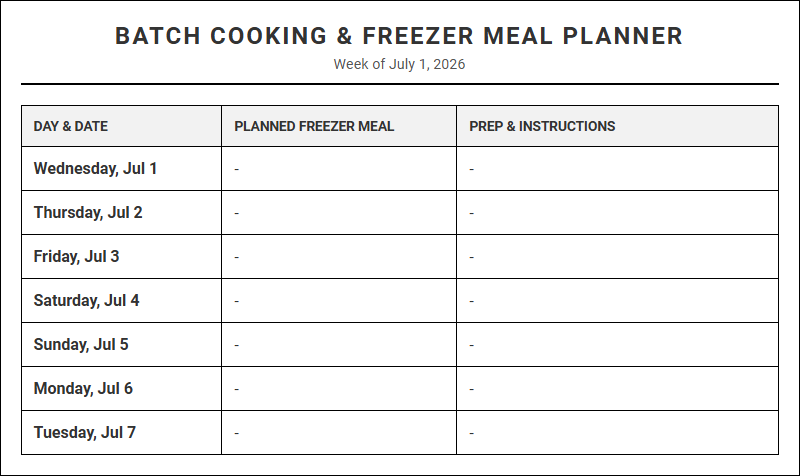
Managing daily family dinners often leads to decision fatigue and budget strain. While digital apps and generic grocery lists offer basic planning, they rarely address long-term inventory logistics. A dedicated Family & Meal Planners printable calendar grants household managers complete structural control, optimizing systems like double-batch lasagna nights. However, maximum efficiency stipulates a commitment to strict freezer-rotation tracking. Below, we outline how to utilize this organizer to streamline your meal prep.
Create Your Batch Cooking and Freezer Meal Organizer
Done customizing?
Batch Cooking and Freezer Meal Organizer - Good to Know
Once-a-Month Cooking
Once-a-Month Cooking (OAMC) is a revolutionary meal planning strategy designed to save you time, money, and daily decision fatigue. By dedicating a single, highly organized day to preparing and freezing a month's worth of dinners, you bypass the nightly stress of cooking from scratch. This method relies heavily on bulk buying, meticulous ingredient prep, and systematic assembly lines.
To successfully execute an OAMC session, you should focus on several key steps:
- Menu Planning: Select recipes that share common ingredients to maximize your bulk purchases.
- Pre-Execution Prep: Chop vegetables, brown meats, and prepare sauces the evening before your big cooking day.
- Labeling: Always write the recipe name, date, and reheating instructions on each container before freezing.
Implementing this structured routine allows households to enjoy wholesome, home-cooked meals every night with minimal weekday effort, significantly reducing the temptation of expensive and unhealthy takeout options.
Dump Meals
For busy individuals seeking maximum convenience, Dump Meals represent the pinnacle of effortless freezer cooking. Unlike traditional meal prep, dump meals require absolutely no pre-cooking. Instead, you place raw, pre-chopped ingredients directly into a heavy-duty freezer bag, squeeze out the excess air, and seal it shut for future assembly.
When you are ready to eat, simply thaw the bag and empty its contents into a slow cooker, instant pot, or baking dish. Consider these essential components for creating highly successful dump meals:
- Proteins: Chicken breasts, pork tenderloin, or cubed beef absorb marinades beautifully while frozen.
- Aromatics: Fresh onions, garlic, and bell peppers infuse deep flavors during the slow-cooking process.
- Liquids: Broths, canned tomatoes, or teriyaki sauces prevent burning and create rich gravies.
This culinary technique ensures a hot, comforting dinner is waiting for you at the end of a long workday, demanding less than five minutes of active preparation time.
Flash Freezing
To maintain the structural integrity and individual texture of your frozen ingredients, mastering the technique of Flash Freezing is indispensable. This process involves freezing individual pieces of food separately on a flat surface before storing them together in a larger container. It prevents moist foods from clumping together into a solid, unmanageable block.
This method is particularly beneficial for delicate items such as berries, sliced bananas, homemade meatballs, cookie dough portions, and individual chicken breasts. To execute this correctly, follow this simple procedure:
Line a baking sheet with parchment paper, arrange your food items in a single layer ensuring they do not touch, and place the tray in the freezer for two to three hours until rock-hard. Once fully frozen, rapidly transfer the pieces into a labeled freezer bag.
By employing this smart preservation technique, you can easily scoop out exactly what you need for a single serving without having to defrost the entire package.
Freezer Inventory Tracker
A beautifully organized freezer is useless if you do not know what lies buried at the bottom of the chest. Implementing a Freezer Inventory Tracker is the most effective way to eliminate food waste, prevent duplicate purchases, and streamline your weekly meal planning. Whether you prefer a digital spreadsheet, a smartphone app, or a simple magnetic dry-erase board on the freezer door, keeping an active log is vital.
Your tracking system should contain specific columns to keep your inventory highly organized and easy to read at a quick glance:
- Item Name: Clearly state what the meal or ingredient is (e.g., "Beef Chili").
- Quantity: Track the number of servings or bags remaining.
- Date Frozen: Keep track of freeze dates to monitor overall freshness.
- Location: Specify the shelf or basket (e.g., "Top Drawer").
Regularly updating this tracker ensures you use your frozen culinary assets before they succumb to freezer burn.
Double-and-Freeze
If dedicating an entire weekend to bulk cooking feels overwhelming, the Double-and-Freeze method offers a gentle, highly sustainable alternative. The concept is wonderfully simple: whenever you cook a freezer-friendly meal for dinner, you prepare a double portion. You serve half to your family tonight, and package the remaining half for the freezer.
This low-stress approach builds a robust stockpile of ready-to-heat meals over time without requiring extra kitchen clean-up or dedicated prep days. Excellent candidates for this method include:
- Layered Dishes: Lasagnas, shepherd's pies, and enchiladas.
- Liquid Comforts: Hearty vegetable soups, marinara sauces, and chili.
- Casseroles: Macaroni and cheese or baked ziti.
By making doubling a natural habit, you effortlessly secure a safety net of homemade dinners for those hectic nights when cooking from scratch is impossible.
FIFO Rotation
The First In, First Out (FIFO) rotation system is a standard kitchen practice in the restaurant industry that translates perfectly to home freezer management. The core rule of FIFO is that the oldest stock must be consumed first, while newly prepared items are placed at the back of the queue. This prevents older meals from being forgotten and suffering from quality degradation.
To successfully establish a FIFO rotation system in your home freezer, organize your storage space using these practical steps:
- Label clearly: Always write the preparation date in a highly visible location on the container.
- Reorganize weekly: Push older containers to the front of the shelf when adding fresh meals.
- Create zones: Separate your freezer into distinct zones for raw meats, prepared meals, and vegetables.
Adhering strictly to FIFO maximizes the shelf-life of your investments, reduces food waste, and guarantees that everything you eat tastes fresh.
Souper Cubes
In recent years, the introduction of silicone freezing molds, specifically popularized by the brand Souper Cubes, has transformed how home cooks portion and store liquid-based meals. These heavy-duty, food-grade silicone trays feature steel rims for stability and come with tight-fitting lids. They allow you to freeze soups, stews, sauces, and grains in precise, pre-measured portions.
Available in half-cup, one-cup, and two-cup sizes, these molds offer unparalleled versatility. Once the food is frozen solid into perfect bricks, you pop them out of the silicone mold and consolidate them into a large silicone bag. This clever storage technique frees up your expensive molds for the next batch while creating highly efficient, stackable frozen blocks that optimize your freezer's physical footprint.
This system eliminates the need to thaw a giant container of soup when you only need a single cup for lunch.
Defrost Schedule
An exceptional freezer meal plan is only as safe as its thawing process, making a structured Defrost Schedule absolutely critical for food safety and quality preservation. Thawing food improperly on the kitchen counter at room temperature invites rapid, dangerous bacterial growth. Planning your defrost cycle ahead of time keeps your family safe and ensures optimal texture.
The safest thawing methods require a small amount of foresight and can be categorized by their timelines:
- The Refrigerator Method (24 Hours): The gold standard. Slowly thaws food at safe temperatures.
- Cold Water Bath (1-2 Hours): Submerge sealed bags in cold water, changing the water every thirty minutes.
- Microwave Defrost (Immediate): Use only if you plan to cook and consume the meal immediately afterward.
Integrating a defrost reminder into your digital calendar ensures meals are moved from the freezer to the fridge the night before cooking.
Portion-Controlled Freezing
One of the most common mistakes in freezer cooking is freezing large quantities of food in massive, single containers. Embracing Portion-Controlled Freezing solves this issue by tailoring your storage sizes to your household's actual eating habits. Freezing food in smaller, realistic portions drastically reduces leftovers and accelerates the defrosting process.
Consider the varying needs of your household when portioning your freshly cooked meals:
- Single Servings: Perfect for quick weekday lunches or solo dinners.
- Double Servings: Ideal for couples or sharing a cozy meal with a friend.
- Family-Sized Platters: Designed to feed a whole table in one seamless serving.
Additionally, freezing ingredients like tomato paste or pesto in ice cube trays ensures you can extract micro-portions for recipe seasoning, minimizing waste and maximizing the efficiency of your pantry ingredients.
Batch Cooking Prep Day
The success of any freezer-cooking endeavor hinges on the organization of your dedicated Batch Cooking Prep Day. This is the designated window of time where all your planning, shopping, and slicing culminate in an efficient assembly process. Treating this day like a professional kitchen operation keeps chaos at bay and ensures you remain energized.
To run an exceptionally smooth prep day, structure your workflow logically using this timeline:
- Clear the Decks: Start with an empty dishwasher, empty trash cans, and clean countertops.
- The Chop Phase: Process all vegetables and aromatics first to keep cutting boards clean of raw meat.
- The Assembly Line: Set up containers in rows, distributing ingredients systematically before sealing.
Approaching your prep day with a clear plan ensures your freezer is stocked with delicious, nutritious meals while keeping kitchen stress to a minimum.
Leave a comment