
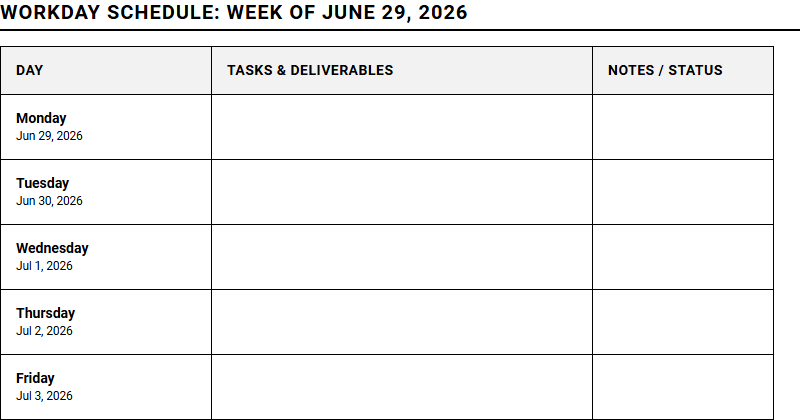
Managing complex workloads often leads to cognitive fatigue. While organizations routinely fund enterprise digital suites to resolve this, screen clutter often worsens distraction. The Daily Agendas printable calendar grants immediate tactile focus-provided users commit to a brief, offline morning planning routine.
Successfully utilized by operations leads at Apex Logistics to complement their Workday Task Manager, this approach restores control. Below, we outline how to seamlessly integrate these printables into your daily workflow.
Create Your Workday Task Manager
Done customizing?
Workday Task Manager - Good to Know
My Tasks
Managing daily responsibilities requires a centralized interface where all pending actions converge. The My Tasks inbox serves as this essential command center within the enterprise ecosystem. Employees can view, prioritize, and execute their assigned duties without navigating multiple disparate systems. This consolidated view organizes notifications, approvals, and questionnaires chronologically or by urgency.
By utilizing dynamic sorting features, users can filter items to focus on high-priority objectives first. Consequently, operational efficiency increases while the risk of missing critical deadlines decreases significantly. This unified workspace not only streamlines individual workflows but also fosters organizational transparency. Users can easily track their progress, view historical submissions, and maintain momentum across complex projects. The intuitive design ensures that onboarding new team members is seamless, as all actionable items are presented in a structured, accessible format.
Business Process Framework
The backbone of organizational automation lies within the Business Process Framework. This powerful engine defines the sequential flow of tasks, reviews, and approvals required to complete critical business operations. By mapping out custom pathways, organizations can standardize procedures such as hiring, expense reporting, and procurement. The framework ensures compliance with internal policies and external regulations by enforcing mandatory validation steps.
Key advantages of this structured framework include:
- Consistency: Standardizes operations across diverse departments.
- Auditability: Generates comprehensive digital footprints for compliance.
- Flexibility: Adapts to evolving business demands through configurable logic.
Administrators can customize conditional routing, ensuring that documents automatically escalate to the correct stakeholders based on specific criteria like monetary thresholds or regional jurisdiction. This automated routing minimizes manual handoffs and mitigates human error.
To-Do Step
Within a larger workflow, certain activities cannot be automated and require direct manual intervention. A To-Do Step acts as a placeholder or a guided prompt within a business process, instructing a specific user to complete an external task. These steps are crucial when processes intersect with offline activities or legacy third-party platforms. For instance, an HR specialist might need to verify physical identification documents before proceeding with a digital onboarding sequence.
The system pauses the automated process until the assignee confirms completion of the physical task. To ensure accuracy, these steps often include detailed instructions, links to reference guides, or mandatory checklist items. By bridging the gap between digital automation and physical execution, the system maintains a cohesive record of the entire operational pipeline, ensuring no detail is overlooked.
Task Delegation
Continuity in operations is vital, especially when key personnel are absent due to vacation, medical leave, or professional training. Task Delegation provides a secure mechanism to temporarily assign authority and action items to designated colleagues. Instead of sharing credentials, which violates security protocols, users can configure delegation rules within the platform. These rules can be highly specific:
- Select a trusted delegate to manage incoming tasks.
- Define a precise date range for the delegation period.
- Restrict delegation to specific business processes, such as approving timesheets but not salary adjustments.
The original task owner retains oversight, while the delegate gains the temporary permissions necessary to prevent bottlenecks. This proactive approach ensures that business momentum is sustained, approval chains remain uninterrupted, and compliance metrics are consistently met.
Workday Journeys
Navigating significant professional transitions requires more than isolated task lists; it demands an integrated, supportive experience. Workday Journeys offer personalized, guided paths designed to assist employees through pivotal career moments, such as onboarding, promotion, or parental leave. By combining structured tasks with rich multimedia content, external resources, and educational materials, these journeys provide a holistic approach to employee development.
Users receive timely nudges and curated information tailored to their unique roles and locations. For example, a new manager might be guided through leadership training modules, policy overviews, and team-building exercises over their first ninety days. This thoughtful orchestration reduces anxiety, fosters a sense of belonging, and accelerates time-to-productivity, converting standard administrative procedures into deeply engaging, supportive professional milestones.
Ad Hoc Tasks
Not all business activities fit neatly into predefined corporate templates or rigid schedules. Ad Hoc Tasks empower users to create, assign, and track spontaneous, one-off assignments that arise during daily operations. Whether it is a sudden request for a specialized report, a quick compliance check, or an urgent client follow-up, these tasks can be generated instantly. Users can assign these duties to themselves or colleagues, set realistic due dates, and attach relevant contextual documentation.
This flexibility ensures that minor yet critical details do not get lost in email chains or instant messaging threads. By capturing unscheduled work within the central system, organizations maintain a more accurate record of actual employee output, resource allocation, and collaborative problem-solving efforts.
Inbox Filters
In a high-volume professional environment, an inbox can quickly become overwhelmed by notifications, requests, and updates. Inbox Filters serve as vital tools for managing cognitive load and maintaining organizational focus. By allowing users to segment their incoming tasks based on specific, customizable criteria, these filters transform a chaotic stream of information into structured queues. Users can organize their inbox by parameters such as:
- Process Type: Grouping all expense approvals together.
- Due Date: Prioritizing tasks requiring immediate attention.
- Initiator: Focusing on requests from specific leadership members.
Saving these custom configurations allows users to toggle between different views instantly. This targeted focus reduces context switching, minimizes the risk of oversight, and significantly speeds up processing times for routine operational approvals.
Workday Assistant
Interaction with complex enterprise systems is revolutionized through conversational artificial intelligence. The Workday Assistant is an intuitive, natural language processing tool designed to help users retrieve information and complete tasks effortlessly. Instead of navigating multi-layered menus, employees can simply type or speak queries like "What is my remaining time off?" or "Approve John's expense report."
The assistant interprets the user's intent, retrieves secure data in real-time, and guides them through the necessary steps. This conversational interface democratizes access to system features, particularly for casual users who do not interact with the platform daily. By providing instant support and automating routine interactions, the assistant reduces the volume of repetitive queries directed at HR and IT helpdesks, allowing those support teams to focus on strategic initiatives.
Approval Chain
Financial integrity and operational governance depend on robust verification pathways. An Approval Chain defines the hierarchical sequence of stakeholders who must review and authorize a transaction before it is finalized. These chains are dynamically generated based on the organization's supervisory structure and specific business rules. For example, a capital expenditure request might require approval from the immediate manager, followed by the department head, and finally the finance director.
The system manages this progression automatically, routing notifications to the next approver only after the preceding step is successfully authorized. If a bottleneck occurs, escalation rules can redirect the request to prevent delays. This automated governance model ensures complete accountability, enforces fiscal responsibility, and provides an indelible audit trail for regulatory compliance.
Step Delay
Timely execution does not always mean immediate execution; sometimes, strategic pauses are required within a workflow. A Step Delay is a deliberate configuration that pauses a business process for a specified duration or until a particular condition is met. This mechanism is incredibly useful for managing staggered rollouts, post-activity evaluations, or compliance waiting periods.
For instance, following an employee's termination, an organization might configure a step delay of thirty days before automatically archiving their digital profile or initiating exit survey distributions. During this pause, administrators can manually intervene if circumstances change. By scheduling automated actions to resume precisely when needed, organizations eliminate the reliance on manual calendars or external reminders, ensuring long-term administrative processes execute flawlessly and in accordance with strategic timelines.

Leave a comment