
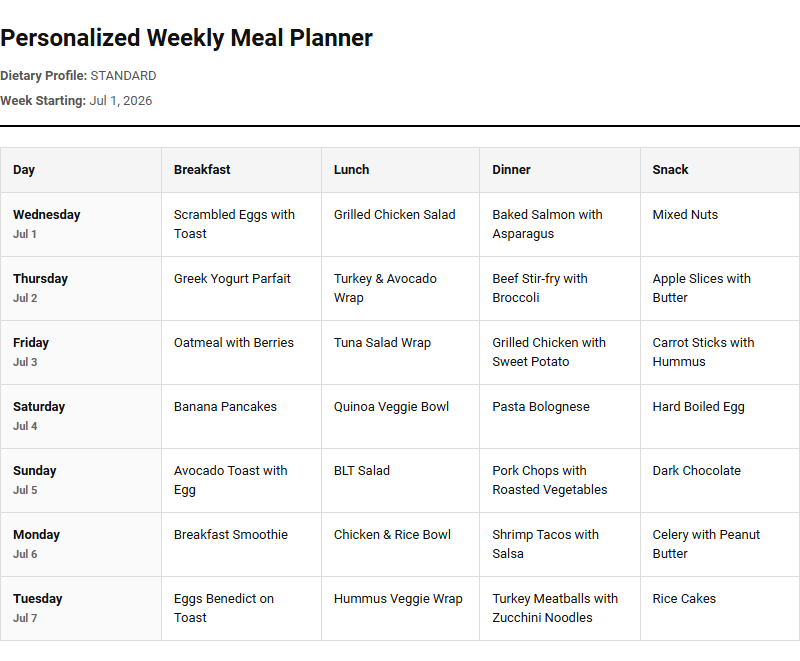
Managing diverse dietary restrictions and food allergies within a household is a stressful daily struggle. While families often rely on standard generic meal templates, these resources lack the specificity needed for cross-contamination safety. Our specialized printable calendar grants you a structured organizational system, stipulating clear guidelines for allergen-free substitutions, like dairy-free alternatives. Below, we outline the essential strategies to maximize this planner for safe, stress-free family dinners.
Create Your Dietary Restriction and Allergy Meal Planner
Done customizing?
Dietary Restriction and Allergy Meal Planner - Good to Know
Top 9 allergen-free
Navigating the modern culinary landscape requires a deep understanding of the top 9 allergens that trigger the majority of severe food-allergic reactions. These key culprits include wheat, milk, eggs, peanuts, tree nuts, fish, crustacean shellfish, soy, and sesame. Crafting a menu free from these ingredients involves rigorous ingredient scrutiny and dedicated sourcing protocols.
To successfully implement a top 9 allergen-free lifestyle, focus on naturally unprocessed whole foods. You can build balanced meals using safe foundations:
- Proteins: Fresh poultry, grass-fed beef, and select seeds.
- Carbohydrates: Quinoa, wild rice, cassava, and sweet potatoes.
- Healthy Fats: Avocado oil, olive oil, and coconut products.
Prioritizing these naturally safe options minimizes reliance on highly processed substitutes, ensuring a nutrient-dense diet that safeguards sensitive individuals from accidental exposure while promoting overall gut health and systemic well-being.
Low-FODMAP meal prep
For individuals managing Irritable Bowel Syndrome (IBS), Low-FODMAP meal prep is an invaluable strategy to prevent painful digestive flare-ups. FODMAPs (Fermentable Oligosaccharides, Disaccharides, Monosaccharides, and Polyols) are short-chain carbohydrates that absorb poorly in the small intestine, leading to gas and bloating.
Successful meal preparation requires substituting high-FODMAP staples like garlic and onions with flavorful alternatives. Consider using these techniques during your weekly prep session:
- Infuse olive oil with garlic cloves, removing the solids before cooking to capture flavor without the water-soluble fructans.
- Utilize the green tops of spring onions and chives for an aromatic bite.
- Portion out safe servings of low-FODMAP vegetables like zucchini, carrots, and baby spinach.
By pre-sorting meals into designated containers, you ensure consistent portion control, which is vital since FODMAP load is cumulative throughout the day.
Autoimmune Protocol (AIP)
The Autoimmune Protocol (AIP) is a specialized elimination diet designed to reduce systemic inflammation and support healing of the mucosal lining in the gut. Often utilized by those with Hashimoto's, rheumatoid arthritis, or celiac disease, AIP focuses on removing foods that potentially stimulate the immune system or disrupt intestinal microbiota.
During the initial elimination phase, several food groups are strictly avoided. These include grains, legumes, dairy, refined sugars, nightshades, nuts, seeds, and food additives. Instead, the diet emphasizes nutrient-dense foods:
- Organ meats and wild-caught seafood rich in omega-3 fatty acids.
- Fermented foods like sauerkraut and kefir made from coconut milk.
- An abundant variety of non-nightshade vegetables and leafy greens.
This phase is temporary, serving as a baseline to identify personal triggers during the systematic reintroduction phase, leading to a highly personalized long-term wellness plan.
Cross-contact prevention
Understanding cross-contact prevention is critical for managing severe food allergies and celiac disease, where even microscopic protein residues can trigger life-threatening anaphylaxis or severe autoimmune damage. Unlike cross-contamination, which involves biological pathogens killed by heat, cross-contact occurs when an allergen physically transfers to a safe food or surface, and cooking does not neutralize the threat.
Establishing a sterile cooking environment requires strict organizational protocols. It is essential to use dedicated cookware, color-coded cutting boards, and separate utensils for allergen-free preparations. Always wash hands thoroughly with soap and water rather than relying on hand sanitizer, which does not remove allergen proteins.
"Keeping a designated 'safe zone' in the pantry and using foil or parchment paper on shared baking sheets can prevent accidental exposure in multi-diet households."
Rigorous sanitizing of countertops and kitchen equipment before preparing allergen-free meals is non-negotiable.
Elimination diet tracking
To pinpoint specific food sensitivities, systematic elimination diet tracking serves as the gold standard diagnostic tool. This structured process requires individuals to remove suspect foods for a set period, typically three to six weeks, and then systematically reintroduce them one by one while closely monitoring physical reactions.
Maintaining a detailed daily log is the cornerstone of this process. An effective food journal should document several critical data points:
- The exact ingredients consumed during every meal, snack, and beverage.
- The timing, severity, and nature of any physical or cognitive symptoms.
- External variables such as sleep quality, stress levels, and daily physical activity.
This granular approach allows you to isolate variables and identify delayed inflammatory responses, which can occur up to 72 hours after consuming a trigger food, providing clear data to customize your long-term diet.
Histamine intolerance
Managing histamine intolerance requires a careful approach to food selection and preservation. This condition arises when the body cannot break down dietary histamine efficiently, often due to a deficiency in the diamine oxidase (DAO) enzyme. Symptoms can mimic allergic reactions, presenting as hives, headaches, digestive distress, or nasal congestion.
Unlike other food sensitivities, histamine levels increase as food ages, ferments, or spoils. Therefore, dietary management focuses heavily on freshness. Avoid fermented foods, aged cheeses, cured meats, and leftovers that have sat in the refrigerator. Instead, prioritize:
- Freshly slaughtered meats frozen immediately after processing.
- Quickly cooked, fresh vegetables like asparagus, broccoli, and kale.
- Freezing leftovers immediately to halt histamine accumulation.
By focusing on rapid preparation and storage, you can significantly lower your daily histamine load and alleviate chronic symptoms.
Celiac-safe
Maintaining a celiac-safe diet requires absolute, lifelong avoidance of gluten, a protein found in wheat, barley, rye, and their derivatives. For individuals with celiac disease, ingesting even a fraction of a breadcrumb can trigger an autoimmune response that damages the villi of the small intestine, leading to nutrient malabsorption and serious long-term health complications.
Creating a safe environment means looking beyond obvious flour-based foods. You must verify that naturally gluten-free grains, like oats and quinoa, are processed in dedicated gluten-free facilities to avoid agricultural cross-contact. Look for certified gluten-free labels on packaged goods, as these indicate compliance with strict testing standards.
Additionally, exercise extreme caution with shared appliances like community toasters, colanders, and wooden spoons, which can trap gluten particles in their porous surfaces, compromising food safety.
Allergen substitution index
Building a functional allergen substitution index allows home cooks and professional chefs to modify traditional recipes without sacrificing taste, texture, or structural integrity. When removing common allergens, you must identify the chemical role the ingredient plays in the recipe, whether it is binding, leavening, moisturizing, or emulsifying.
Consider this quick reference guide for common culinary substitutions:
- Egg Replacers: Use carbonated water for lightness, applesauce for moisture, or a ground flaxseed slurry for binding in baked goods.
- Dairy Alternatives: Swap heavy cream with coconut cream, and utilize oat or almond milk for general cooking.
- Wheat Flour Substitutes: Blend brown rice flour, potato starch, and tapioca flour with a pinch of xanthan gum to mimic gluten elasticity.
Mastering these simple swaps preserves the joy of eating while ensuring safety.
Rotational diet planning
For individuals with multiple food sensitivities or leaky gut syndrome, rotational diet planning is an effective strategy to prevent the development of new allergies. By cycling through different food families rather than eating the same ingredients daily, you minimize repetitive exposure that can overstimulate a compromised immune system.
A standard rotation schedule typically operates on a four-day cycle. If you consume a specific food group on Monday, you avoid that entire biological family until Friday. This requires tracking foods by their scientific families rather than common categories:
- Nightshades: Potatoes, tomatoes, eggplants, and peppers.
- Brassicas: Broccoli, cabbage, cauliflower, and brussels sprouts.
- Alliums: Garlic, onions, leeks, and shallots.
This structured variety encourages a highly diverse microbiome, which inherently strengthens digestion and improves immune tolerance over time.
Hidden ingredient alerts
Uncovering hidden ingredient alerts is an essential skill for anyone managing severe food allergies or intolerances. Manufacturers frequently use technical, scientific, or alternative names for common allergens on ingredient labels, which can easily mislead consumers who are looking for straightforward terms.
It is vital to recognize these deceptive naming conventions when scanning packaged foods:
- Milk derivatives: Whey, casein, caseinate, lactalbumin, and ghee.
- Soy indicators: Textured vegetable protein (TVP), lecithin, edamame, and miso.
- Gluten sources: Malt, spelt, kamut, farro, brewer's yeast, and hydrolyzed wheat protein.
Always read the entire ingredient list, even on products you have purchased safely before, as formulations can change without notice. When in doubt, contact the manufacturer directly to confirm the origin of natural flavors and starches.
Leave a comment