
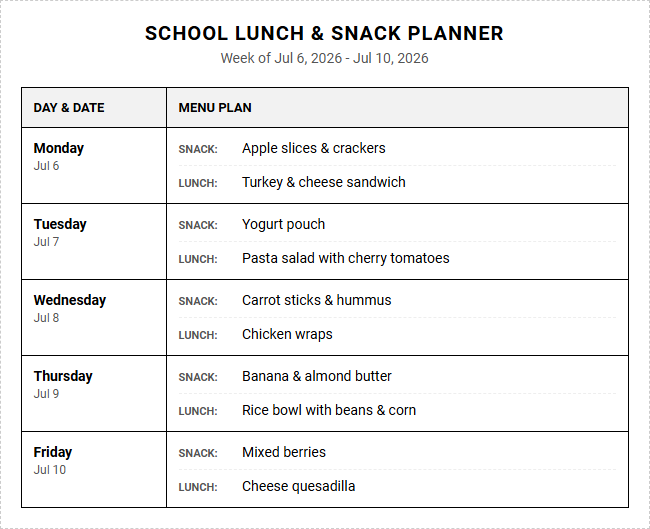
Managing the daily chaos of packing nutritious school lunches often leaves parents overwhelmed during the morning rush. While standard digital calendar apps offer basic organization, they rarely streamline physical kitchen prep. Our printable Kids School Lunch and Snack Planner grants families immediate mental clarity by visualizing the week ahead.
Under the stipulation that users establish a consistent prep routine-such as pre-portioning Wednesday's allergen-free bento snacks-this system ensures long-term efficiency. Below, we outline how to optimize this printable tool to eliminate morning stress.
Create Your Kids School Lunch and Snack Planner
Done customizing?
Kids School Lunch and Snack Planner - Good to Know
Bento box meal prep
Bento boxes offer a visual and structured approach to school lunches, making meal preparation both efficient and appealing. By utilizing compartmentalized containers, parents can easily balance macronutrients without mixing textures. Start by designating sections for proteins, complex carbohydrates, fruits, and vegetables.
- Proteins: Hard-boiled eggs, cubed cheese, or rolled deli meats.
- Carbohydrates: Whole-grain crackers, pita pockets, or quinoa salad.
- Produce: Berries, grapes, cucumber slices, or cherry tomatoes.
Preparing these components on Sunday ensures seamless assembly during busy weekday mornings. The compartmentalized design prevents food from touching, which is a common preference among younger children. To keep elements exceptionally fresh, place moisture-rich items like sliced melons in silicone baking cups within the compartments. Incorporating a variety of colors and textures not only enhances visual appeal but also guarantees a diverse intake of essential vitamins and minerals.
Nut-free allergy-friendly snacks
Creating safe, allergen-free learning environments requires careful ingredient selection, especially when packing school snacks. Nut-free policies are common, but finding satisfying alternatives does not mean sacrificing flavor or nutrition. Sunflower seed butter serves as an excellent, creamy substitute for peanut butter, pairing beautifully with apple slices or oat crackers.
- Roasted chickpeas: A crunchy, protein-dense alternative to traditional tree nuts.
- Pumpkin seeds: Rich in magnesium and zinc, perfect for school-safe trail mixes.
- Chilled edamame: Fun to eat and packed with plant-based protein.
When purchasing pre-packaged items, always inspect labels for certified allergen-free seals to avoid cross-contamination. Preparing homemade granola bars using rolled oats, pumpkin seeds, and dried cranberries ensures absolute control over the ingredients. These wholesome, worry-free options keep children energized while maintaining safety for classmates with severe food sensitivities.
Kid-approved lunch rotation
Preventing school lunch fatigue requires a dynamic, kid-approved rotation system that balances novelty with familiar favorites. Instead of serving the same sandwich daily, establish a weekly theme system to simplify your planning process. Mondays can feature colorful wraps, while Wednesdays focus on warm comfort foods, and Fridays highlight DIY lunch kits.
"Involving children in meal choices fosters a positive relationship with nutrition that lasts a lifetime."
Involving children in the planning process significantly increases the likelihood that they will finish their meals. Allow them to choose between two healthy options, fostering autonomy and reducing mealtime resistance. A successful rotation keeps lunchboxes exciting and ensures a broader spectrum of nutrient intake over the school year. By systematically rotating proteins, grains, and produce, you prevent palate boredom and make grocery shopping highly predictable.
Deconstructed school lunches
Deconstructed school lunches are a game-changer for picky eaters who dislike mixed textures or soggy bread. By separating ingredients into individual components, children can assemble their bites or enjoy each element independently. A classic turkey sandwich becomes a playful platter of rolled deli turkey, Swiss cheese cubes, and whole-grain crackers.
This interactive format transforms eating into an engaging sensory activity, making lunchtime fun and low-pressure. Deconstruction also preserves the structural integrity of ingredients, preventing crackers from softening and lettuce from wilting. It accommodates various dietary preferences easily, as components can be substituted without ruining the entire meal. Parents find this method incredibly simple to pack, utilizing small containers or bento compartments. This presentation style empowers children, giving them control over how they consume their food while ensuring they receive balanced, wholesome nutrition.
Weekly snack pairing guide
A structured weekly snack pairing guide ensures that children receive sustained energy throughout the school day by combining complex carbohydrates with healthy proteins or fats. This synergetic pairing stabilizes blood sugar levels, preventing mid-afternoon energy crashes.
| Day | Carbohydrate/Fiber | Protein/Healthy Fat |
|---|---|---|
| Monday | Baby Carrots | Classic Hummus |
| Wednesday | Fresh Berries | Greek Yogurt |
| Friday | Apple Slices | Sunflower Seed Butter |
Planning these pairings on Sunday saves valuable time during the chaotic morning rush. Referencing a simple grid eliminates guesswork and ensures a nutritionally balanced variety of food groups, making snacks both satisfying and deeply nourishing.
Thermos hot lunch ideas
Packing a warm meal provides comforting nourishment, particularly during colder autumn and winter months. An insulated thermos is the key to expanding your school lunch repertoire beyond cold sandwiches and wraps. To maximize heat retention, fill the thermos with boiling water for five minutes before emptying it and adding steaming-hot food.
- Vegetable Minestrone: Packed with fiber, beans, and colorful vegetables.
- Warm Chicken Teriyaki: Served over a bed of fluffy brown rice.
- Creamy Macaroni and Cheese: Stir in some peas or broccoli florets for extra nutrition.
These hearty meals provide sustained warmth and satisfaction, keeping students focused during afternoon classes. Pairing a hot thermos main with cold sides, like fresh fruit or crisp celery sticks, creates an appealing contrast of temperatures and textures. High-quality insulated containers open up endless culinary possibilities.
Zero-waste lunch packaging
Transitioning to zero-waste lunch packaging is an environmentally responsible choice that also yields significant long-term financial savings. By eliminating single-use plastic baggies, cling wrap, and disposable utensils, you significantly reduce daily household waste. Instead, invest in high-quality stainless steel containers, reusable silicone pouches, and beeswax wraps to keep food fresh.
- Containers: Stainless steel or bento-style boxes.
- Wraps: Beeswax wraps for sandwiches and cheese.
- Hydration: Double-walled insulated stainless steel bottles.
Cotton sandwich bags with washable liners and bamboo utensil sets are durable, lightweight alternatives that fit perfectly into standard insulated lunchboxes. Teaching children to bring home any packaging remnants fosters environmental awareness and stewardship from a young age. This sustainable approach encourages mindfulness regarding consumption patterns and plastic reduction while keeping lunch gear incredibly clean.
Finger food meal planning
Finger food meal planning is an excellent strategy for younger children who prefer quick, bite-sized portions during their limited recess time. Designing meals around small, easily manageable items encourages independent eating and minimizes clean-up. Think mini chicken skewers, cucumber rounds topped with cream cheese, and colorful fruit kebabs.
These bite-sized elements are inherently appealing and easy for tiny hands to grasp, promoting fine motor skills development. Parents can prepare large batches of mini muffins, vegetable egg bites, or baked meatballs over the weekend and freeze them for easy access. Packing a colorful assortment of finger foods ensures that lunchtime feels playful rather than chore-like. This approach allows kids to eat efficiently, leaving ample time for playground socialization and physical activity.
Prep-ahead school bites
Master weekday morning chaos by focusing on prep-ahead school bites that store beautifully in the refrigerator or freezer. Dedicating a block of time on Sunday to portioning out snacks, washing berries, and baking wholesome goods yields massive time savings during the week. Items like oatmeal cups, savory egg muffins, and homemade energy bites can be prepared in double batches.
- Oatmeal cups: Sweetened with bananas and baked in muffin tins.
- Egg muffins: Whisked with spinach, cheddar, and turkey bacon.
- Energy bites: Rolled with oats, flax seeds, and honey.
Simply pull them out the night before, and they will thaw perfectly by lunchtime. Pre-chopping hard vegetables like carrots, bell peppers, and celery ensures they are ready to be tossed into lunchboxes at a moment's notice, reducing decision fatigue.
Hidden veggie snack recipes
Integrating hidden veggie snack recipes is a clever, stress-free method to boost your child's daily nutrient intake without dinnertime power struggles. Many vegetables can be seamlessly incorporated into baked goods, dips, and smoothies without altering the beloved flavors or textures that kids expect. For instance, pureed sweet potato or zucchini adds incredible moisture to chocolate muffins, while grated carrots blend beautifully into cinnamon oat bars.
Creamy spinach and herb dips, made with Greek yogurt, pair wonderfully with whole-grain crackers while delivering essential iron and vitamins. Smoothies packed with mild greens like baby spinach, blended with sweet fruits like bananas and strawberries, mask any vegetable taste completely. These nutrient-dense snacks ensure that even the most selective eaters receive vital dietary fiber, vitamins, and minerals throughout the school day.

Leave a comment