
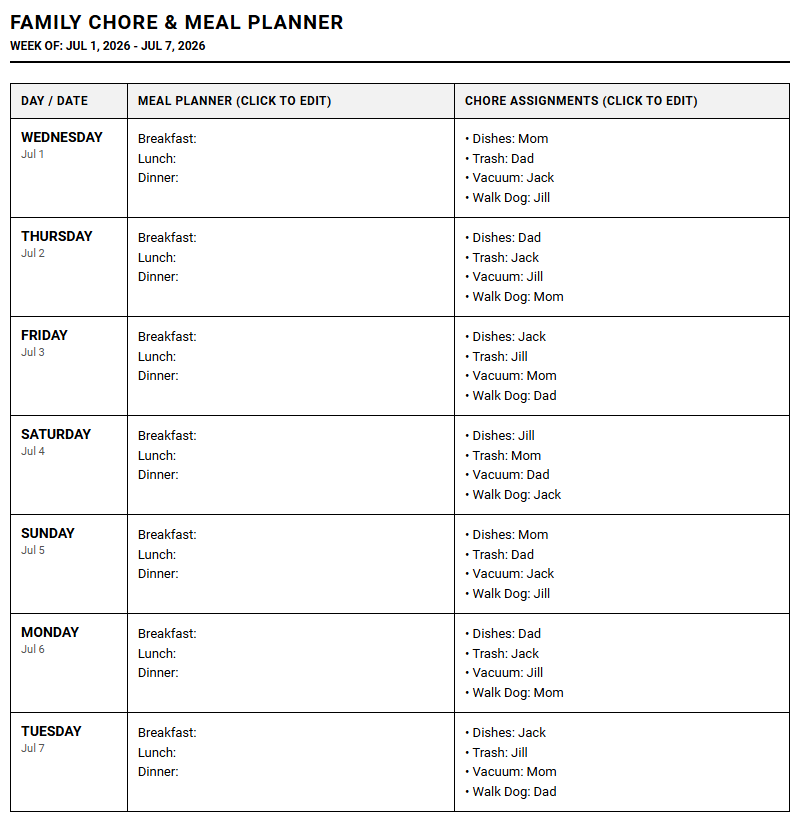
Keeping a busy household running smoothly often leads to daily friction over chores and dinner. While families frequently rely on scattered digital apps, these rigid platforms often fail to engage everyone. A physical, printable Family Chore Chart and Meal Planner grants immediate, offline visibility that fosters shared accountability. Though success stipulates a commitment to weekly updates, proven layouts like the Dual-Zone Tracker show immediate results. Below, we examine how to implement these templates to streamline your home.
Create Your Family Chore Chart and Meal Planner
Done customizing?
Family Chore Chart and Meal Planner - Good to Know
Streamlining Household Management: Ten Proven Systems
Family Command Center
A central hub serves as the operational core of any busy household. Positioned in a high-traffic area like the kitchen or entryway, this dedicated space consolidates critical daily information, keeping everyone aligned and reducing morning chaos. To build an efficient setup, incorporate a few essential organizational tools:
- Magnetic Whiteboard: Excellent for writing urgent, temporary notes, displaying weekly schedules, or leaving quick reminders.
- Mail Sorters: Prevent paper clutter by creating labeled slots for incoming mail, school permission slips, and bills.
- Key Hooks: Establish a designated spot for keys, preventing frantic searches before leaving the house.
By establishing this centralized physical anchor, family members can quickly check schedules, review outstanding tasks, and drop off papers as they enter the home. This simple setup keeps daily operations running smoothly and ensures nothing gets lost in the shuffle.
Gamified Chores
Transforming routine household tasks into an engaging experience can significantly boost participation, especially among younger children. By integrating basic game design principles into daily cleaning habits, chores evolve from boring obligations into exciting challenges. This interactive approach leverages intrinsic motivation and friendly competition to build positive long-term habits.
Consider implementing this simple three-tier progression system to get started:
- Earn Experience Points (XP): Assign specific point values to tasks based on difficulty. Sweeping the floor might earn 10 XP, while washing dishes yields 20 XP.
- Unlock Levels: As family members accumulate points, they level up, earning specialized titles like "Master of the Broom" or "Dishwasher Champion".
- Redeem Rewards: Accrued points can be traded for customized privileges, such as choosing the weekend movie or enjoying an extra half-hour of screen time.
Theme Night Meal Planning
Deciding what to cook every single night can lead to profound decision fatigue. Implementing a structured theme night system simplifies grocery shopping and culinary preparation by providing a predictable weekly framework. Instead of staring blankly at an open refrigerator, you can rely on a reliable rotational schedule that satisfies diverse palates.
"By narrowing down your culinary choices to a specific category each day, you unlock creativity within a structured, manageable boundary."
A typical weekly rotation might include Taco Tuesday for Mexican cuisine, Wacky Wednesday for breakfast-for-dinner, and Pasta Thursday for comforting Italian dishes. This predictable rhythm allows you to buy staples in bulk, streamline your meal preparation routines, and significantly reduce food waste. Consequently, dinner prep becomes a stress-free routine rather than a daily logistical hurdle.
Zone Cleaning Method
Deep cleaning an entire house in one session is often exhausting and unsustainable. The Zone Cleaning Method solves this problem by dividing your living space into distinct geographical zones, focusing intensive cleaning efforts on just one area per week. This systematic approach ensures that every corner of your home receives deep attention on a rotating, manageable basis.
Here is an example of how you can divide your household chores throughout the month:
| Week | Target Zone | Primary Deep Cleaning Tasks |
|---|---|---|
| Week 1 | The Entryway & Living Room | Dusting baseboards, vacuuming rugs, polishing furniture. |
| Week 2 | The Kitchen & Pantry | Wiping down appliances, cleaning oven, organizing shelves. |
| Week 3 | Bathrooms & Laundry Area | Scrubbing tile grout, sanitizing counters, washing bathmats. |
Maintaining this consistent cycle ensures your home stays sparkling clean without requiring you to dedicate an entire weekend to grueling labor.
Chore Rotation Wheel
Fairness is critical when distributing household responsibilities among family members. A physical or digital chore rotation wheel visualizes task distribution, ensuring that nobody gets stuck with the least desirable jobs indefinitely. By rotating duties on a weekly basis, everyone gains experience with different aspects of home maintenance, fostering a cooperative domestic environment.
To implement this successfully, list routine tasks such as taking out the trash, vacuuming hallways, wiping down tables, and loading the dishwasher around the outer edge of a wheel. Each week, spin or shift the inner wheel containing family names. This transparent process minimizes complaints and arguments about favoritism, as everyone can see the objective system dictating their weekly contributions. A rotating wheel instills a strong sense of shared responsibility and collective pride in maintaining a clean home.
Visual Routine Board
For children, conceptualizing time and sequence can be challenging, often leading to endless parental prompting during morning and bedtime transitions. A visual routine board uses clear, sequential images to guide children through their daily expectations independently. This structured tool builds confidence and self-regulation skills from an early age.
Construct a simple morning progression using these sequential steps:
- Make Bed: Pull up the blankets and arrange pillows neatly.
- Get Dressed: Put on the pre-selected outfit for the school day.
- Eat Breakfast: Finish the morning meal and clear the plate.
- Brush Teeth: Brush thoroughly for two minutes and wash hands.
As children complete each task, they can flip a physical tab or move a magnet to mark it done. This interactive feedback loop turns daily routines into an achievable, self-directed checklist.
Inventory-Based Meal Prep
Groceries represent a major household expense, yet significant amounts of food are discarded due to poor planning. Inventory-based meal prep flips the traditional shopping dynamic: instead of deciding what to cook and buying new ingredients, you build your weekly menu around items you already own. This sustainable strategy dramatically lowers monthly grocery bills and reduces food waste.
Before writing a shopping list, perform a thorough audit of your freezer, pantry, and crisper drawers. Group expiring items together and brainstorm recipes that utilize these key ingredients first. Only purchase the fresh items or missing staples needed to complete those specific meals. This practice keeps your food supply rotating efficiently, ensures you use what you buy, and keeps your kitchen neatly organized.
Allowance and Reward Tracker
Teaching children financial literacy begins with a transparent system for earning and managing money. An allowance and reward tracker connects household contributions to financial incentives, teaching kids the value of hard work and careful budgeting. By documenting earnings clearly, you avoid confusion and maintain high motivational levels.
A basic tracking ledger can be organized using a simple table structure:
| Chore Completed | Value | Allocation (Save / Spend / Give) |
|---|---|---|
| Mopping the Kitchen | $2.00 | $1.00 Save / $0.80 Spend / $0.20 Give |
| Washing the Family Car | $5.00 | $2.50 Save / $2.00 Spend / $0.50 Give |
This clear distribution strategy helps children learn how to divide their earnings responsibly, laying a solid foundation for future financial success.
Batch Cooking Schedule
Weekday evenings are notoriously hectic, leaving little time for elaborate meal preparation. A batch cooking schedule solves this pressure point by dedicating a block of time, typically on Sundays, to preparing large quantities of versatile ingredients or complete meals. This upfront investment of effort saves hours of cooking and cleanup during the busy workweek.
Focus your batch cooking sessions on highly versatile staples that can be combined in various ways:
- Proteins: Roast several chicken breasts, brown ground turkey, or bake a large batch of marinated tofu.
- Grains: Cook large pots of brown rice, quinoa, or farro to serve as hearty bases for quick bowls.
- Roasted Vegetables: Sheet-pan roast broccoli, sweet potatoes, and bell peppers for easy side dishes.
Store these components in airtight containers. During the week, assemble healthy meals in minutes, keeping your family well-fed and avoiding the temptation of expensive takeout.
Leave a comment