
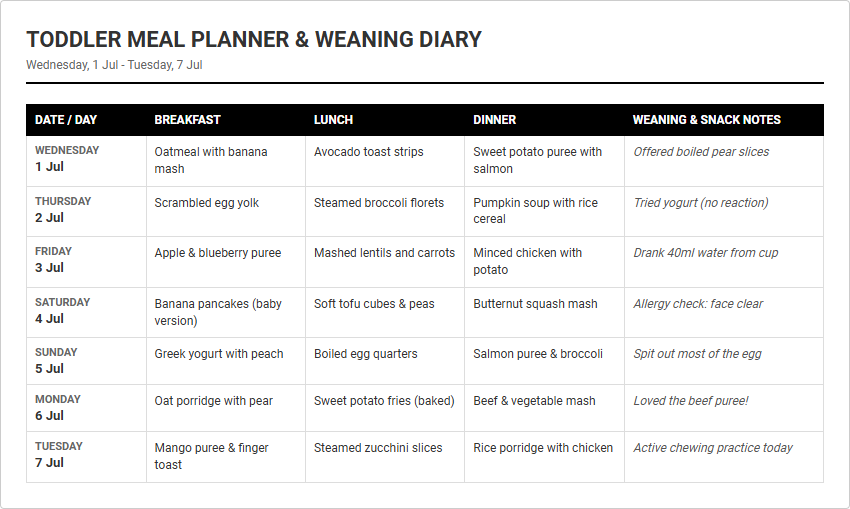
Transitioning infants to solid foods and managing toddler nutrition often leaves parents overwhelmed by meal-prep logistics. While standard family wellness budgets or healthcare HSA allocations cover pediatric consultations, they rarely provide daily execution tools. Our printable Toddler Meal Planner and Weaning Diary grants parents immediate organizational structure and peace of mind. Note: this planning template serves as an educational tracking guide, not clinical advice. Featuring specialized allergen logs and daily puree trackers, this resource simplifies developmental transitions. Below, we outline how to maximize this calendar for stress-free family mealtimes.
Create Your Toddler Meal Planner and Weaning Diary
| Date / Day | Breakfast | Lunch | Dinner | Weaning & Snack Notes |
|---|
Done customizing?
Toddler Meal Planner and Weaning Diary - Good to Know
Baby-led weaning
Baby-led weaning (BLW) is a progressive method of introducing solid foods where infants feed themselves whole finger foods instead of being spoon-fed traditional purees. This approach empowers babies to explore diverse textures and flavors at their own pace, fostering early independence and self-regulation. By skipping the pureed stage, infants actively develop essential oral motor skills, jaw strength, and the pincer grasp.
To safely implement this method, parents must ensure that food is prepared in manageable, finger-shaped pieces that are soft enough to be mashed between the gums. Common starting foods include:
- Steamed broccoli florets
- Ripe avocado wedges
- Soft-cooked carrot sticks
As your baby explores these foods, they learn to stop eating when full, laying the foundation for healthy eating habits. Always supervise meals to ensure safety while your little one embarks on this tactile culinary journey.
First foods tracker
Embarking on the journey of solid foods is an exciting milestone, but it requires careful documentation to monitor your baby's physical responses. A first foods tracker serves as a structured journal where parents can log every new ingredient introduced to their infant's diet. This practice is crucial for identifying potential food intolerances, digestive sensitivities, or delayed allergic reactions.
By keeping a detailed record, you can easily trace the source of any sudden diaper rashes, hives, or tummy discomfort. A well-organized tracker typically captures the following data points:
| Date Introduced | Food Item | Quantity Consumed | Observed Reactions |
|---|---|---|---|
| October 12 | Sweet Potato | 2 teaspoons | No adverse reaction |
Maintaining this log for at least three days per new food item ensures a safe and systematic culinary expansion for your growing child.
Allergen introduction log
Introducing highly allergenic foods to your infant can feel daunting, but clinical research indicates that early and consistent exposure can significantly reduce the risk of developing childhood food allergies. Utilizing an allergen introduction log helps parents navigate this critical phase with confidence and precision. Pediatric guidelines recommend introducing common allergens one at a time, in small quantities, during a active part of the day when you can observe your child for several hours.
When documenting these events, keep a close watch for immediate or delayed symptoms, such as swelling, coughing, vomiting, or hives. Consider organizing your schedule around the top eight allergens:
- Peanuts (thinned with water or breastmilk)
- Eggs (scrambled or hard-boiled)
- Dairy (plain whole-milk yogurt)
- Tree nuts, wheat, soy, fish, and shellfish
Recording the exact time, dosage, and subsequent physical condition provides invaluable documentation for your pediatrician during routine checkups.
Toddler meal prep
Managing the nutritional needs of an energetic toddler can be challenging amidst a busy household schedule. Implementing a systematic toddler meal prep routine is an efficient strategy to save time, reduce daily cooking stress, and ensure your child receives balanced, home-cooked nutrition. Dedicating a few hours on the weekend to washing, chopping, cooking, and portioning ingredients can streamline your entire week.
"Preparation is the key to maintaining nutritional consistency during busy weekdays."
Utilize freezer-safe, portion-controlled containers to store pre-made meals that can be quickly defrosted and served. Focus on prepping versatile components, such as roasted root vegetables, quinoa, and shredded chicken, which can be easily combined into different dishes. By having healthy options readily accessible, you minimize the temptation to rely on heavily processed convenience foods when your toddler is hungry and impatient.
Picky eater strategies
Navigating the selective eating habits of a toddler is a common developmental phase that requires patience, consistency, and creative parenting strategies. Rather than transforming mealtimes into stressful power struggles, parents can foster a positive relationship with food by offering choices within healthy boundaries. Implementing the "division of responsibility" model-where the parent decides what, when, and where to eat, and the child decides how much to eat-is highly effective.
To encourage adventurous eating, try the following approaches:
- Pair unfamiliar ingredients with well-liked "safe" foods.
- Involve your toddler in simple meal preparation tasks.
- Avoid offering bribes or rewards for eating specific foods.
By presenting new foods repeatedly without pressure, you allow your toddler to become familiar with diverse tastes and textures on their own terms, eventually expanding their palate.
Finger food transition
The transition from smooth purees to textured finger foods is a vital developmental milestone that typically occurs between eight and ten months of age. This phase encourages infants to refine their oral motor skills, shifting from a simple front-to-back sucking motion to a complex lateral chewing action. Introducing varied textures is crucial during this window to prevent future sensory aversion to lumpy or solid foods.
Begin the transition by offering foods that easily dissolve in the mouth or can be effortlessly mashed with gentle gum pressure. Good starting options include:
- Ripe banana slices
- Puffed whole-grain cereals
- Well-cooked, skinless zucchini rounds
As your child's confidence and coordination grow, you can progressively introduce firmer textures and smaller pieces, encouraging them to master the pincer grasp and enjoy a wider variety of family meals.
Iron-rich toddler recipes
Iron is an essential micronutrient required for a toddler's rapid brain development, cognitive function, and healthy red blood cell production. Because young children require a surprisingly high daily intake of dietary iron, incorporating nutrient-dense recipes into their weekly meal plan is paramount. Combining heme iron (found in animal products) with non-heme iron (found in plant sources) yields the best nutritional outcomes.
To maximize absorption, always pair iron-rich ingredients with foods high in vitamin C, such as citrus fruits, strawberries, or bell peppers. Consider preparing these highly nutritious, kid-friendly recipes:
- Spinach and Beef Meatballs: Ground beef blended with finely minced spinach and garlic.
- Lentil Patty Bites: Mashed brown lentils seasoned with mild herbs and pan-seared in olive oil.
- Fortified Oatmeal Muffins: Rolled oats baked with mashed bananas and iron-fortified baby cereal.
These flavorful options ensure your toddler meets their daily nutritional requirements while enjoying tasty, bite-sized meals.
Nutrient-dense baby purees
For parents choosing the traditional feeding route, maximizing the nutritional density of every spoonful is key to supporting a baby's rapid physical growth. Rather than relying solely on single-ingredient fruit purees, which can be high in natural sugars, aim to create complex blends that incorporate healthy fats, proteins, and colorful vegetables. This approach broadens your infant's palate and provides essential fat-soluble vitamins.
Consider mixing different food groups to create balanced, smooth purees:
- Avocado and Pear: Combines healthy monounsaturated fats with gentle dietary fiber.
- Salmon, Sweet Potato, and Dill: Delivers essential omega-3 fatty acids and beta-carotene.
- Chicken, Pea, and Mint: Provides high-quality iron and protein with a refreshing herbaceous note.
By intentionally curating these nutrient-packed combinations, you support your infant's neurological development and establish a foundation for appreciating complex flavor profiles later in childhood.
Sensory food play
Childhood food exploration extends far beyond the act of swallowing; it is an immersive, sensory experience that significantly influences how children perceive nourishment. Sensory food play encourages toddlers to interact with ingredients using all five senses-touching, smelling, seeing, hearing, and tasting-without the immediate pressure to eat. This playful interaction reduces mealtime anxiety and desensitizes children to unfamiliar textures.
To set up a successful sensory play session, offer a variety of safe, edible materials with contrasting physical properties. You might explore:
- Warm, cooked spaghetti noodles for squishing and pulling.
- Chilled yogurt tinted with natural fruit juices for finger-painting.
- Dry roasted oat circles for pouring, sorting, and crunching.
Allowing children to get messy with food in a relaxed, non-judgmental environment builds cognitive pathways, reduces tactile defensiveness, and naturally sparks curiosity about tasting new culinary creations.
Weekly toddler menu planner
Structuring your toddler's nutritional intake around a cohesive weekly menu planner is an effective way to guarantee a balanced distribution of macronutrients and vital micronutrients. A well-designed planner schedules three main meals and two nutritious snacks per day, ensuring consistent energy levels and preventing mid-afternoon crankiness. It also streamlines your grocery shopping trips, reducing household food waste.
When drafting your weekly schedule, aim to include diverse food groups across each day:
| Mealtime | Sample Menu Option | Primary Nutrients Provided |
|---|---|---|
| Breakfast | Scrambled egg with diced tomatoes and whole-wheat toast | Protein, Vitamin C, Complex Carbohydrates |
| Lunch | Quinoa salad with shredded chicken and mashed avocado | Iron, Healthy Fats, Lean Protein |
| Dinner | Baked salmon bites, steamed broccoli, and sweet potato mash | Omega-3 Fatty Acids, Beta-Carotene, Fiber |
This organized framework ensures your toddler experiences a colorful rotation of wholesome foods, supporting their continuous growth and development.
Leave a comment