
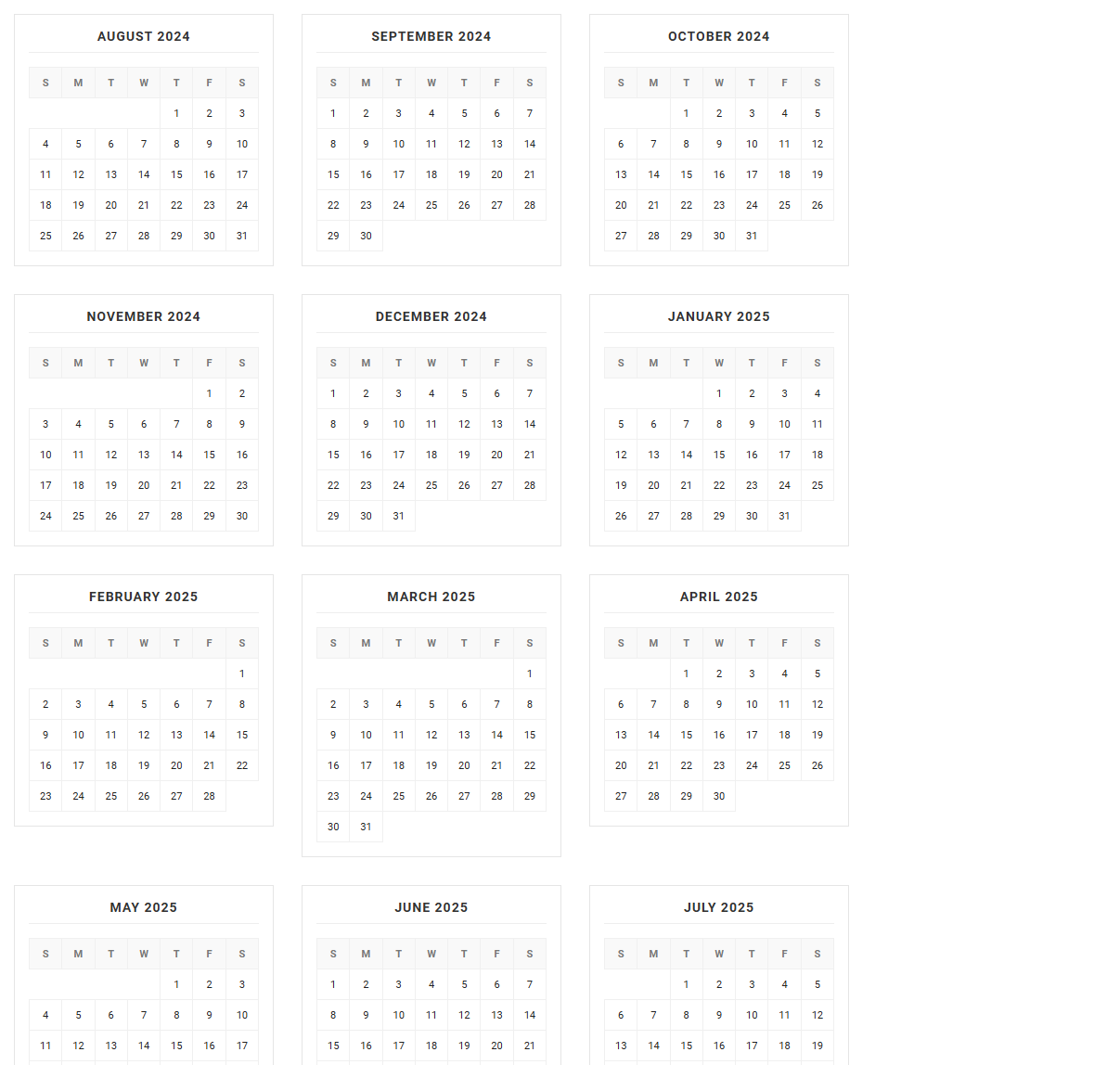
Managing fragmented schedules across terms often leaves educators and students overwhelmed. While standard institutional funding sources prioritize complex administrative software, simpler planning tools are frequently overlooked.
Fortunately, a printable Academic Year Calendar grants immediate visual clarity. Under the stipulation of consistent daily tracking, these templates-much like the physical layouts used by K-12 administrators-drive organizational success. Below, we outline how to select, customize, and maximize your yearly calendar.
Create Your Academic Year Calendar
Done customizing?
Academic Year Calendar - Good to Know
Comprehensive Guide to Academic Terms and Calendar Structures
Semester
A semester is one of the most common academic calendar systems utilized by universities worldwide. Typically, an academic year is divided into two primary terms: the fall semester and the spring semester. Each of these terms generally lasts between 15 and 17 weeks. During this period, students enroll in a set of courses, typically four or five, which they attend concurrently.
This traditional structure allows for deep academic engagement, giving students ample time to absorb complex material, complete comprehensive research projects, and build relationships with professors. Many institutions also offer a condensed summer semester. The structured duration of a semester helps balance rigorous coursework with extracurricular activities, internships, and student life. Key characteristics include:
- Standard duration of 15 to 17 weeks per term.
- Enrollment in multiple courses simultaneously.
- Generous time for research and project development.
Trimester
The trimester system divides the academic year into three equal terms of approximately 10 to 12 weeks each: fall, winter, and spring. Unlike the traditional semester system, students under a trimester schedule typically take fewer courses per term, usually three or four. This structure allows for a more focused academic experience, as students can concentrate deeply on a smaller selection of subjects at any given time.
Many institutions also offer a fourth, optional summer trimester. Benefits of this calendar include increased flexibility in scheduling, more opportunities to retake classes, and the potential for early graduation. However, the faster pace requires disciplined time management, as exams and major assignments arrive much quicker than in standard semester-based programs. To succeed, students must adapt to the expedited timeline of each course.
Add-Drop Period
The add-drop period is a crucial window at the beginning of each academic term, typically lasting one to two weeks. During this brief timeframe, students have the flexibility to alter their class schedules without academic or financial penalties. If a course does not meet a student's expectations, or if a scheduling conflict arises, they can easily adjust their enrollment.
This period serves as an important safety net, allowing students to "shop" for classes to ensure they find the right fit for their degree progress. It is important to distinguish this from withdrawing from a class, which occurs later in the term and often results in a permanent mark on the transcript. Utilizing this window wisely helps students optimize their workload and maintain high academic performance throughout the term.
Reading Week
Reading week, often referred to as study week or prep week, is a designated period right before final examinations. During this time, regular classes and lectures are suspended to allow students uninterrupted time for intensive study and review. It is a critical period designed to reduce academic stress and improve student performance on cumulative assessments.
"Reading week provides the necessary breathing room to consolidate knowledge and prepare thoroughly for academic evaluations."
Students utilize reading week to compile lecture notes, form study groups, write term papers, and consult with professors during extended office hours. While some students view it as a brief holiday, successful students treat it as a structured academic period. This deliberate pause in the instructional schedule ensures that students are thoroughly prepared for the rigorous evaluation period that follows immediately after.
Block Plan
The block plan is an innovative academic calendar system where students take only one course at a time. Each "block" typically lasts three to four and a half weeks, during which students dive intensely into a single subject. This immersive approach eliminates the cognitive load of multitasking between multiple unrelated disciplines.
Classes under a block plan meet daily for several hours, fostering strong peer collaboration and deep relationships with faculty. This schedule is highly beneficial for the following activities:
- Intensive laboratory work and scientific experiments.
- Extended field research and off-campus excursions.
- Immersive study abroad programs.
It demands high focus and consistent attendance, as missing a single day on a block plan can be equivalent to missing an entire week of lectures in a traditional semester system.
J-Term
J-Term, short for January Term or interim term, is a brief, intensive academic session held during the winter break. Spanning roughly three to four weeks in January, this term allows students to complete a full course at an accelerated pace. It provides a unique opportunity to explore niche topics that may not fit into the standard fall or spring schedules.
Many universities use J-Term to offer experiential learning opportunities. These include:
- Short-term study abroad trips and cultural immersion.
- Intensive local or regional internships.
- Independent research projects and creative workshops.
Because students typically enroll in just one course, they can dedicate their full attention to the material, making it an excellent way to fulfill graduation requirements or explore new academic passions outside their major field of study.
In-Service Day
An in-service day is a designated day in the academic calendar when classes are suspended so that faculty and staff can engage in professional development. While students receive a day off from instruction, teachers, administrators, and support staff gather to collaborate, attend workshops, and receive training on new educational methodologies.
These days are essential for maintaining educational quality. Topics covered often include curriculum alignment, technological integration, student mental health support, and diversity training. By investing this time into staff development, institutions ensure that educators remain equipped with modern tools and strategies, directly benefiting student learning outcomes when regular classes resume. It is a vital component of institutional growth and excellence.
Commencement
Commencement is the formal graduation ceremony celebrating students who have successfully completed their degree requirements. This milestone event represents the culmination of years of hard work, dedication, and academic growth. Families, friends, faculty, and distinguished guests gather to honor the achievements of the graduating class.
During the ceremony, students wear traditional academic regalia-caps, gowns, and hoods-representing their specific fields of study and degrees earned. Keynote addresses from inspiring speakers offer wisdom and encouragement as graduates embark on their professional journeys or advanced studies. Beyond the conferring of diplomas, commencement serves as a powerful rite of passage, marking the transition from academic preparation to active contribution in the global community.
Finals Week
Finals week is the culminating period of an academic term dedicated entirely to final examinations, project presentations, and term paper submissions. This high-stakes week requires students to demonstrate their mastery of the course material accumulated over the preceding months. The atmosphere on campus during this time is highly focused and intense.
Universities often adjust campus resources to support students during finals week, such as:
- Extending library hours to a 24-hour schedule.
- Providing quiet study zones and academic tutoring.
- Offering stress-relief activities and complimentary snacks.
Proper preparation, healthy sleep habits, and effective time management are crucial for navigating this demanding week. Successfully completing finals week marks the official end of the academic term, clearing the way for a well-deserved break.
Academic Recess
Academic recess refers to the official breaks scheduled throughout the academic year when instructional activities are paused. These periods include Thanksgiving break, winter recess, spring break, and the extended summer holiday. These recesses are vital for preventing student and faculty burnout.
Beyond rest and relaxation, academic recesses offer valuable opportunities for students to pursue unique endeavors:
- Securing professional internships and jobs.
- Engaging in seasonal employment or career building.
- Participating in volunteer work and community service.
For institutions, these periods allow for campus maintenance, facility upgrades, and administrative planning. Academic recesses play a crucial role in maintaining overall campus well-being and productivity.
Leave a comment