
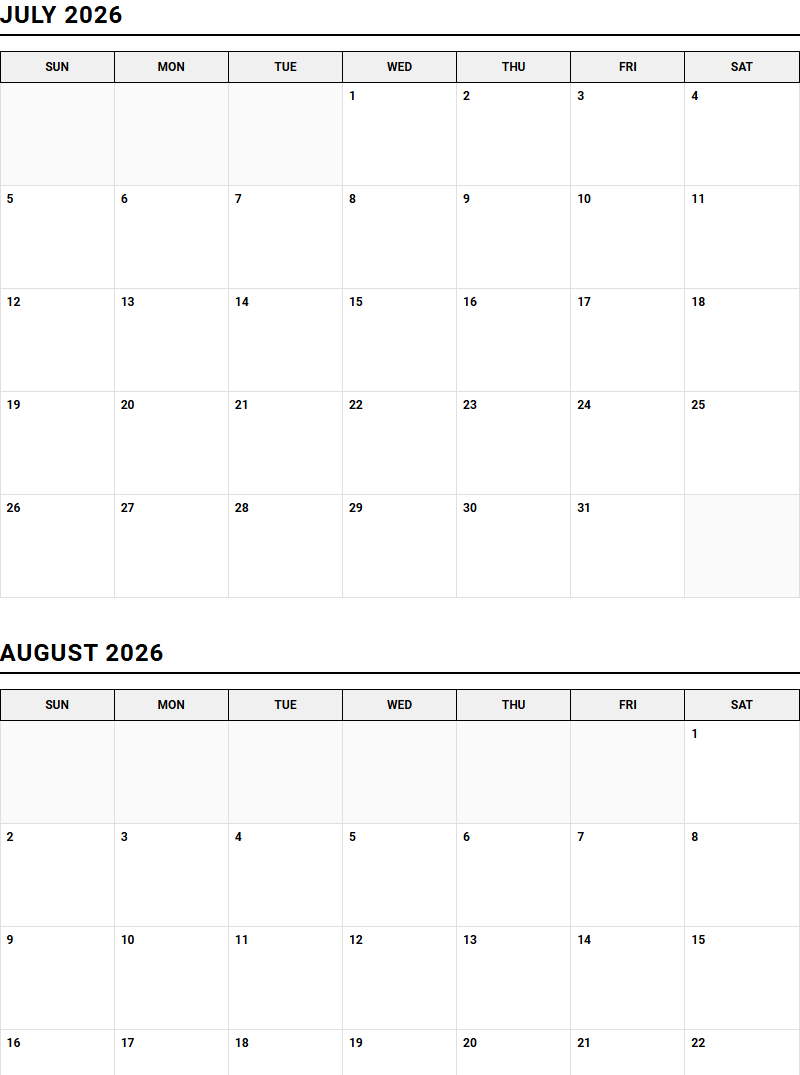
Maintaining momentum on annual goals often leads to mid-year burnout. While standard yearly roadmaps or daily checklists offer some structure, they fail to bridge vision and execution. A printable quarterly planning calendar grants professionals the agility to pivot without losing focus.
However, effective utilization stipulates limiting focus to three core objectives per cycle-a strategy top firms use to scale operations. Below, we outline how to implement these printable calendars to optimize your seasonal productivity.
Create Your Quarterly Planning Calendar
Done customizing?
Quarterly Planning Calendar - Good to Know
OKRs
Objectives and Key Results (OKRs) serve as a critical framework for defining and tracking outcomes within progressive organizations. By establishing ambitious, qualitative Objectives alongside measurable, quantitative Key Results, companies align their daily efforts with overarching corporate strategies. This methodology fosters total transparency, as every team member can visualize how their individual contributions drive the broader mission.
- Focus: Prioritizing the most impactful initiatives each quarter.
- Alignment: Ensuring cross-functional teams work toward shared goals.
- Stretch: Encouraging teams to push operational boundaries.
Typically refreshed every ninety days, OKRs encourage operational agility, allowing teams to pivot rapidly when market conditions shift. Through continuous monitoring and grading of key metrics, businesses cultivate a performance-driven culture that prioritizes actual tangible value over mere output.
PI Planning
Program Increment (PI) Planning is a cornerstone event in the Scaled Agile Framework (SAFe), bringing together diverse teams within an Agile Release Train (ART). Over a highly structured, collaborative session, stakeholders align on a shared product vision, identify critical cross-team dependencies, and construct a unified plan for the upcoming increment.
This intensive event serves as the heartbeat of scaled agile enterprises, bridging the gap between high-level executive strategy and tactical engineering execution. By facilitating face-to-face communication, teams can proactively mitigate risks and resolve conflicts in real time.
- Reviewing the current business context and product roadmap.
- Drafting team plans and estimating capacity.
- Identifying risks and establishing the program board.
The resulting commitment fosters a shared sense of ownership, ensuring everyone departs with a clear understanding of the immediate milestones ahead.
Quarterly Business Review
The Quarterly Business Review (QBR) acts as a pivotal evaluation mechanism, allowing executive stakeholders, department heads, and key client managers to examine operational performance data from the previous three months. During these strategic sessions, teams assess financial metrics, analyze customer satisfaction scores, and review project delivery timelines.
"An effective QBR does not merely look backward; it serves as an essential steering mechanism that shapes the upcoming quarter's investments."
By comparing actual performance against forecasted goals, organizations identify systemic bottlenecks and celebrate operational wins. This structured reflection ensures that resources remain directed toward the most profitable avenues, while keeping external partners aligned on the overall health and direction of the business partnership.
Strategic Roadmap
A strategic roadmap serves as a dynamic, high-level visual blueprint that outlines the long-term vision and directional path of an organization. Unlike static project plans that focus on granular tasks, this document communicates the fundamental "why" and "what" behind product developments and business transformations over an extended timeline.
By mapping key initiatives to specific business outcomes, the roadmap guides cross-functional teams through complex market terrains. It coordinates the efforts of marketing, sales, and engineering departmentally:
- Market Expansion: Targeting new demographics and geographic regions.
- Product Innovations: Deploying cutting-edge features to maintain relevancy.
- Technical Debt Reduction: Strengthening core infrastructure for future scaling.
Maintaining a flexible yet structured roadmap ensures that daily work remains anchored to long-term enterprise goals.
Capacity Planning
Capacity planning is the systematic process of determining the maximum workload an organization, department, or individual team can realistically handle over a specified timeframe. By analyzing historical velocity, available labor hours, and technical constraints, operational leaders can make informed commitments for upcoming cycles.
This practice prevents the common pitfalls of over-promising and under-delivering, which frequently lead to employee burnout and diminished product quality. Effective capacity planning requires a meticulous balance between demand forecasting and supply management.
When organizations accurately measure their operational bandwidth, they can confidently accept new projects, negotiate realistic deadlines, and identify when it is necessary to scale their workforce. This analytical approach transforms vague estimations into predictable, data-backed scheduling.
Milestone Tracking
Milestone tracking provides project management teams with critical checkpoints throughout the development lifecycle, serving as highly visible markers of progress toward major deliverables. Unlike daily task management, milestones represent significant achievements, such as completing a prototype, passing a compliance audit, or launching a beta phase.
Monitoring these key events allows project managers to gauge the overall health of an initiative and communicate progress clearly to external sponsors. When a milestone is missed, it acts as an early warning system, prompting immediate intervention.
- Phase Gates: Verifying entry and exit criteria for project stages.
- Deliverable Verification: Ensuring quality standards are met before proceeding.
- Stakeholder Updates: Providing high-level progress reports without granular noise.
This macro-level oversight keeps complex initiatives structured and highly manageable.
Quarterly Retrospective
The quarterly retrospective offers a structured forum for teams to pause, reflect, and evaluate their collaborative processes and workflows over the preceding ninety days. By fostering a safe, blame-free environment, team members can candidly discuss operational bottlenecks, communication breakdowns, and notable successes.
The primary objective is to generate actionable insights that refine internal practices. During these sessions, teams categorize their observations into clear categories:
- What went well: Processes that should be standardized and repeated.
- What went wrong: Bottlenecks that hindered productivity or morale.
- Action items: Concrete changes to implement in the next cycle.
Continuous improvement is achieved when retrospectives lead to tangible adjustments, transforming retrospection into a catalyst for operational excellence.
Resource Allocation
Resource allocation involves the strategic distribution of an organization's most valuable assets-including talent, capital, technology, and time-across competing projects and initiatives. Effective allocation requires deep visibility into ongoing operations and a clear understanding of corporate priorities.
When executed correctly, it ensures that high-impact projects receive adequate support while minimizing wasteful expenditure on low-priority tasks. Project management offices must continuously balance resource availability against shifting project demands.
By leveraging resource scheduling software and skill matrices, managers assign the right people to the right tasks at the optimal time. This disciplined approach mitigates resource constraints, optimizes utilization rates, and secures a higher return on investment for every project undertaken.
Timeboxing
Timeboxing is an exceptionally efficient productivity technique that allocates a fixed, non-negotiable limit of time to a specific activity or deliverable. By constraining the time available, teams are forced to focus on core functionalities, minimize scope creep, and make rapid, decisive design choices.
This agile practice is widely utilized during sprint planning, daily standups, and exploratory research phases where work could otherwise expand indefinitely. The advantages of timeboxing include:
- Increased Focus: Eliminating distractions to meet tight boundaries.
- Predictable Delivery: Establishing a reliable cadence for project updates.
- Mitigated Perfectionism: Encouraging the release of functional, iterative updates.
Applying strict time limits prevents analytical paralysis, ensuring that projects maintain momentum and deliver continuous value to users.
Fiscal Quarter Alignment
Fiscal quarter alignment synchronizes operational sprints, product releases, and strategic goals with the financial reporting cycles of the business. This structural harmony ensures that departmental expenditures, resource hiring, and revenue generation directly correspond with the organization's quarterly performance reporting.
By mapping tactical execution windows to three-month financial intervals, leadership can present cohesive growth metrics to board members, investors, and public markets. It allows for a more accurate evaluation of Return on Investment (ROI) across different departments.
Furthermore, aligning operational cadences with fiscal quarters simplifies budget forecasting and tax planning. This synchronization ensures that strategic pivots, driven by financial realities, are executed in tandem across both the financial ledgers and the product development teams.

Leave a comment