
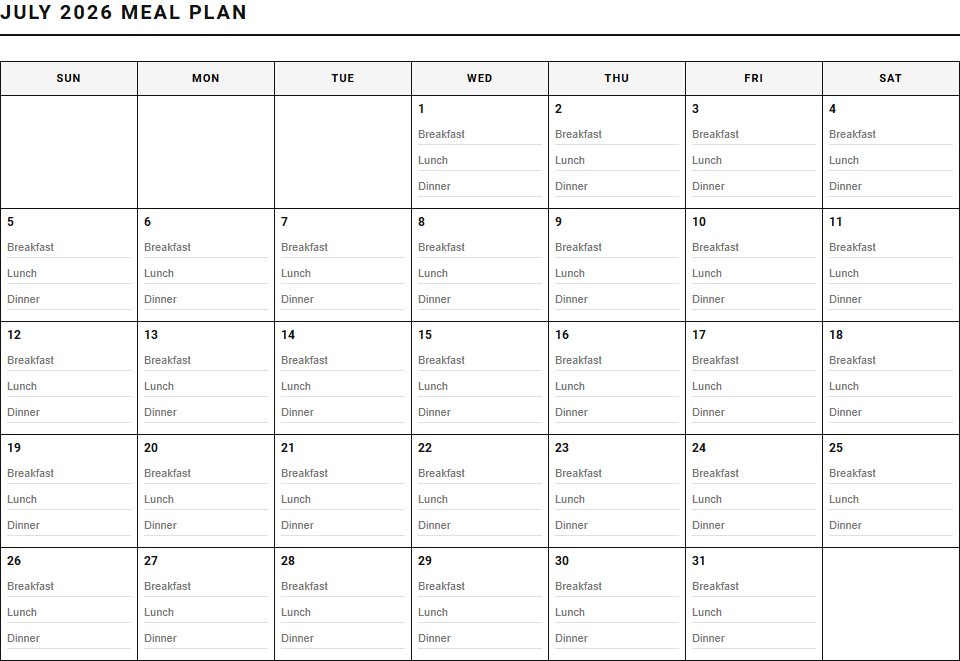
Managing daily dinner decisions often leads to chronic decision fatigue and budget leaks. While digital apps and standard grocery lists offer temporary organization, they frequently lack visual clarity. Transitioning to a dedicated Monthly Calendars printable calendar designed as a Monthly Meal Planner Calendar grants you complete culinary foresight. Success with this tool, however, requires a commitment to pre-scheduling ingredients. Below, we examine concrete templates for tracking macros and planning family dinners, detailing how to optimize your layout.
Create Your Monthly Meal Planner Calendar
Done customizing?
Monthly Meal Planner Calendar - Good to Know
Aesthetic meal planner
An aesthetic meal planner transforms the daily chore of kitchen organization into an inspiring, mindful ritual. By prioritizing beautiful typography, harmonious color palettes, and minimalist layouts, this approach appeals to those who value visual harmony in their living spaces. A visually pleasing menu acts as a gentle invitation to cook healthy, home-cooked meals rather than ordering takeout.
Whether you prefer a physical linen-bound journal or a sleek iPad layout, design plays a critical role in habit formation. To elevate your culinary space, consider these design elements:
- Soft pastel or neutral earth tones that complement kitchen decor.
- Minimalist grid layouts that reduce mental clutter and promote clarity.
- Dedicated sections for elegant food photography or botanical illustrations.
Integrating these serene aesthetics ensures that organizing your weekly nourishment feels less like an obligation and more like a creative outlet for self-care and culinary expression.
Notion meal planner template
The flexibility of a Notion meal planner template lies in its powerful database relational capabilities. Unlike static documents, Notion allows users to connect a recipe library directly to a weekly calendar view, auto-generating dynamic shopping lists in real time. This digital workspace adapts to your unique eating habits, accommodating everything from complex meal prep schedules to simple daily logs.
By leveraging custom properties, you can tag recipes by prep time, difficulty, or main ingredients. Consider structuring your template with these core database relations:
- Recipe Database: The central hub storing ingredients, instructions, and source URLs.
- Weekly Scheduler: A calendar view linking days of the week to specific database items.
- Grocery List Aggregator: A filtered view displaying ingredients needed for scheduled meals.
Using relation and rollup properties, your digital workspace handles the heavy lifting, saving hours of manual planning.
Batch cooking calendar
A batch cooking calendar is the ultimate time-saving tool for busy professionals and families. Instead of preparing meals daily, this system schedules dedicated kitchen sessions-often on weekends-to cook large quantities of versatile base ingredients. By planning your kitchen activity around batching, you maximize appliance efficiency and minimize cleanup time throughout the workweek.
"By preparing versatile building blocks like roasted vegetables, grains, and proteins in bulk, you assemble fresh dinners in under ten minutes." - Culinary Efficiency Guide
Your calendar should clearly distinguish between prep days and assembly days. This structured approach prevents decision fatigue, ensuring that when energy is low, healthy and fully prepared options are readily available in your freezer or refrigerator, waiting to be reheated.
Monthly menu board
For long-term organizational clarity, a monthly menu board provides a comprehensive birds-eye view of your household's dining landscape. Usually displayed prominently in the kitchen on a magnetic whiteboard or chalkboard, this macroscopic view allows you to align meal schedules with paydays, seasonal produce cycles, and major family events.
Planning thirty days in advance prevents repetitive meal cycles and streamlines bulk shopping. You can easily mark themed nights (such as Taco Tuesday or Pizza Friday) to establish comforting household traditions. A monthly rotation also makes it simpler to cross-reference school calendars and late work nights, ensuring complex meals are never scheduled during chaotic weeks, thereby reducing stress and food waste.
Zero-waste meal planner
Embracing a zero-waste meal planner is both an environmental triumph and a financial victory. This strategy flips traditional meal planning on its head: instead of deciding what you want to eat and buying new ingredients, you plan meals specifically to consume what you already have before it spoils.
The core methodology focuses on ingredient preservation and creative substitution. A highly effective zero-waste workflow includes:
- First In, First Out (FIFO): Prioritizing highly perishable items like leafy greens.
- Cross-utilization: Designing meals that share overlapping fresh herbs and open dairy containers.
- Rescue days: Dedicating the day before shopping to stir-fries, soups, or frittatas that clear out the crisper drawer.
By shifting your focus to conservation, you significantly decrease your ecological footprint while discovering inventive, delicious flavor combinations.
Budget meal calendar
A budget meal calendar is a strategic financial tool designed to optimize grocery spending without compromising nutritional value. By aligning your eating schedule with grocery store sales cycles, seasonal discounts, and affordable pantry staples, you gain control over your household expenses.
Integrating affordable protein sources like beans, lentils, and eggs into key calendar blocks ensures cost-effective nutrition. Consider this sample distribution of a budget-focused week:
| Day Type | Primary Protein Source | Average Cost Focus |
|---|---|---|
| Pantry Night | Canned chickpeas, black beans | Ultra-low cost |
| Seasonal Fresh | Local bone-in chicken thighs | Moderate cost |
| Leftover Remix | Assorted accumulated ingredients | Zero new cost |
Meticulous planning ensures that every dollar spent at the grocery store translates directly into delicious, filling meals.
Macro-tracking calendar
A macro-tracking calendar serves as a bridge between culinary enjoyment and precise physical performance goals. Whether you are aiming for fat loss, muscle hypertrophy, or athletic endurance, mapping out your macronutrients-proteins, carbohydrates, and fats-ahead of time is far more effective than tracking them retroactively.
By scheduling meals that correspond directly to your daily physical activity levels, you can easily implement carb-cycling or caloric-deficit strategies. You can organize your calendar with specific focal points:
- High-carb training days: Scheduled to fuel intense workouts and optimize glycogen recovery.
- High-protein rest days: Structured to facilitate muscular repair and satiety.
- Pre-portioned snack blocks: Tailored to prevent blood sugar crashes and impulsive snacking.
Aligning your weekly food calendar with metabolic needs removes the daily guesswork from sports nutrition.
Family dinner planner
Conquering the chaos of evening schedules requires a collaborative family dinner planner. This tool goes beyond mere food preparation; it coordinates extracurricular activities, varying dietary preferences, and chore division, turning dinner time back into a peaceful communal experience.
Involving children in the planning process fosters healthy relationships with food and teaches valuable life skills. You can designate specific nights for different family members to lead, choosing recipes and helping with preparation. To accommodate busy evenings, mark days with "slow cooker" or "one-pot" tags to ensure that on nights filled with sports practices or music lessons, a warm, home-cooked meal is ready the moment the family walks through the door.
Pantry challenge calendar
A pantry challenge calendar is a fun, highly rewarding way to declutter your kitchen cabinets while drastically reducing your monthly grocery bill. For a designated period-usually a week or two-the challenge restricts grocery shopping to absolute essentials like fresh milk or produce, forcing you to cook from your existing dry goods, freezer stockpiles, and canned foods.
This process requires creative culinary thinking, turning dusty cans of artichokes or bags of split peas into gourmet meals. To execute a successful pantry challenge, follow these steps:
- Inventory your assets: List everything in your freezer, cupboards, and spice racks.
- Map recipes: Match dry grains with frozen proteins to create balanced plates.
- Document successes: Keep track of surprisingly delicious pantry combinations for future regular rotations.
This challenge prevents long-term food expiration and refreshes your culinary resourcefulness.
Digital meal planning template
A modern digital meal planning template offers unmatched convenience and accessibility, syncing effortlessly across smartphones, tablets, and desktop computers. Operating in a digital space means your recipes, meal schedules, and shopping lists are always in your pocket, making impromptu grocery store stops stress-free.
Many digital systems support interactive elements that static paper planners simply cannot match. Useful digital features to look for include:
- Hyperlinked recipe cards that open instructions with a single click.
- Collaborative editing features that allow family members to add grocery items in real time.
- Automated scaling tools that adjust ingredient quantities based on the number of dinner guests.
Transitioning to a digital workspace streamilnes your organization, leaving you more time to enjoy the creative process of cooking.
Leave a comment