
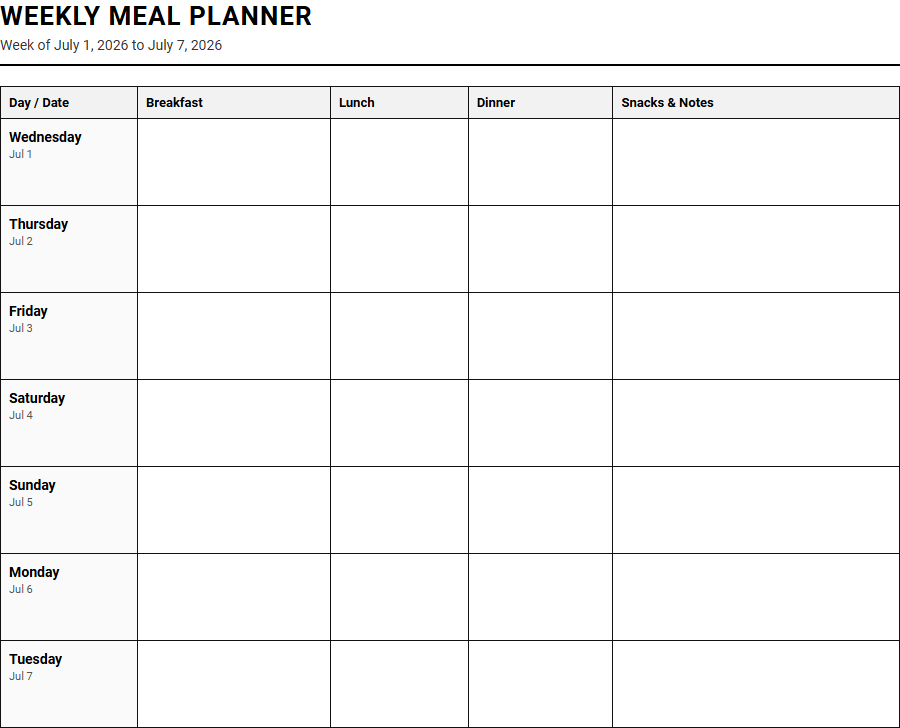
Managing daily family nutrition often leads to decision fatigue and budget strain. While standard grocery budgeting and meal sourcing establish a baseline, they frequently lack execution. A printable Yearly Calendar grants immediate, structured visualization to your meal prep strategy. Although success stipulates a commitment to consistent weekly updates, utilizing specific monthly templates, such as the 12-month rotation grid, ensures long-term organization. Below, we examine how to effectively implement these yearly printable tools to optimize your kitchen management.
Create Your Meal Planner Calendar
Done customizing?
Meal Planner Calendar - Good to Know
Meal prep automation
Modern culinary planning relies heavily on meal prep automation to streamline kitchen workflows. By leveraging advanced algorithmic scheduling, busy individuals can transition from manual chore delegation to a highly optimized, hands-free cooking routine. This technological shift utilizes smart appliances and specialized software to coordinate cooking times, preheat ovens remotely, and even dictate precise chopping sequences.
Implementing an automated system offers key advantages for the home chef:
- Time Reclamation: Reduce active kitchen labor by up to forty percent each week.
- Energy Efficiency: Synchronize appliance usage to minimize electricity consumption.
- Precision Execution: Eliminate human error in temperature control and timing.
By delegating repetitive tasks to integrated software, you establish a seamless flow that transforms weekend cooking sessions from a chaotic chore into a highly efficient, therapeutic routine. Embracing automation ensures your culinary efforts yield maximum results with minimal physical fatigue.
Smart grocery list integration
The bridge between recipe selection and actual execution is often disrupted by fragmented shopping methods. Smart grocery list integration solves this friction point by dynamically translating digital meal plans into categorized, aisle-specific shopping lists. When you select your weekly recipes, the system automatically aggregates ingredients, scales quantities based on your serving requirements, and organizes them logically.
Consider the core functionalities of a modern connected shopping ecosystem:
- Real-time updates: Shared cloud lists ensure family members never double-purchase items.
- Aisle categorization: Items are grouped automatically by department to optimize your physical route through the store.
- E-commerce sync: Push your list directly to local grocery delivery services with a single click.
This systematic approach eliminates impulse buying, saves precious time during weekly errands, and guarantees that no critical ingredient is forgotten, laying a flawless foundation for your upcoming culinary endeavors.
Pantry inventory sync
An organized kitchen relies on accurate data, and a pantry inventory sync system serves as the central database of your culinary assets. By utilizing barcode scanning, computer vision, or manual digital logs, this system maintains a real-time ledger of everything inside your cupboards, refrigerator, and freezer. It actively prevents the common mistake of purchasing duplicates of ingredients you already own.
Key features of an optimized inventory tracker include:
- Expiration Date Alerts: Receive proactive notifications before sensitive items spoil.
- Auto-Depletion: Ingredients are deducted automatically from your inventory as you mark meals as cooked.
- Threshold Triggers: Set minimum quantities for staples like olive oil or garlic to trigger automated shopping reminders.
Maintaining a digital twin of your physical pantry allows you to make informed decisions, optimize storage space, and ensure that fresh ingredients are utilized during their peak window of quality.
Batch cooking schedule
Maximizing kitchen efficiency requires a structured batch cooking schedule. Rather than cooking daily, this methodology consolidates culinary production into dedicated blocks of time. By preparing large quantities of versatile base ingredients-such as roasted root vegetables, grains, and proteins-you build a modular foundation for quick assembly throughout the week.
A typical high-efficiency batch schedule focuses on sequence optimization:
- Phase 1: Pre-heat appliances and initiate long-duration baking or roasting tasks.
- Phase 2: Execute active stovetop simmering, such as preparing grains, beans, or sauces.
- Phase 3: Portion, cool, and safely package meals in airtight containers for the upcoming week.
This structured approach minimizes clean-up time to a single session and ensures that nutritious, home-cooked food is always accessible, shielding you from the temptation of convenience-driven fast food options during busy weeknights.
Digital menu board
A digital menu board acts as the central communication hub for your household's nutritional plan. Placed prominently in the kitchen, this display visualizes daily meals, upcoming prep requirements, and designated leftovers. It eliminates the constant question of "what's for dinner?" by providing absolute clarity to every household member.
Modern digital boards offer dynamic features that static chalkboards cannot replicate:
- Interactive allergen warnings and dietary indicators.
- Visual preparation timelines, showing which ingredients need to be defrosted or prepped ahead of time.
- Direct links to digital recipe cards, allowing any family member to step in and assist with cooking.
Displaying your culinary roadmap fosters shared responsibility and builds excitement around home-cooked meals, transforming dining from an afterthought into a celebrated daily ritual.
Food waste reduction tracker
Environmental stewardship and financial savings converge in the implementation of a food waste reduction tracker. This tool monitors discarded ingredients, analyzes the root causes of spoilage, and provides actionable insights to adjust future purchasing habits. By logging what gets thrown away, you gain visibility into patterns of over-purchasing or under-utilization.
Consider the tangible benefits of tracking waste metrics:
- Identify high-risk perishables that frequently go unused.
- Calculate the financial impact of discarded food to motivate behavioral changes.
- Receive suggestions for modifying portion sizes or preservation techniques.
Using this data-driven feedback loop empowers households to align their purchasing habits with actual consumption, drastically reducing both environmental impact and grocery expenses over time.
Recipe scraper
The internet is rich with culinary inspiration, but navigating ad-heavy blogs can be frustrating. A recipe scraper extracts clean cooking data directly from websites, bypassing narrative fluff, pop-ups, and trackers. It imports only the essential elements: ingredients, measurements, and step-by-step instructions.
This utility normalizes unstructured web data into a clean, readable format that offers several benefits:
- Universal Standardization: Converts diverse recipe formats into a single, cohesive style.
- Instant Scaling: Automatically adjusts ingredient yields to match your target portion sizes.
- Offline Accessibility: Saves clean text local to your device for uninterrupted cooking sessions.
Building a distraction-free digital cookbook enables you to focus purely on the culinary process, ensuring accuracy and saving valuable time during active preparation.
Macro-balanced meal prep
Achieving specific fitness goals or sustaining daily energy levels requires precise nutrition. A macro-balanced meal prep strategy focuses on the calculated distribution of macronutrients: proteins, carbohydrates, and healthy fats. Instead of merely counting calories, this approach optimizes the composition of every meal to support muscle recovery and steady blood sugar levels.
An effective macro-balancing framework includes:
- Lean Proteins: Building blocks for cellular repair and satiety.
- Complex Carbohydrates: Sustained energy sources that prevent mid-day crashes.
- Healthy Lipids: Essential fats that support hormone regulation and nutrient absorption.
Pre-apportioning these components in precise ratios ensures your body receives optimal fuel, removing guesswork and helping you maintain physical performance throughout your demanding weekly schedule.
Dietary restriction filter
Catering to diverse nutritional requirements demands absolute precision. A robust dietary restriction filter screens recipes, ingredient lists, and menu suggestions to ensure compliance with health, ethical, or religious boundaries. Whether managing severe allergies, gluten sensitivities, or plant-based preferences, this filter protects diners from accidental exposure.
Key filter criteria can be customized across several categories:
- Allergen Safety: Complete exclusion of nuts, dairy, soy, shellfish, or gluten.
- Ethical Choices: Filtering specifically for vegan, vegetarian, or sustainably sourced ingredients.
- Medical Protocols: Aligning with low-sodium, diabetic-friendly, or low-FODMAP guidelines.
Implementing reliable filtering protocols reduces the cognitive burden of meal planning, ensuring safety and inclusivity for family members and dinner guests alike.
Leftover rotation planner
A common pitfall of meal prep is letting cooked food spoil in the back of the refrigerator. A leftover rotation planner dynamically schedules the consumption of previously prepared meals, ensuring nothing goes to waste. It tracks the age of cooked items and integrates them strategically into your upcoming eating schedule.
To maximize the utility of prepared food, the system operates on key principles:
- First-In, First-Out (FIFO) kitchen management protocols.
- Creative repurposing suggestions, such as turning yesterday's roasted chicken into today's protein-rich soup.
- Precise freezing schedules for items that cannot be consumed within safe storage windows.
Active rotation management maximizes your initial kitchen investments, reduces fresh cooking requirements on busy days, and guarantees that every meal remains safe, flavorful, and rewarding to consume.

Leave a comment