
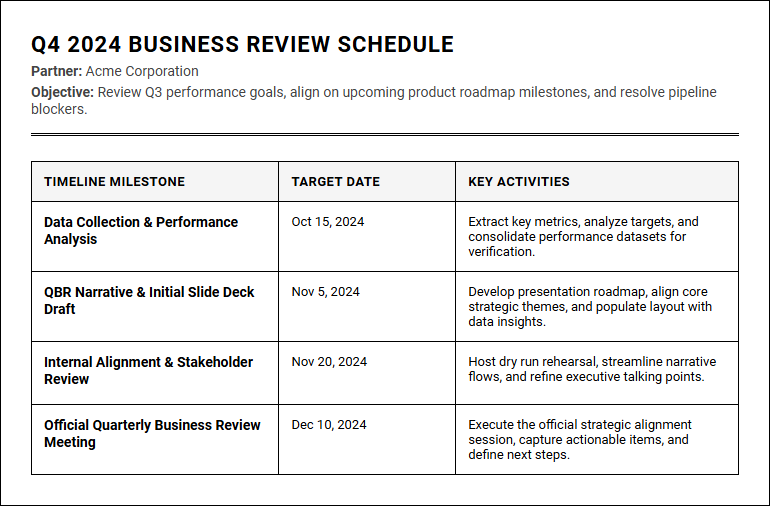
Aligning cross-functional projects during quarterly transitions often leads to fragmented tracking and missed deadlines. While standard operational funding sources secure baseline project resources, they frequently lack high-level strategic visualization. A dedicated Quarterly Business Review Calendar grants teams immediate execution clarity, utilizing concrete tools like milestone trackers to maintain alignment. Note that maximum efficiency requires consistent team updates. Below, we outline how to leverage this printable tracker to streamline your upcoming reviews.
Create Your Quarterly Business Review Calendar
Done customizing?
Quarterly Business Review Calendar - Good to Know
QBR Cadence
Establishing a structured Quarterly Business Review (QBR) cadence is essential for maintaining strong alignment between service providers and enterprise stakeholders. This systematic rhythm ensures that strategic partnerships remain focused on driving mutual growth, addressing operational roadblocks, and identifying new avenues for collaboration. Rather than treating these sessions as administrative burdens, high-performing organizations utilize them to recalibrate expectations and celebrate shared milestones.
To maximize the impact of your QBRs, consider incorporating the following agenda items:
- Executive Summary: A high-level overview of the quarter's primary achievements.
- Performance Metrics: Objective data reflecting service delivery standards and contractual compliance.
- Strategic Roadmapping: Collaborative planning session to align future initiatives with evolving corporate goals.
By committing to a predictable quarterly timeline, enterprises can transform standard vendor relationships into deeply integrated, high-value partnerships that consistently deliver measurable business outcomes.
Fiscal Calendar Alignment
Synchronizing operational reviews with the corporate fiscal calendar alignment is crucial for securing budget approvals and maintaining executive relevance. When business assessments coincide with key financial milestones, leadership teams can make informed, data-driven decisions regarding resource allocation and contract renewals. This coordination prevents the friction that typically occurs when operational cycles operate independently of financial realities.
Implementing this alignment requires careful coordination across multiple business functions, as detailed below:
- Q1 Planning: Align project kickoffs with newly authorized annual budgets and strategic hiring plans.
- Q2 Mid-Year Review: Evaluate actual expenditures against initial forecasts and make necessary adjustments.
- Q3 Forecasting: Analyze run rates and initiate preliminary discussions for next year's resource needs.
- Q4 Closeout: Finalize performance metrics, document total cost of ownership, and lock in renewal agreements.
Aligning these processes protects projects from sudden budget shifts and positions operational initiatives as core drivers of overall fiscal health.
Asynchronous Review Scheduling
Modern global enterprises frequently struggle with coordinating live meetings across multiple time zones. Embracing asynchronous review scheduling offers a highly efficient alternative to traditional, calendar-clogging syncs. By leveraging collaborative digital workspaces and recorded video briefings, teams can review critical performance metrics and project updates at their own convenience without sacrificing deep focus time.
This decentralized approach rely heavily on a structured documentation model:
- Pre-recorded Walkthroughs: Project owners share five-minute video summaries of key deliverables.
- Centralized Feedback Loops: Stakeholders input questions and approvals directly into shared documents.
- Actionable Deadline Windows: Reviewers are given a strict 72-hour window to submit their inputs.
Shifting routine updates to asynchronous channels allows organizations to reclaim valuable meeting hours, reserving live interactions for critical creative brainstorming, complex problem-solving, and relationship-building sessions.
Milestone-Driven Tracking
Relying solely on calendar dates to measure progress often leads to artificial deadlines and compromised quality. A robust system of milestone-driven tracking shifts the organizational focus from mere time elapsed to actual value delivered. This methodology ensures that subsequent project phases are unlocked only when predefined, verifiable success criteria are fully met by the delivery team.
Key components of a successful milestone-oriented framework include:
- Definition Phase
- Establishing clear, objective, and quantifiable definitions of done for each project phase.
- Verification Phase
- Utilizing automated testing or independent quality assurance checks to validate deliverables.
- Gateway Review
- A formal sign-off process involving key sponsors before releasing resources for the next phase.
By anchoring project momentum to concrete outcomes, organizations dramatically reduce risk, eliminate scope creep, and maintain a high standard of quality throughout the development lifecycle.
Executive Touchpoint Schedule
Maintaining long-term sponsor buy-in requires a highly structured executive touchpoint schedule. C-suite leaders do not need to be bogged down by daily operational details; instead, they require high-level, synthesized insights that directly tie performance to overarching business objectives. Establishing a dedicated communication channel for executives ensures they remain informed and engaged without suffering from meeting fatigue.
To respect executive schedules while ensuring alignment, structure your interactions around these key cadences:
- Monthly Flash Reports: One-page dashboards summarizing budget variance, major risks, and key wins.
- Bi-Annual Strategic Briefings: Deep-dive discussions focusing on industry trends, competitor movements, and partnership evolution.
- Annual Governance Meetings: High-level reviews to evaluate the contract's overall health and discuss long-term renewal options.
Proactively managing these interactions helps project leaders secure necessary executive intervention when critical roadblocks emerge, ensuring sustained momentum.
Value Realization Timeline
A well-defined value realization timeline acts as a visual roadmap that tracks when specific benefits and returns on investment (ROI) will be actualized. Many initiatives fail to demonstrate immediate impact, leading to premature stakeholder skepticism. Mapping out exactly when different tiers of value will emerge manages expectations and proves the long-term viability of the investment.
Typically, value emerges across three distinct operational horizons:
- Immediate Wins (0-30 Days): Quick-hit process improvements, automation of manual tasks, and immediate cost savings.
- Intermediate Benefits (30-90 Days): Improved team velocity, enhanced customer satisfaction scores, and reduced operational error rates.
- Long-Term Strategic Impact (90+ Days): Sustained revenue growth, market expansion, and the establishment of a scalable business model.
Tracking progress against these specific milestones allows teams to defend project budgets and build trust with financial stakeholders.
Strategic Planning Cycle
Integrating daily operations into the broader strategic planning cycle ensures that team efforts directly support long-term corporate visions. Organizations that operate in silos risk dedicating resources to projects that no longer align with executive goals. A continuous planning cycle creates a feedback loop where ground-level insights consistently inform and refine high-level business strategies.
An effective corporate planning cycle typically moves through these core stages:
- Environmental Scanning: Assessing market shifts, regulatory updates, and emerging technological trends.
- Resource Allocation: Aligning capital, human resources, and operational assets with prioritized objectives.
- Continuous Execution: Monitoring progress via real-time dashboards and key performance indicators.
This dynamic approach allows enterprises to pivot rapidly in response to changing market conditions while maintaining operational cohesion across all departments.
Stakeholder Availability Mapping
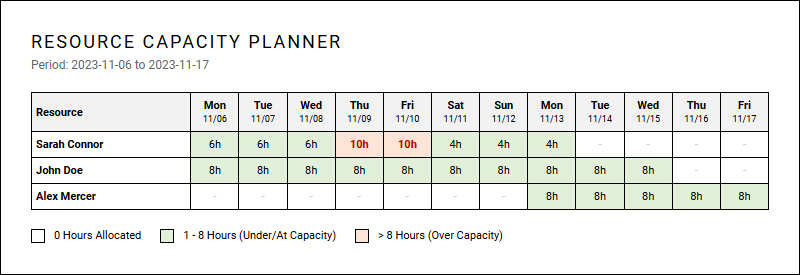
Coordinating complex projects across matrixed organizations requires meticulous stakeholder availability mapping. Project delays frequently occur not from technical failures, but from the inability to secure timely approvals from key decision-makers. By proactively mapping out stakeholder schedules, vacation periods, and peak operational seasons, project managers can optimize critical milestones for maximum participation.
Consider implementing the following scheduling practices to minimize calendar bottlenecks:
- Blackout Period Identification: Documenting quarter-end close periods when finance teams are entirely unavailable.
- Delegate Authorization: Establishing pre-approved backup decision-makers for when primary stakeholders are out of the office.
- Time-Zone Optimization: Grouping virtual sessions into overlapping core hours to accommodate global cross-functional teams.
Proactive scheduling keeps projects moving smoothly, avoiding the costly delays associated with waiting on critical, yet absent, business approvers.
Performance Review Cadence
A consistent performance review cadence is the cornerstone of operational excellence and continuous service improvement. These sessions provide an objective forum to evaluate vendor deliverables, internal team outputs, and overall system reliability against established Service Level Agreements (SLAs). Regular evaluations prevent small performance variances from escalating into major operational failures.
To build a comprehensive evaluation framework, balance your reviews across these different intervals:
- Weekly Operational Syncs: Quick checks to address immediate technical bugs and short-term delivery bottlenecks.
- Monthly Performance Reviews: Formal evaluations of SLA compliance, system uptime, and average response times.
- Annual Partner Assessments: Holistic evaluations of the relationship viability, cultural fit, and contract competitiveness.
Maintaining a disciplined review schedule fosters an organizational culture of accountability, driving continuous improvement across all operational facets.
Quarterly Retrospective Timeline
The end of each business quarter offers a unique opportunity to pause, reflect, and optimize internal workflows through a structured quarterly retrospective timeline. Unlike standard business reviews that focus heavily on external deliverables, retrospectives are designed to analyze internal processes, team dynamics, and communication bottlenecks to make the next cycle more efficient.
A standard retrospective process follows a clear, constructive sequence:
- Data Gathering: Collect objective metrics regarding sprint velocity, team morale, and project bottlenecks.
- Root Cause Analysis: Discuss what went well and identify the underlying causes of any missed targets.
- Action Item Creation: Assign specific, measurable process improvements to owners for implementation in the upcoming quarter.
Dedicated self-reflection enables teams to systematically eliminate operational inefficiencies, fostering a highly collaborative environment geared toward sustained execution excellence.
Leave a comment