
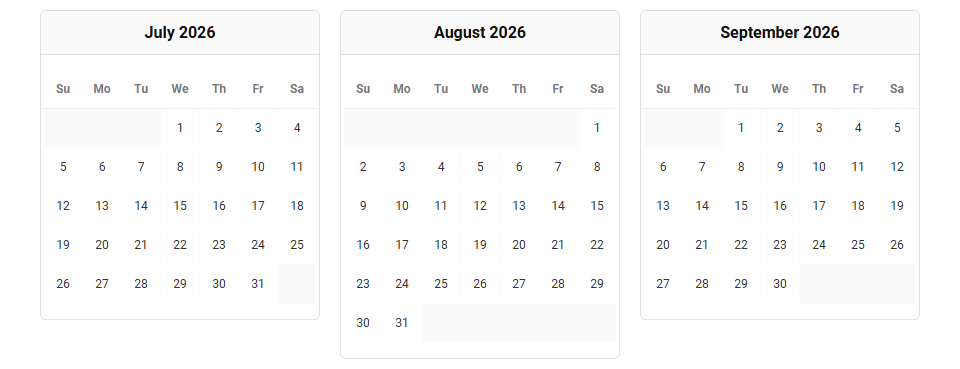
Managing overlapping seasonal projects across quarters remains a persistent challenge for busy coordinators. While standard administrative resources and organizational funding sources typically support high-level annual plans, they often overlook mid-range execution. Our printable Three-Month View Planning Calendar grants teams immediate, continuous visibility-provided it is integrated with daily digital workflows. Perfect for tracking concrete milestones like Q4 holiday marketing campaigns, this guide details how to optimize your quarterly layout for seamless strategic scheduling.
Create Your Three-Month View Planning Calendar
Done customizing?
Three-Month View Planning Calendar - Good to Know
Quarterly roadmap
A quarterly roadmap serves as a strategic blueprint, aligning organizational vision with actionable execution over a three-month horizon. It bridges high-level strategy and daily operations, ensuring cross-functional teams work toward unified targets. By visualizing key initiatives, product releases, and market expansions, this framework keeps stakeholders aligned on upcoming priorities.
To maximize the utility of your roadmap, focus on these critical components:
- Strategic Themes: Group initiatives by high-level business objectives to maintain focus.
- Cross-Functional Dependencies: Highlight areas where product, marketing, and sales intersect.
- Resource Allocations: Ensure talent and budget are distributed to high-impact projects.
Regularly reviewing this map allows teams to pivot gracefully when market conditions shift, keeping short-term deliverables synchronized with long-term aspirations. It acts as a primary communication tool, transforming abstract goals into a tangible, shared journey for the entire enterprise.
90-day sprint planner
The 90-day sprint planner breaks large-scale goals into manageable, bite-sized tasks. This agile approach encourages teams to focus strictly on immediate priorities, minimizing cognitive overload and reducing project bottlenecks. Over a ninety-day period, execution speed accelerates as clear ownership and rapid feedback loops are established.
Implement this planner by organizing your workflow into distinct phases:
- Phase 1 (Days 1-30): Establish foundational architectures, kick off campaigns, and define success metrics.
- Phase 2 (Days 31-60): Execute core tasks, monitor progress, and iterate based on initial user feedback.
- Phase 3 (Days 61-90): Finalize deliverables, run quality assurance checks, and prepare for deployment.
This disciplined structure ensures that procrastination is minimized and team momentum is sustained. By celebrating micro-wins every thirty days, motivation remains high throughout the entire cycle.
Rolling quarterly forecast
A rolling quarterly forecast offers a dynamic financial and operational planning model that continuously projects future performance. Unlike static annual budgets, this rolling mechanism updates projections each month, dropping the elapsed month and adding a future month to the horizon. This adaptability is crucial for modern businesses navigating volatile economic climates.
"Adaptability is the key to financial resilience. By constantly projecting ninety days forward, organizations can preemptively address supply chain disruptions and cash flow shortages."
Integrating actual data with predictive analytics enables leadership to make proactive decisions. Rather than reacting to historical deficits, teams can adjust spending, optimize inventory, and realign hiring strategies dynamically. This continuous forecasting cycle fosters a culture of fiscal responsibility and operational agility, ensuring the company remains competitive no matter what challenges arise in the marketplace.
Multi-month dashboard
The multi-month dashboard aggregates disparate data points into a single, comprehensive visual interface. By consolidating key performance indicators (KPIs) over a three-to-six-month span, executives can quickly identify trends, patterns, and anomalies that might be invisible on weekly reports. This holistic view helps stakeholders make data-driven decisions swiftly.
| Metric Name | Month 1 Target | Month 2 Target | Month 3 Target |
|---|---|---|---|
| Customer Acquisition Cost (CAC) | $120 | $110 | $100 |
| Monthly Recurring Revenue (MRR) | $50k | $62k | $75k |
| Churn Rate | 2.5% | 2.2% | 2.0% |
Utilizing clean data visualization techniques ensures that team members at all levels can comprehend complex trends at a glance, fostering transparent internal communication.
Medium-term planning calendar
A medium-term planning calendar operates in the sweet spot between daily task managers and multi-year strategic visions. Usually covering a period of three to six months, this tool allows marketing teams, product developers, and event coordinators to schedule major campaigns without getting bogged down in minute details. It establishes a steady operational cadence.
Key advantages of utilizing a medium-term calendar include:
- Improved Resource Forecasting: Plan contractor hiring and budget allocations well in advance.
- Enhanced Collaboration: Align disparate department schedules to avoid internal project collisions.
- Strategic Space: Leave adequate room for creative development and testing before major launches.
Maintaining this high-level view prevents organizations from falling into a reactive loop, ensuring that prep work begins weeks before a campaign actually launches.
90-day planning cycle
Adopting a structured 90-day planning cycle helps teams build a repeatable rhythm of planning, executing, and reviewing. This system is short enough to spark urgency, yet long enough to allow for the completion of significant initiatives. It encourages organizations to discard outdated annual plans in favor of responsive, iterative growth models.
Each ninety-day loop requires a commitment to three specific behaviors:
- Define: Set three to five critical objectives and key results (OKRs) at the beginning of the cycle.
- Execute: Hold weekly syncs to review progress, remove roadblocks, and maintain momentum.
- Reflect: Conduct a post-mortem review on day ninety to capture valuable lessons before starting again.
This operational loop ensures that mistakes are quickly analyzed and corrected, driving continuous organizational improvement quarter over quarter.
Three-month rolling calendar
The three-month rolling calendar is a fluid planning tool that constantly shifts forward, providing a perpetual ninety-day view of upcoming deadlines, milestones, and deliverables. Unlike calendars bound by strict quarters, a rolling view ensures that as January ends, April immediately enters the planning horizon, avoiding the typical end-of-quarter planning bottleneck.
This model is highly effective for content creators, event managers, and software engineers who require a continuous pipeline of work. By maintaining a constant three-month outlook, teams prevent sudden rushes at the start of a new fiscal period. It promotes a balanced workload distribution and helps managers anticipate resource shortages long before they impact project delivery, maintaining healthy production tempos.
Macro schedule layout
A macro schedule layout offers a bird's-eye perspective on large organizational operations, mapping out major programs, board meetings, and product launches over an extended period. This layout strips away granular task lists, focusing instead on significant milestones and critical paths. It is designed specifically for senior leadership and board members who need to monitor corporate velocity.
By highlighting major dependencies, the macro layout ensures that executive support is aligned with key phases of the business lifecycle. It acts as the master schedule from which all micro-plans and individual sprints are derived. Having a singular, clean macro view prevents misalignment across complex portfolios and ensures that the entire enterprise moves in harmony toward its primary commercial targets.
Tri-mester view planner
The tri-mester view planner segmenting the academic or corporate year into three distinct four-month blocks. This planning structure is ideal for organizations that run on continuous cycles, such as educational institutions, seasonal manufacturing plants, or non-profits. It allows for a deeper dive into initiatives than a standard quarter, providing extra time for complex projects to mature.
A tri-mester approach allows teams to structure their focus around three major pillars annually:
- First Period (Jan-Apr): Research, development, and foundational market testing.
- Second Period (May-Aug): Active launch, heavy promotion, and user acquisition campaigns.
- Third Period (Sep-Dec): Optimization, monetization, retention strategies, and yearly reviews.
This balanced distribution of effort reduces burnout and ensures sustained output throughout the calendar year.
Quarterly milestone tracker
A quarterly milestone tracker is an essential project management tool that records progress toward defined key results. By breaking down large-scale strategic goals into smaller, measurable milestones, teams can visualize their progress in real-time. This tracking mechanism fosters accountability and highlights exactly where resources need to be deployed if a milestone falls behind schedule.
| Milestone Target | Assigned Department | Target Date | Status |
|---|---|---|---|
| Beta App Release | Engineering | October 15 | In Progress |
| Lead Gen Campaign Launch | Marketing | November 01 | Approved |
| Annual Report Draft | Finance | December 15 | Pending |
Using this structured matrix ensures that deadlines are taken seriously and progress is visible across the entire organization, driving teams toward successful quarterly completions.
Leave a comment