
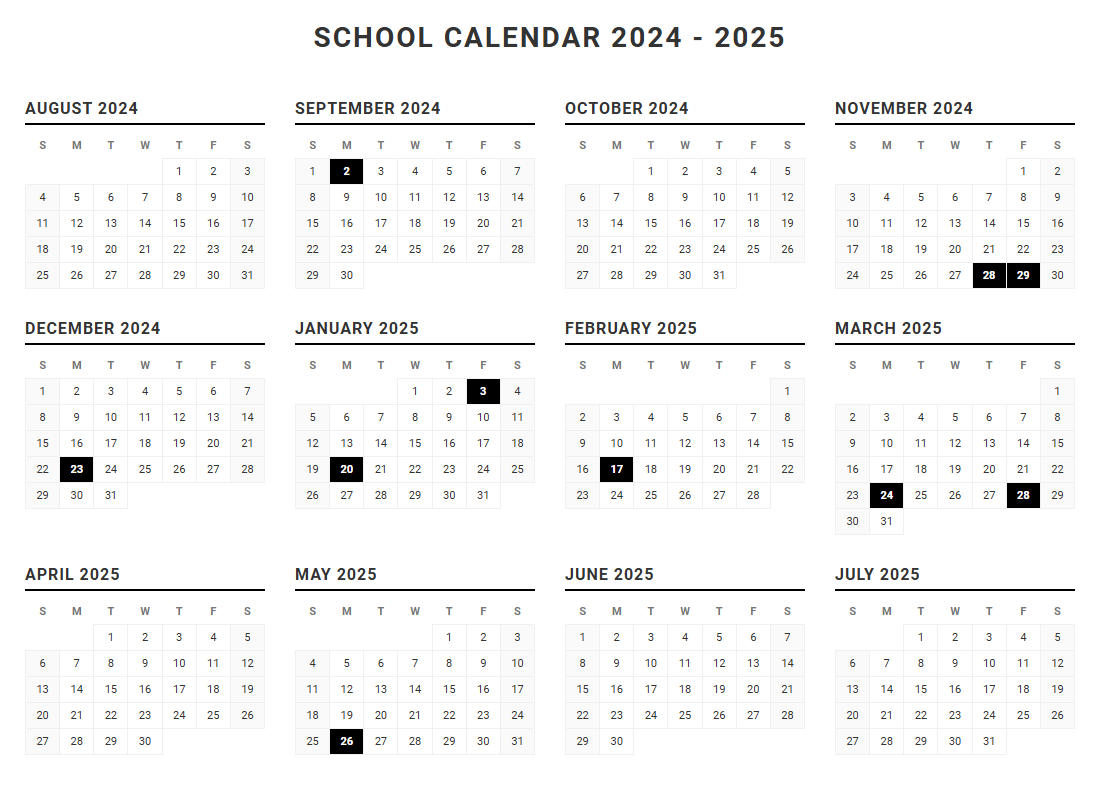
Coordinating a dynamic academic year often leaves administrators and families overwhelmed by fragmented schedules. While institutions traditionally align planning with fiscal cycles and standard funding sources, maintaining daily organization is paramount. Implementing a printable Yearly School Calendar grants stakeholders unparalleled structural clarity. However, effective utilization stipulates that users account for localized district variances, much like the templates utilized by Boston Public Schools. Below, we explore the top printable formats to optimize your planning.
Create Your Yearly School Calendar
Done customizing?
Yearly School Calendar - Good to Know
Academic Year
The academic year serves as the foundational framework that defines the annual cycle of formal education within schools, colleges, and universities. Typically spanning from late summer or early autumn to the subsequent late spring, this structured timeframe ensures that educational institutions deliver a standardized quantity of learning. Systematically organized, it regulates the rhythm of instruction, examinations, and vacation periods.
Modern educational planning requires a carefully structured schedule. The standard academic year is divided into distinct segments designed to maximize student retention and administrative efficiency. Factors influencing its structure include:
- Regional climate variations and historical agrarian cycles.
- State and national legislative mandates regarding required instruction.
- Algorithmic planning for standardized testing windows.
By establishing a predictable schedule, school districts can effectively allocate resources, coordinate transportation, and align curriculum delivery to ensure that students across diverse demographics receive equitable access to comprehensive education.
Balanced Calendar
A balanced calendar, often referred to as a year-round school calendar, redistributes the traditional 180 instructional days across a full twelve-month period. Instead of the conventional long summer vacation, this modern scheduling alternative features shorter, more frequent breaks interspersed throughout the academic cycle. This system aims to mitigate the well-documented phenomenon of summer learning loss, ensuring continuous cognitive engagement.
Educational experts advocate for this model due to its potential to reduce student burnout and staff fatigue. By restructuring the school year, districts establish a sustainable instructional rhythm. Key benefits of implementing a balanced schedule include:
- Continuous learning retention: Shorter breaks prevent students from forgetting core concepts.
- Frequent opportunities for remediation: Academic struggles are addressed in real-time.
- Consistent restorative periods: Both educators and students benefit from regular intervals of rest.
Intersession
An intersession represents a specialized academic period inserted between standard terms or during the scheduled breaks of a balanced calendar. These designated blocks of time offer unique pedagogical opportunities that are often difficult to accommodate within the rigorous constraints of the regular school week. During an intersession, schools typically shift focus toward customized student support programs.
"Intersessions provide a vital safety net, transforming traditional vacation periods into active, targeted windows of academic intervention and experiential enrichment."
For students who are struggling to meet standard benchmarks, these periods facilitate intensive remediation and credit recovery. Conversely, for advanced learners, intersessions host elective coursework, deep-dive STEM projects, local internships, and creative arts workshops. This dual-purpose structure maximizes facility usage and provides highly targeted educational pathways, adapting dynamically to the unique needs of a diverse student population.
Professional Development Day
A Professional Development Day is a designated non-instructional day where students remain home while educators engage in collaborative learning, training, and strategic planning. These days are essential for maintaining high instructional standards and ensuring that teachers remain updated on contemporary pedagogical methodologies, technological advancements, and evolving curriculum frameworks.
During these sessions, school staff members participate in data-driven analysis to evaluate student performance trends. These collaborative environments allow educators to:
- Analyze benchmark assessment data to modify instructional strategies.
- Receive training on inclusive teaching practices and classroom management.
- Collaborate across grade levels to align vertical curriculum objectives.
By investing dedicated time into teacher growth, educational institutions foster an environment of continuous improvement, which directly correlates with enhanced student engagement and improved academic outcomes across all grade levels.
Instructional Days
Instructional days are the specific calendar dates when schools are legally open and actively delivering direct educational instruction to students. State and national departments of education mandate a minimum number of instructional days-typically hovering around 180 days per academic year-to guarantee that every child receives a comprehensive and legally compliant education.
To qualify as an official instructional day, schools must meet precise criteria regarding the minimum number of hours spent on academic tasks. Every single hour must count toward the developmental progress of the student body. If unexpected closures occur, such as those caused by hazardous winter weather or utility failures, districts must schedule make-up instructional days to fulfill their statutory obligations and preserve the integrity of the academic year.
Asynchronous Learning Day
An Asynchronous Learning Day shifts the traditional classroom dynamic to a flexible, remote environment where students engage with educational materials independently. Rather than participating in real-time, live lectures, learners access pre-recorded lessons, complete digital assignments, and submit projects via online learning management systems within a flexible, designated timeframe.
This instructional modality cultivates essential 21st-century skills by encouraging self-direction, time management, and digital literacy. These days are strategically utilized during:
- Inclement weather events to prevent the loss of instructional momentum.
- School building transitions or local election days when facilities are compromised.
- Staff planning periods to allow teachers uninterrupted grading and preparation time.
By navigating digital curriculums independently, students learn to take agency over their educational journeys, developing critical problem-solving skills necessary for higher education and modern career paths.
Grading Period
A grading period is a distinct, structured interval within the academic year during which a student's academic progress, effort, and behavior are formally monitored, assessed, and recorded. Common configurations for these intervals include six-week progress reports, nine-week quarters, or half-year semesters, depending on district policy.
At the culmination of each grading period, teachers synthesize formative and summative assessments to issue formal report cards. This systematic evaluation cycle serves as a critical communication channel between the school and the home environment. Regular intervals of assessment prevent academic issues from going unnoticed for too long. By reviewing these standardized progress reports, families, educators, and counselors can identify learning gaps early, celebrate academic achievements, and implement timely interventions to support struggling students before the end of the term.
Trimester
The trimester system divides the academic year into three distinct, equal periods, typically lasting between twelve and fourteen weeks each. Unlike the traditional semester model, which splits the year in half, the trimester framework offers a unique structural cadence that alters course pacing, class duration, and scheduling flexibility.
This division allows students to focus on fewer subjects at any given time, fostering a deeper, more concentrated engagement with the material. By taking fewer courses per term, learners can dedicate more focus to challenging subjects. High schools and universities utilizing trimesters often find that this system facilitates more frequent elective opportunities and allows for rapid credit accumulation. This instructional rhythm supports balanced student workloads, enabling deeper academic immersion and reducing the stress often associated with managing too many distinct subjects simultaneously.
Parent-Teacher Conferences
Parent-Teacher Conferences represent dedicated, collaborative meeting windows designed to foster direct communication and partnership between educators and families. These scheduled interactions offer an invaluable platform to discuss a student's cognitive growth, emotional development, and social integration within the school community.
"Active collaboration between home and school environments remains the most powerful indicator of long-term academic success for a developing child."
During these brief but highly focused meetings, teachers share qualitative observations, review physical portfolios of student work, and analyze standardized testing data with parents. This mutual exchange allows families to share insights regarding their child's domestic routines, strengths, and stressors. Establishing this cooperative loop ensures that both educators and parents are aligned in their strategies, providing a cohesive network of support that enhances student achievement.
Fall Break
A Fall Break is a brief recess typically scheduled midway through the autumn semester, usually occurring in October or November. Lasting anywhere from a long weekend to a full week, this scheduled vacation provides a much-needed pause in the initial, demanding stretch of the new academic year.
This recess is strategically positioned to combat the physical and mental fatigue that naturally accumulates after weeks of intense academic focus and adjustments to new routines. By stepping away from the classroom, students and educators can rest, recharge, and spend time with family. Taking intentional breaks significantly boosts long-term productivity and classroom morale. This mental reset prepares the entire school community to return with renewed focus and energy, successfully navigating the final weeks leading up to the winter holiday season.
Leave a comment