
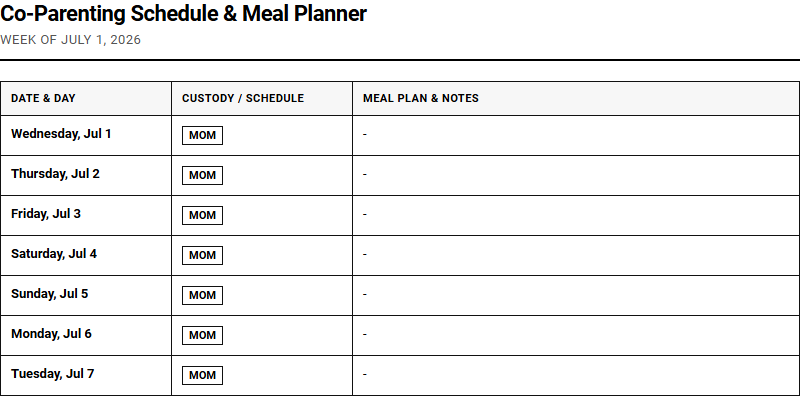
Managing split custody schedules while maintaining consistent nutrition across two households presents a significant logistical challenge for co-parents. While standard digital calendars or text threads offer basic coordination, they often lack centralized visibility.
A structured printable Co-Parenting Schedule and Meal Planner grants both households immediate clarity, provided both parents commit to updating it weekly. For instance, coordinating Sunday handovers alongside prep for school lunches becomes effortless. Below, we outline key strategies to successfully integrate this planner into your routine.
Create Your Co-Parenting Schedule and Meal Planner
Done customizing?
Co-Parenting Schedule and Meal Planner - Good to Know
Shared custody calendar
A robust shared custody calendar serves as the foundational pillar for successful co-parenting. By utilizing a single, centralized schedule, both parents can easily visualize custody transfers, school holidays, and extracurricular commitments. This digital roadmap significantly reduces scheduling conflicts and eliminates the need for stressful, face-to-face negotiations during drop-offs.
To maximize the efficiency of your calendar, consider integrating the following elements:
- Color-coded events to quickly distinguish between custody periods and individual appointments.
- Real-time push notifications that alert both households to sudden changes.
- Document attachment options for storing school permission slips or event flyers.
Using these features ensures that both parents remain equally informed, fostering a sense of stability and predictability for the children. When schedules are transparent, planning vacations, doctor appointments, and family gatherings becomes a seamless, collaborative process that prioritizes the children's well-being above all else.
Two-household meal planner
Maintaining nutritional consistency across two separate homes can be challenging for co-parents. A dedicated two-household meal planner bridges this gap, ensuring that children receive balanced diet options regardless of which parent they are staying with. This collaborative tool helps parents coordinate weekly dinner menus, tracking nutritional intake and favorite recipes.
- Step 1: Select a shared meal-planning interface accessible by both parties.
- Step 2: Input the weekly meal schedules, highlighting days of custody transition.
- Step 3: Note specific meal preferences, successful recipes, and portion sizes.
By coordinating menus, parents can prevent children from eating the same meals multiple nights in a row. Additionally, this collaborative planning reduces overall food waste and helps streamline grocery shopping budgets for both households, establishing a harmonious approach to nutrition that supports healthy physical development.
Parallel parenting schedule
In high-conflict situations, a parallel parenting schedule offers a structured framework that allows both parents to raise their children independently while minimizing direct interaction. This method focuses on clear boundaries and strict scheduling to reduce tension and protect children from parental disagreements. Communication is kept to a minimum, typically restricted to essential updates.
Effective execution of this schedule requires specific, immutable guidelines:
- Detailed pickup and drop-off times at neutral, public locations.
- Clearly defined responsibilities for school communication and medical decisions.
- Pre-arranged fallback plans to handle unexpected delays without direct confrontation.
By establishing rigid routines, children enjoy a sense of safety and predictability in both households. This arrangement allows each parent to foster a unique relationship with their children without the stress of constant negotiation, ensuring a healthier environment for the entire family unit.
Joint custody routine tracker
Consistency is vital for children transitioning between different homes. A joint custody routine tracker helps parents align daily habits, bedtime schedules, homework routines, and screen time limits. When children experience similar expectations and boundaries in both households, they adapt more quickly to transitions and exhibit lower levels of stress.
"Consistency in daily routines across both homes fosters a deep sense of security, helping children feel grounded during custody transitions."
Through the use of a synchronized tracker, co-parents can log daily achievements, sleep patterns, and behavioral notes. If a child struggles with homework on a Tuesday night, the other parent can easily view the tracker on Thursday and offer targeted support, reinforcing a unified front and promoting academic and emotional success.
Shared family digital organizer
Managing the administrative details of a modern family requires a centralized repository. A shared family digital organizer acts as a secure digital filing cabinet where both parents can access critical information instantly. From immunization records and school report cards to insurance policies and emergency contact lists, keeping these documents in one accessible location is invaluable.
Key features of a comprehensive digital organizer include:
- Shared folders for digital permission slips and sports registration forms.
- Expense logs to track shared parenting costs, medical bills, and school fees.
- A secure contact directory for tutors, pediatricians, and babysitters.
Having immediate access to this data minimizes miscommunication and ensures that both parents can make informed decisions in real time. It reduces the reliance on memory and text messages, keeping both households organized, aligned, and prepared for any situation.
2-2-3 custody rotation
The 2-2-3 custody rotation is a popular schedule designed to balance parental involvement, particularly for younger children who benefit from frequent contact with both parents. Under this arrangement, the children spend two days with Parent A, two days with Parent B, and a three-day weekend back with Parent A. The following week, the order rotates.
This dynamic rotation offers several distinct advantages:
- Ensures both parents enjoy alternating weekend leisure time with the children.
- Minimizes the duration of time young children spend away from either parent.
- Creates a predictable bi-weekly pattern that can be planned months in advance.
To implement this successfully, parents must maintain detailed logs of school uniforms, sports gear, and homework assignments. Because transitions occur frequently, utilizing a digital planner helps ensure that no essential items are forgotten during the rapid mid-week handovers.
Co-parenting grocery coordinator
Managing food supplies across two separate households requires careful planning. A co-parenting grocery coordinator assists parents in managing shopping lists, tracking staple pantry items, and coordinating major food purchases. This prevents the common issue of duplicate buying, where children have excess food in one home and shortages in the other.
Using a collaborative shopping system allows families to:
- Coordinate bulk purchases of snacks, school lunch supplies, and hygiene products.
- Update a dynamic list of items that need to travel with the child during transitions.
- Share the financial costs of expensive specialty food items or dietary supplements.
By maintaining a clear, updated list of what is stocked in each household, parents can save money, reduce trips to the store, and ensure that their children always have access to their preferred, nutritious foods, regardless of which kitchen they are visiting.
Blended family meal prep
Blending families brings unique challenges, particularly when merging different culinary habits, schedules, and food preferences. Blended family meal prep techniques can simplify this transition, bringing stepsiblings and parents together through shared kitchen activities. Planning and preparing meals in advance helps reduce daily stress and fosters a welcoming, inclusive home environment.
Consider implementing these practical preparation tips:
Batch cooking on weekends ensures that busy weeknights are stress-free, allowing parents to focus on helping children adjust to new family dynamics. Involving children in menu selection and prep work gives them a sense of control and belonging, easing the transition period and turning mealtime into a positive bonding experience for everyone involved.
Nest parenting custody calendar
Bird's nest parenting is an innovative arrangement where the children remain in the family home while the parents rotate in and out according to the custody schedule. A specialized nest parenting custody calendar is essential for managing this complex setup, coordinating not just custody times, but also home maintenance, cleaning duties, and household expenses.
To maintain order in a shared nesting home, the calendar should track:
- Specific dates and times for parental handovers inside the residence.
- House cleaning schedules and division of domestic chores.
- Grocery restocking responsibilities prior to the next parent's arrival.
This calendar keeps both parents accountable for the physical condition of the home. By establishing clear guidelines for property maintenance and household boundaries, co-parents can provide a stable, unchanging environment for their children while maintaining their own independent living spaces elsewhere.
Co-parent allergy and diet tracker
For children with severe food allergies, dietary restrictions, or medical conditions, communication between households is a matter of safety. A co-parent allergy and diet tracker provides a life-saving database where parents can record allergen triggers, emergency medical protocols, and approved food brands, eliminating dangerous guesswork.
This specialized tracker should always be updated with:
- Allergen profiles detailing severity, symptoms, and required treatments.
- Step-by-step instructions for administering emergency medications like epinephrine.
- Lists of safe, pre-approved alternative brands for common school snacks.
When both parents have instant access to this critical health data, the risk of accidental allergen exposure drops significantly. This shared tool ensures that caregivers, babysitters, and extended family members remain perfectly aligned, keeping the child safe, healthy, and protected across both home environments.

Leave a comment