
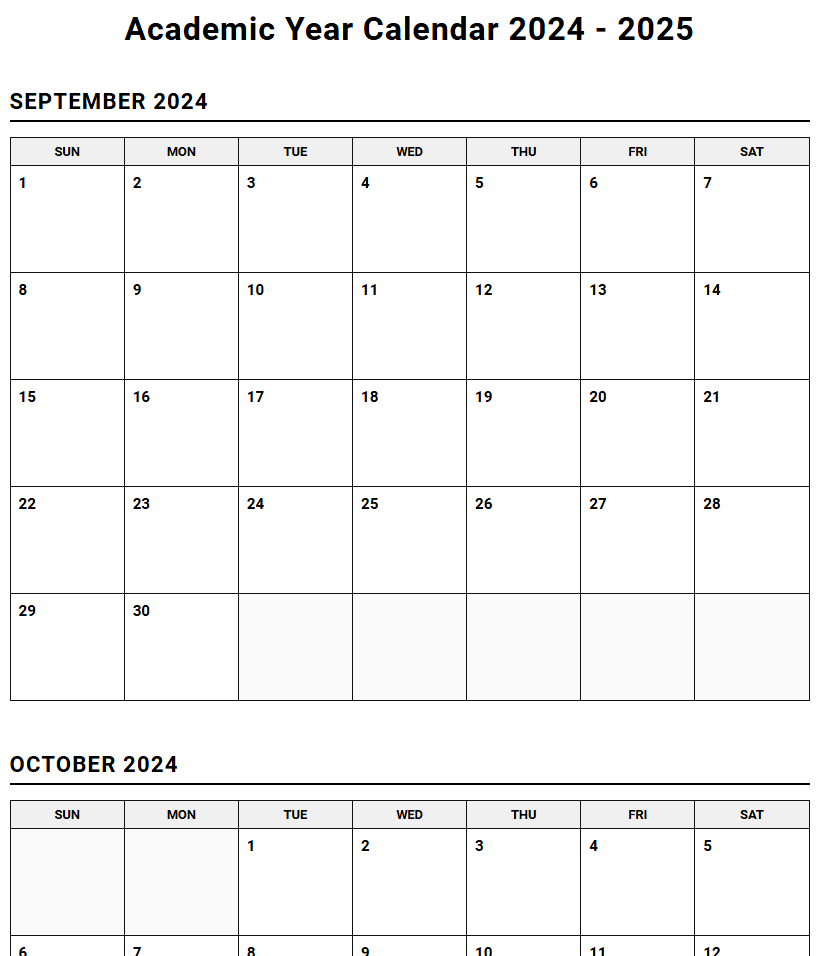
Managing complex course loads with rigid, pre-made agendas often leads to missed academic deadlines. While standard off-the-shelf planners offer basic structures, they rarely align with unique departmental timelines. Custom printable templates grant you the exact autonomy required to tailor layouts to your specific workflow, provided you commit to a consistent weekly updating routine. For instance, mapping out syllabus milestones and exam prep blocks ensures seamless organization. Below, we examine the best configuration strategies for your academic planner.
Create Your Academic Planner Calendar
Done customizing?
Academic Planner Calendar - Good to Know
Syllabus tracker
An effective syllabus tracker is the cornerstone of academic organization, transforming overwhelming course outlines into actionable roadmaps. Instead of letting vital information sit forgotten in a PDF, students can catalog every critical milestone, textbook reading, and exam date in one centralized hub. This systematic approach ensures that nothing slips through the cracks during the hectic semester.
By dissecting your syllabi at the start of the term, you can categorize tasks by:
- Course Code: Grouping assignments by specific classes.
- Weight Value: Identifying which tasks impact your final grade the most.
- Required Resources: Listing mandatory chapters and lecture materials.
Maintaining a digital or physical tracker empowers you to anticipate busy weeks long before they arrive, shifting your academic stance from reactive firefighting to proactive preparation. It is the ultimate tool for reclaiming control over your academic destiny.
Semester spread
The semester spread provides a bird's-eye view of your entire academic term, mapping out several months on a single, comprehensive layout. This macro-level perspective is essential for identifying "hell weeks"-those challenging periods where multiple midterms, papers, and presentations coincide. By visualizing these academic bottlenecks in advance, you can distribute your workload evenly and avoid last-minute cramming.
An optimized semester spread typically highlights key milestones such as:
- University holidays and campus closures.
- Midterm and final examination windows.
- Major project submission deadlines.
- Personal commitments and extracurricular events.
Seeing your time mapped out sequentially fosters a realistic understanding of deadlines. It encourages consistent progress, helping you balance intensive study blocks with necessary rest, ensuring you maintain peak cognitive performance from day one through final exams.
Assignment tracker
An assignment tracker is an indispensable utility designed to monitor the lifecycle of every coursework deliverable. Moving beyond simple to-do lists, this specialized database records the progression of papers, problem sets, and lab reports from initial research to final grading. It offers real-time clarity on outstanding obligations, reducing academic anxiety significantly.
To maximize efficiency, your tracker should utilize dynamic status properties:
- Not Started: Upcoming tasks waiting for preparation.
- In Progress: Active assignments requiring research or drafting.
- Under Review: Completed work awaiting peer feedback or final polishing.
- Submitted: Finished tasks logged with confirmation receipts.
Integrating columns for estimated completion times and actual hours spent helps refine your time-management skills. This structured approach ensures you meet every deadline with confidence and poise.
Time blocking
The productivity technique known as time blocking involves dividing your day into distinct, dedicated intervals of time. Instead of working from an open-ended task list, you assign specific activities to designated hours, treating study sessions with the same commitment as scheduled lectures. This practice minimizes cognitive load and combats the urge to multitask.
Implementing a successful time-blocking routine requires careful categorization:
- Deep Work: High-focus blocks reserved for writing, coding, or complex problem-solving.
- Shallow Work: Shorter intervals for answering emails, organizing files, and administrative tasks.
- Buffer Blocks: Flexible periods designed to absorb unexpected delays or overflow tasks.
- Recreation: Structured downtime to prevent academic burnout and promote mental wellness.
By protecting these boundaries, you cultivate deep focus, allowing you to complete high-quality academic work in significantly less time.
Undated academic planner
An undated academic planner offers unparalleled flexibility, liberating students from the rigid constraints of traditional pre-dated agendas. Whether you operate on a quarterly system, take a gap semester, or experience fluctuations in workload, an undated format adapts to your unique timeline. It eliminates the guilt of blank, wasted pages during holiday breaks and exam-free weeks.
Key advantages of choosing an undated planning system include:
- Customizable Start Dates: Begin your planning journey at any point in the calendar year.
- Intermittent Use: Pause tracking during vacations and resume instantly without skipping pages.
- Personalized Layouts: Adapt daily and weekly spreads to fit changing academic demands.
This adaptable methodology ensures your organizational tools evolve alongside your changing curriculum, providing a sustainable planning solution year after year.
Grade tracker
A grade tracker is a vital analytical instrument that allows students to monitor their academic performance and calculate their cumulative GPA in real time. Rather than waiting for end-of-term report cards, tracking your scores continuously provides immediate feedback on your comprehension of course material. This quantitative approach highlights which subjects require increased attention.
A robust grade tracking system should record several essential metrics:
- Individual assignment scores and corresponding percentages.
- Weighted grade formulas aligned with each syllabus.
- Cumulative GPA projections based on current performance.
- Target scores needed on upcoming finals to secure desired grades.
By demystifying the grading process, you remove guesswork, allowing you to make strategic decisions about where to invest your study time for maximum academic return.
Study schedule
Creating a structured study schedule is crucial for transitioning from passive review to active, long-term knowledge retention. Rather than relying on sporadic, exhausting cram sessions, a well-designed schedule leverages scientifically proven learning principles like spaced repetition and active recall. By distributing study sessions over days and weeks, you build stronger neural pathways.
Your study schedule should be structured around these core components:
- Review Sessions: Quick daily recaps of newly introduced lecture material.
- Practice Application: Dedicated blocks for tackling mock exams and practice problems.
- Collaborative Study: Group sessions for discussing complex concepts and peer teaching.
- Weekly Consolidation: Comprehensive weekend reviews of the past week's topics.
Consistency is the foundation of academic success, and a systematic study schedule provides the framework necessary to achieve it.
Digital student planner
The modern digital student planner represents the evolution of personal organization, combining the tactile benefits of traditional paper planning with the boundless utility of modern technology. Designed for use on tablets and laptops, these interactive planners utilize hyperlinked tabs, allowing users to jump seamlessly between monthly spreads, daily logs, and specialized trackers with a single tap.
Digital organization platforms offer several unique features:
- Cross-Device Syncing: Access your academic schedule on your phone, tablet, or desktop.
- Search Functionality: Instantly locate notes, deadlines, or lecture topics.
- Infinite Canvas: Add pages, images, and digital stickers without worrying about physical bulk.
By centralizing your academic life on a digital canvas, you create a portable, eco-friendly workspace that keeps you organized wherever your studies take you.
Thesis timeline
A thesis timeline is a specialized project management tool designed to break down massive research endeavors into manageable, sequential phases. Writing a thesis or dissertation can feel overwhelming without a structured framework. By establishing precise milestones over several months or semesters, you can maintain steady momentum and ensure your research stays on track.
A typical thesis workflow includes several critical development phases:
- Proposal and Literature Review: Defining the research question and synthesizing existing studies.
- Methodology and Data Collection: Designing experiments, conducting surveys, or analyzing sources.
- Drafting and Synthesis: Writing chapter-by-chapter arguments and refining the thesis narrative.
- Revision and Defense: Incorporating advisor feedback and preparing for oral examinations.
This structured timeline prevents procrastination and ensures a thorough, high-quality scholarly contribution.
Weekly vertical layout
The weekly vertical layout is a favorite configuration among students who thrive on visual, chronological structure. By organizing the week into columns running left to right, this layout allows you to view your daily schedule as a continuous flow from morning to night. It is exceptionally well-suited for mapping out lecture blocks, study sessions, and work shifts side-by-side.
Maximize your vertical columns by implementing these visual strategies:
- Time Grid Integration: Map tasks directly to specific hourly slots.
- Color Coding: Use distinct colors for lectures, personal time, and study sessions.
- Top Priorities Header: Reserve the top of each column for the day's critical tasks.
This layout reveals empty time slots at a glance, helping you identify opportunities for productive study or well-deserved relaxation throughout the busy academic week.
Leave a comment