
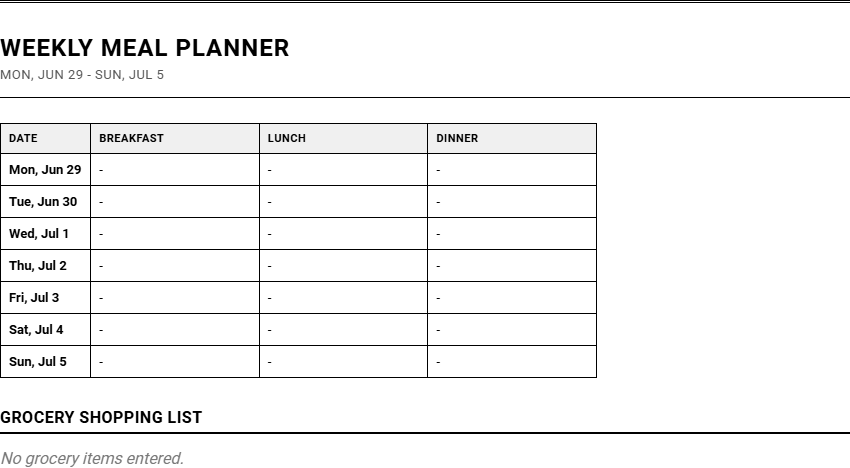
Managing weekly dinners often leads to chaotic grocery store trips and avoidable food waste. While families frequently rely on scattered digital apps or mental checklists, these traditional sources lack a unified approach. Our printable weekly calendars grant immediate organization, stipulating only that users commit to a designated weekly planning routine. Featuring dedicated daily meal blocks and categorized shopping lists, this guide outlines how to select the ideal layout to streamline your household prep.
Create Your Meal Planner and Grocery List
| Day | Breakfast | Lunch | Dinner | Groceries Needed |
|---|---|---|---|---|
| Day 1 | ||||
| Day 2 | ||||
| Day 3 | ||||
| Day 4 | ||||
| Day 5 | ||||
| Day 6 | ||||
| Day 7 |
| Date | Breakfast | Lunch | Dinner |
|---|
Done customizing?
Meal Planner and Grocery List - Good to Know
Batch cooking
Batch cooking is the cornerstone of efficient meal management. By preparing large quantities of base ingredients or entire meals at once, you save hours during busy weekdays. This culinary strategy minimizes cleanup time and reduces energy consumption by using your oven or stovetop once for multiple dishes.
To succeed with batch cooking, focus on versatile ingredients that freeze well and can be repurposed into different recipes. Consider the following foundational elements:
- Grains: Cook large pots of brown rice, quinoa, or farro to use as bowls, sides, or stir-fry bases.
- Proteins: Roast multiple chicken breasts, braise beef, or bake seasoned tofu cubes.
- Roasted Vegetables: Sheet pans of sweet potatoes, broccoli, and bell peppers add instant nutrition to any plate.
Storing these elements in airtight, portion-sized containers keeps food fresh. This structured approach ensures a variety of healthy, ready-to-eat options are always available in your refrigerator.
Pantry inventory tracker
Maintaining a digital or physical pantry inventory tracker is vital to avoid duplicate purchases and reduce food spoilage. When you know exactly what is sitting on your shelves, meal planning becomes an intuitive process of connecting existing ingredients to new recipes.
Implementing an effective tracking system involves a simple three-step cycle:
- Audit: Empty your pantry and log every item, noting its quantity and expiration date.
- Categorize: Group items into logical sections such as canned goods, grains, baking essentials, and spices.
- Update: Deduct items as you cook and add them as you shop to keep the database accurate.
This organized methodology prevents the common frustration of buying a third jar of cumin while forgetting the chicken broth. It transforms your pantry into a highly efficient home grocery store.
Aisle-by-aisle sorting
Navigating the grocery store without a plan leads to impulse buys and wasted time. Aisle-by-aisle sorting reorganizes your shopping list to match the physical layout of your local supermarket, allowing you to breeze through the aisles with purpose.
"By aligning your shopping list with the store's blueprint, you eliminate backtracking and significantly reduce decision fatigue during your weekly grocery run."
This method groups items into natural zones like the produce department, dairy section, meat counter, and center aisles. You will no longer find yourself darting from the bakery back to the frozen food section for a forgotten item. It streamlines your path, keeps you focused on your budget, and ensures a highly efficient shopping experience from entrance to checkout lane.
Macros-based planning
For individuals tracking fitness goals, macros-based planning aligns daily nutrition with precise physical demands. This targeted dietary strategy focuses on balancing the three essential macronutrients required for human health and energy:
- Proteins
- Essential for muscle repair, immune function, and maintaining satiety throughout the day.
- Carbohydrates
- The primary energy source for high-intensity workouts and daily brain function.
- Fats
- Crucial for hormone regulation, nutrient absorption, and long-term cell health.
By calculating your specific macronutrient ratios, you can tailor your meal prep to support fat loss, muscle gain, or athletic performance. Planning meals around these specific targets removes the guesswork from healthy eating, transforming your diet into a precise tool for physical optimization.
Zero-waste meal prep
Embracing zero-waste meal prep is an eco-conscious strategy that protects both your budget and the planet. This mindful approach to cooking challenges you to utilize every part of the ingredients you purchase, turning potential kitchen scraps into delicious, nutrient-dense culinary assets.
Consider integrating these simple, sustainable habits into your routine:
- Save vegetable ends, onion skins, and herb stems in the freezer to make rich, homemade vegetable stock.
- Blend wilted greens, herb stems, and olive oil into a vibrant pesto or chimichurri sauce.
- Quick-pickle leftover cucumber slices, red onions, or carrot ribbons to extend their shelf life and add zest to meals.
By prioritizing food preservation and creative ingredient reuse, you drastically reduce household waste. This sustainable cycle ensures that every dollar spent at the grocery store translates directly into delicious, consumed nourishment.
Recipe importer
A digital recipe importer simplifies the process of collecting culinary inspiration from across the web. Instead of navigating cluttered blogs filled with long stories and intrusive advertisements, this tool extracts only the essential cooking details you need.
The import process typically works in three seamless stages:
- Copy the web address of your favorite online recipe.
- Paste the link into the importer tool to parse the raw data.
- View the cleaned ingredients, yield, and step-by-step instructions in a standardized format.
This automated curation saves valuable prep time, allowing you to quickly build a personalized, digital cookbook. It turns chaotic internet browsing into a clean, searchable database of meals tailored to your personal tastes and dietary needs.
Capsule pantry
Inspired by minimalist fashion, a capsule pantry relies on a curated selection of versatile, high-quality ingredients that can be combined to create dozens of unique meals. This philosophy rejects crowded, cluttered cabinets in favor of intentional, multi-purpose staples.
A standard capsule pantry focuses on stocking reliable foundation items:
- Base Starches: Long-lasting grains, oats, pasta, and potatoes.
- Flexible Proteins: Canned beans, lentils, eggs, and frozen seafood.
- Flavor Enhancers: High-quality olive oil, acid sources like lemons or vinegar, and a core set of spices.
By mastering recipes built around these core staples, you reduce decision fatigue and simplify grocery shopping. This minimalist framework encourages culinary creativity, proving that you do not need hundreds of ingredients to cook diverse, flavorful, and satisfying meals every single day.
Ingredient substitution guide
An ingredient substitution guide is your ultimate safety net in the kitchen, preventing mid-cooking panic when you realize an essential item is missing. This practical resource helps you adapt to dietary restrictions, allergies, or empty pantry shelves without sacrificing the texture or flavor of your dish.
| Missing Ingredient | Excellent Substitution | Best Application |
|---|---|---|
| Buttermilk | Milk + Lemon Juice | Baking & Pancakes |
| All-Purpose Flour | Oat Flour (Gluten-Free) | Muffins & Cookies |
| Soy Sauce | Coconut Aminos | Stir-Fries & Marinades |
Understanding these culinary swaps empowers you to keep cooking smoothly. It fosters adaptability, encourages experimentation, and ensures that a missing ingredient never ruins your dinner plans.
Smart grocery list auto-categorization
Modern culinary technology relies on smart grocery list auto-categorization to remove the tedious manual sorting from your shopping preparation. When you add ingredients from your meal plan to your shopping list, intelligent algorithms instantly organize them into their respective store departments.
This automated organization offers several benefits to the busy shopper:
- Instant Grouping: Appends items like spinach and apples under Produce automatically.
- Time Savings: Eliminates the need to rewrite or manually sort lists before leaving the house.
- Reduced Stress: Guarantees a smoother, more focused shopping experience in crowded store environments.
By streamlining list preparation, this smart tool ensures you spend less time wandering the aisles and more time enjoying freshly prepared meals.
Portion size calculator
Cooking the correct amount of food is made effortless with a portion size calculator. This essential planning tool computes exactly how much raw ingredients you need to purchase and cook based on the number of guests, dietary goals, and meal types.
To use a portion calculator effectively, consider these three variables:
- Headcount: The total number of adults and children dining at the table.
- Meal Type: Whether the dish serves as a light lunch, a main dinner course, or a side dish.
- Target Portions: Adjusting for leftovers if you plan to save food for the next day.
By accurately estimating serving sizes, you eliminate the risk of running out of food or dealing with overwhelming leftovers. It aligns your cooking process with your consumption needs, fostering a balanced, stress-free dining experience.
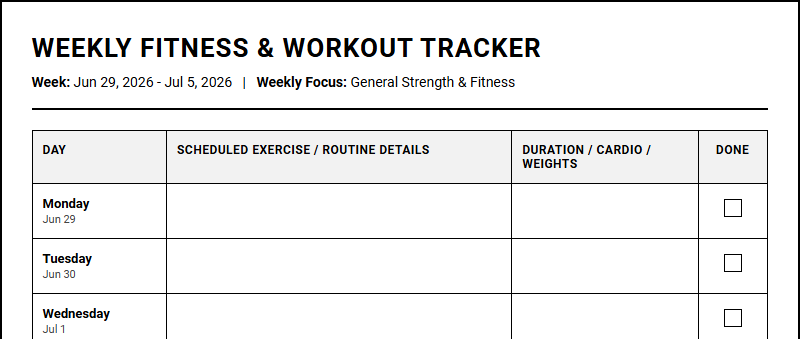
Leave a comment