
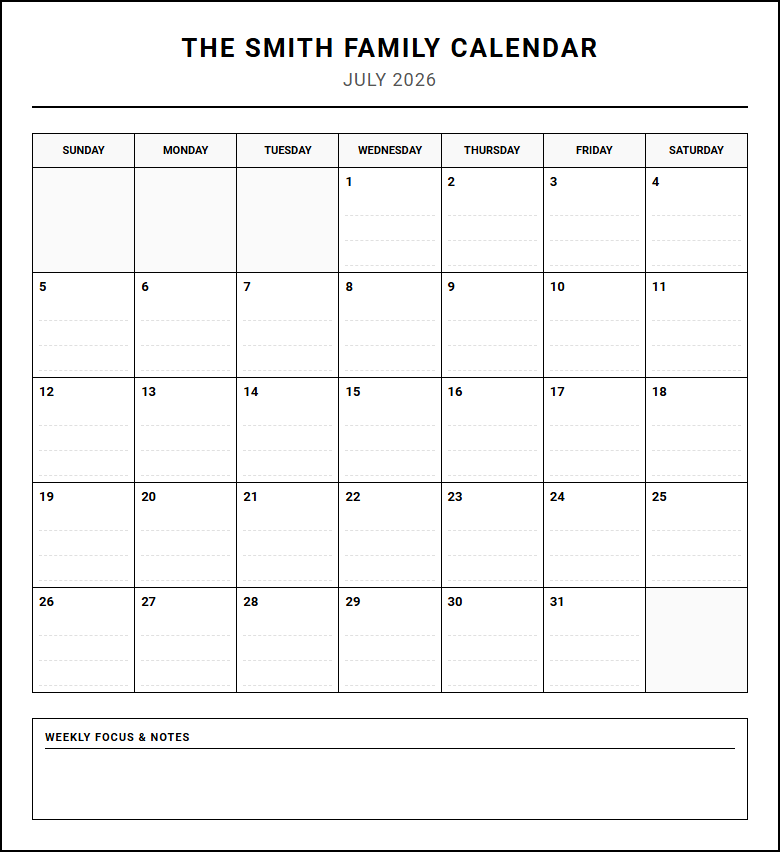
Managing a chaotic household schedule often leaves families feeling overwhelmed. While standard organizational investments provide basic structure, they frequently fail to adapt to unique dynamics. Transitioning to custom printable templates grants families the precise flexibility needed to coordinate school events and chore tracking-provided there is consistent cooperative input. Below, we examine how tailoring these blank templates establishes a reliable, centralized system for your daily routine.
Create Your Family Organizer Calendar
Done customizing?
Family Organizer Calendar - Good to Know
Shared digital calendar
A shared digital calendar serves as the modern backbone for household organization, ensuring that every family member remains aligned. By migrating from a traditional paper planner to a cloud-based digital platform, families can access schedules in real-time from any location. This transition eliminates double-bookings and minimizes the chaos of forgotten commitments.
To maximize the utility of a shared calendar, consider implementing the following practices:
- Enable real-time push notifications for instant updates on schedule modifications.
- Set automatic reminders at customizable intervals (e.g., 24 hours and 2 hours prior).
- Integrate location-based alerts to calculate travel times dynamically.
By leveraging these collaborative features, busy households can foster transparency, reduce scheduling anxiety, and ensure that everyone is consistently on the same page regarding daily logisitics and upcoming events.
Family command center
Establishing a physical or digital family command center creates a centralized hub where crucial household information resides. Positioned in a high-traffic area, such as the entryway or kitchen, this portal bridges the gap between digital coordinates and tangible daily life. It serves as a visual anchor for the entire household, guiding everyone from morning departures to evening routines.
- The Core Display: A wall-mounted tablet or large monitor displaying the master schedule.
- The Quick-Access Dock: Charging stations for devices alongside a physical mail sorter.
- The Bulletin Space: A corkboard for permission slips, invitations, and emergency contacts.
A well-curated command center empowers children to take ownership of their routines. It transforms abstract digital schedules into concrete daily actions, fostering independence and reducing the parental burden of constant verbal reminders.
Color-coded scheduling
Visual processing is incredibly efficient, and color-coded scheduling harnesses this power to make complex family timetables instantly digestible. By assigning a distinct, dedicated hue to each family member, anyone can scan the master calendar and comprehend the day's layout in under three seconds. This method drastically reduces cognitive load and prevents oversight.
Beyond individual assignments, colors can also categorize activities to improve overall life balance:
- Blue: Academic commitments and school hours.
- Green: Extracurricular activities, sports, and hobbies.
- Orange: Shared family events and collaborative leisure time.
- Red: Urgent medical appointments or critical deadlines.
This systematic visual hierarchy allows parents to quickly assess which family members are overcommitted and where potential scheduling conflicts lie, facilitating easier adjustments and healthier time management.
Co-parenting coordination
Navigating the complexities of dual-household parenting demands seamless communication and precise scheduling. Dedicated co-parenting coordination tools and shared digital strategies ensure that children transition smoothly between homes while maintaining consistent routines, rules, and expectations. This collaborative approach prioritizes the child's well-being above all else.
"Consistent scheduling across households provides children with a vital sense of security, predictability, and emotional stability."
By utilizing shared digital custody calendars, both parents maintain real-time visibility into school events, medical appointments, and extracurricular activities. This eliminates the necessity of constant direct messaging, reduces potential friction points, and creates a transparent, verifiable record of agreements and scheduled transitions that benefits the entire family unit.
Smart kitchen display
The kitchen is naturally the heart of the home, making a smart kitchen display the ideal hardware integration for family coordination. A wall-mounted touchscreen tablet or smart screen consolidates calendars, grocery lists, and daily reminders into a single, accessible device. It acts as an interactive bulletin board that updates dynamically throughout the busy week.
These displays offer several key integration advantages:
- Hands-free voice control for adding items to lists while cooking.
- A central portal for streaming step-by-step recipe videos.
- Ambient screen modes that display rotating family photos or weather forecasts.
Positioning this technology in the kitchen ensures that schedule reviews happen naturally during breakfast or dinner preparation, weaving organization seamlessly into the fabric of daily domestic life.
Meal planning integration
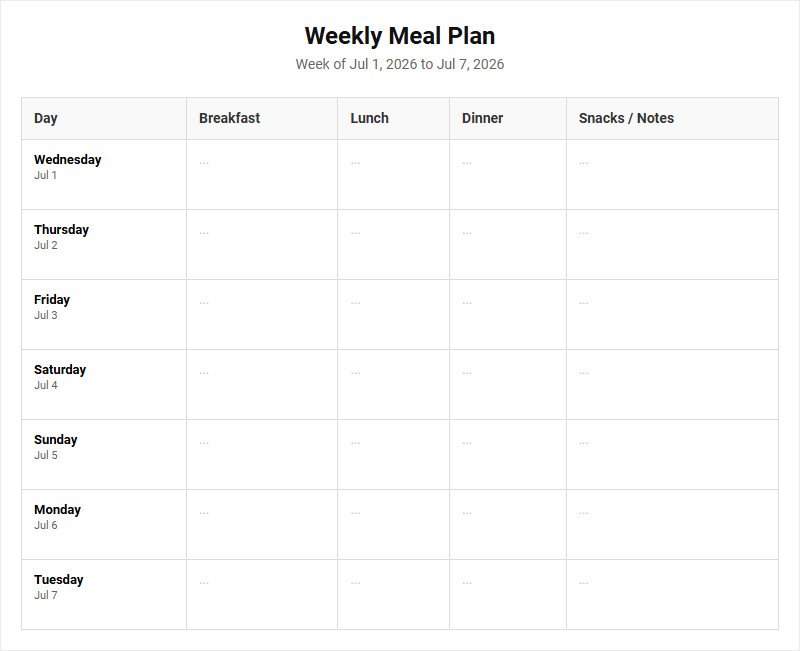
Coordinating dinner for a busy household can be a daily source of stress, but meal planning integration simplifies this chore. By linking weekly menus directly to your shared digital calendar, every family member knows what to expect for dinner. This proactive approach curbs the frequent question of "what's for dinner?" and reduces impulse takeout purchases.
- Plan the week's meals on Sunday, assigning specific recipes to calendar days.
- Automatically populate a shared grocery list based on ingredients needed.
- Cross-reference the meal plan with busy evening schedules to choose quick meals on hectic nights.
Integrating your meal plan with your scheduling software ensures that on nights with late soccer practices, quick-prep meals or leftovers are intentionally scheduled, saving precious time and reducing food waste.
Chore chart automation
Maintaining a clean home requires collective effort, and chore chart automation removes the friction of delegating household responsibilities. Digital chore applications allow parents to assign age-appropriate tasks, set recurring schedules, and track completion without resorting to constant nagging or micromanagement. This system instills accountability and routine in children.
Effective automated systems typically incorporate the following functional elements:
- Push notifications sent directly to children's devices when chores are due.
- Gamified elements, such as earning points toward rewards or allowances upon completion.
- Photo-verification options where kids upload a picture of their completed task.
By automating the tracking and reminding processes, parents shift from being enforcers to facilitators, allowing the system to fairly regulate household contributions and rewards.
School schedule syncing
The academic year introduces a deluge of events, deadlines, and schedule variations that can overwhelm any parent. School schedule syncing involves importing district calendars, assignment portals, and extracurricular rosters directly into your family's master digital calendar. This proactive integration prevents last-minute surprises regarding exams, field trips, or school closures.
To establish a comprehensive academic calendar integration, ensure you sync these key feeds:
- The primary school district calendar for holidays, staff development, and early dismissals.
- Classroom management platforms (like Google Classroom or Canvas) for homework deadlines.
- Athletic and club schedules for practice times, game locations, and uniform requirements.
Consolidating these external schedules into one accessible interface ensures that academic obligations are balanced against family time, protecting students from burnout and keeping parents fully informed.
Time-blocking for families
Rather than managing a chaotic list of sporadic tasks, time-blocking for families structures the day into dedicated, thematic chunks of time. This productivity technique designates specific windows for focused activities, such as homework, creative play, family meals, and wind-down routines. It provides a comforting predictability for children and reduces transitions stress.
- Identify the core routines that occur daily, such as morning prep and bedtime.
- Allocate specific blocks for deep-focus tasks, minimizing distractions during these periods.
- Incorporate flexible "buffer blocks" to accommodate unexpected delays or spontaneous fun.
Time-blocking helps families transition away from reactive multitasking and toward intentional living. By protecting designated blocks of time for connection, relaxation, and responsibilities, households can maintain a healthy, balanced rhythm throughout the busiest weeks.
Shared task delegation
A functional household relies on teamwork, and shared task delegation ensures that the mental load of home management is distributed equitably. Rather than one parent acting as the sole project manager, shared digital task lists allow everyone to see outstanding errands, maintenance chores, and administrative duties in a transparent, collaborative environment.
Implementing a shared task manager allows family members to:
- Assign tasks to specific individuals with clear, realistic deadlines.
- Add detailed notes, sub-tasks, and relevant links to prevent confusion.
- Collaborate on shared checklists, such as packing lists or party planning.
This decentralized approach encourages active participation from all family members. When everyone has visibility into the household's operational needs, they can proactively step up, complete pending tasks, and contribute meaningfully to the family's shared success.
Leave a comment