
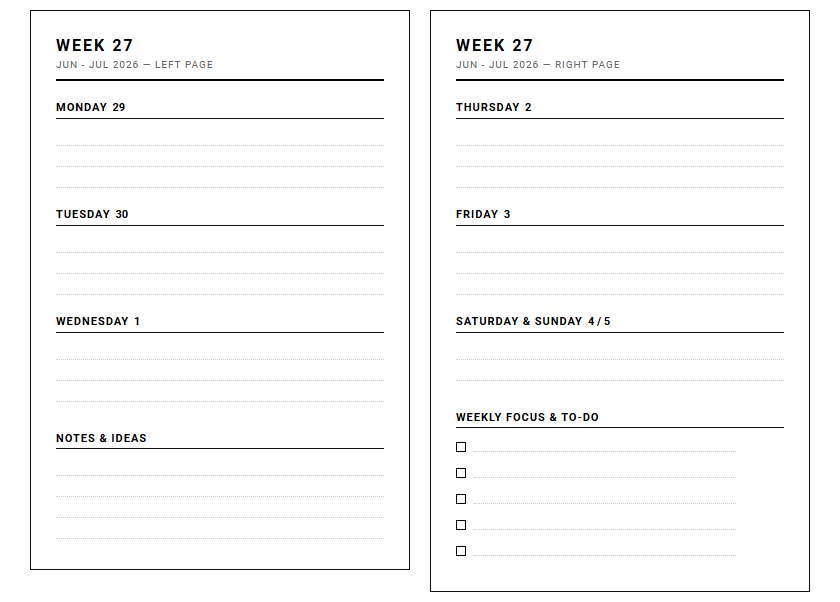
Managing a chaotic schedule in cramped single-page layouts often leads to missed tasks and mental fatigue. While traditional digital calendars offer quick alerts, they lack the spatial context required for deep, comprehensive planning.
A premium printable two-page weekly planner grants users unparalleled visual clarity, transforming chaotic weeks into structured, manageable blocks. Note this stipulation: long-term effectiveness depends entirely on choosing the correct format for your workflow. Whether you require hourly time-blocking grids or horizontal journaling spreads, this guide outlines how to leverage two-page layouts for peak productivity.
Create Your Two Page Spread Weekly Planner
Done customizing?
Two Page Spread Weekly Planner - Good to Know
Horizontal layout
The horizontal layout is a classic approach to weekly planning, reminiscent of traditional diary entries. In this structure, the weekly spread is divided into horizontal blocks, stretching from the left margin to the right. Typically, three or four days occupy each page of a two-page spread, providing a wide, linear canvas for writing.
This layout is exceptionally well-suited for individuals who prefer a narrative style of journaling alongside their task management. Because the boxes are wide, you have ample room to write complete sentences, detailed notes, or daily reflections without feeling restricted by narrow columns.
- Best for: Journaling, creative writing, and extensive note-taking.
- Design Tip: Use a light dot grid to split horizontal blocks into sectioned tasks and journaling areas.
By prioritizing horizontal space, this format allows your thoughts to flow naturally across the page, making it a soothing choice for memory keeping and slow planning.
Vertical layout
The vertical layout organizes your weekly view into vertical columns, typically dedicating one column to each day of the week. This structure is highly favored by chronological planners who prefer to visualize their days from top to bottom, mimicking a daily timeline.
This format excels at categorizing your daily agenda. You can easily divide each vertical column into distinct, stacked sections, such as: morning, afternoon, and evening, or dedicate specific zones for work tasks, personal errands, and meal planning. The structured columns make it simple to scan your entire week at a single glance, identifying busy days and open windows of time effortlessly.
To maximize this layout, try using color-coded highlighters or stickers to separate different life areas. It remains one of the most popular functional planning styles for busy professionals, students, and anyone managing a packed, hour-by-hour schedule.
Dashboard layout
A dashboard layout is designed for those who view their week as a holistic project rather than just a chronological list of dates. This highly functional spread typically dedicates one entire page to your weekly calendar, while the facing page acts as a centralized command center, or "dashboard," for tracking miscellaneous information.
Within the dashboard side, you will find specialized boxes for weekly priorities, categorized to-do lists, shopping lists, and incoming emails. This separation ensures your daily calendar remains uncluttered, reserved strictly for scheduled appointments and time-bound events.
Key advantages of this system include:
- Clear separation of scheduled events and general weekly tasks.
- Dedicated zones for habit tracking, weekly focus, and notes.
- Reduced visual clutter on the actual daily calendar blocks.
This layout is perfect for project managers and busy heads of households who need to coordinate diverse responsibilities simultaneously.
Dutch door weekly
The Dutch door weekly is a creative and highly customizable journaling technique that involves cutting or folding notebook pages to create partial pages. This allows a portion of an underlying page to remain visible while you flip through the weekly spreads, blending different layout elements together.
By cutting a horizontal or vertical section out of a page, you can keep a master monthly calendar, a running task list, or a habit tracker in constant view as you turn the pages of your weekly spreads. This eliminates the tedious process of flipping back and forth between different sections of your planner.
While it requires a bit of physical preparation using scissors or utility knives, the utility it provides is unmatched. It expands your usable workspace, offering a dynamic, multi-layered planning experience that adapts to complex, multi-week projects.
Alastair method
Developed by Alastair Johnston, the Alastair method is a brilliant, minimalist approach to weekly planning that eleganty solves the problem of scheduling unscheduled tasks. Instead of assigning a task to a specific day prematurely, you list all your tasks in a single, running list down the page.
To the left of this task list, you draw seven narrow columns, each corresponding to a day of the week, from Monday to Sunday. When you write down a task, you simply place a dot or a symbol in the column of the day you intend to complete it. If plans change, you can easily migrate the task by drawing an arrow and placing a new dot in a different column.
This method provides incredible flexibility, reducing the anxiety of rewriting uncompleted tasks. It is highly favored by Bullet Journal enthusiasts who appreciate clean lines, rapid logging, and a highly streamlined planning process.
Time blocking grid
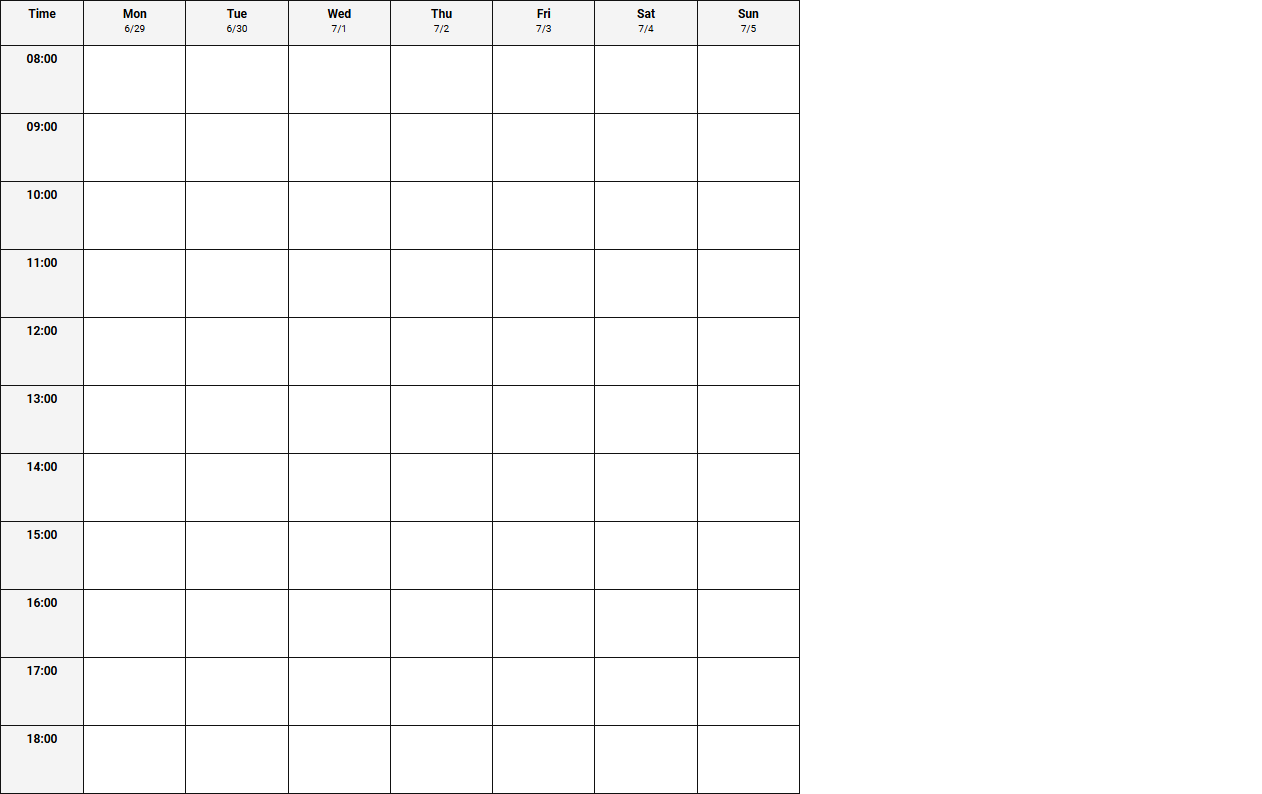
The time blocking grid is an ultra-structured planning method designed to maximize productivity and eliminate time wasting. This layout features a detailed grid where each column represents a day and each row represents a specific hour or half-hour increment, stretching from early morning to late evening.
By treating your time as a finite resource, you assign a specific block of time to every single task on your schedule, including deep work, meetings, meals, and even relaxation. This visual representation of your day prevents you from overcommitting and helps you stay focused on one task at a time.
Using different colors to block out various categories of work can drastically improve your time awareness. This layout is a favorite among freelancers, entrepreneurs, and anyone struggling with distraction, as it transforms abstract daily goals into concrete, time-bound commitments.
Undated weekly spread
The undated weekly spread offers the ultimate freedom and flexibility for sporadic planners. Unlike traditional dated diaries, undated spreads leave the date headers blank, allowing you to fill in the days and months as you go. This means you can start planning at any point in the year without wasting pages during vacations or quieter weeks.
This layout is particularly beneficial for individuals whose workloads fluctuate significantly. If you have a chaotic week, you can utilize a highly detailed spread; if the next week is quiet, you can skip planning entirely without facing the guilt of blank pages.
Furthermore, undated spreads allow you to experiment with different structural designs from week to week, adapting your planning style to your changing lifestyle. It represents a sustainable, pressure-free approach to managing your time and organizing your personal life.
Minimalist weekly layout
The minimalist weekly layout embraces the philosophy of "less is more," stripped of unnecessary decorations, borders, and complex tracking systems. It focuses strictly on the essentials: ample white space, clean typography, and simple, open boxes for daily tasks and events.
This layout is designed to reduce cognitive load and mental fatigue. By removing visual distractions, your eyes can easily focus on your immediate priorities. It encourages mindful planning, prompting you to list only your most critical tasks rather than cluttering your day with endless to-do lists.
Common elements of this style include:
- Generous use of empty space to create a sense of calm.
- Simple grid structures with fine, light gray or dotted lines.
- Lack of rigid labeling, allowing you to redefine spaces instantly.
This clean aesthetic is ideal for those who find busy planners overwhelming and prefer a quiet, focused space to organize their thoughts.
Habit tracker spread
A habit tracker spread integrates your daily routines and habit monitoring directly into your weekly view. Instead of keeping your habits on a separate monthly page, this layout places small, daily tracking grids right alongside your weekly schedule, keeping your personal growth goals at the forefront of your mind.
By viewing your habits in tandem with your daily schedule, you can easily analyze how your routine affects your productivity. For instance, you might notice a correlation between late-night screen time and lower productivity the following morning. This immediate visual feedback loop is incredibly motivating.
You can track everything from hydration and exercise to reading and meditation. Keeping these trackers embedded in your weekly layout ensures high visibility, drastically increasing the likelihood of sticking to your positive lifestyle changes over the long term.
Digital weekly spread
The digital weekly spread brings the traditional planning experience into the modern era, utilizing tablets, styluses, and dedicated planning applications. This layout combines the tactile satisfaction of handwriting with the powerful efficiency of digital technology, offering endless flexibility.
With a digital spread, you can easily copy and paste recurring events, drag and drop tasks to reschedule them instantly, and search your entire planner using handwriting recognition. Hyperlinked tabs allow you to jump seamlessly between weekly, monthly, and daily views with a single tap, streamlining your navigation.
Additionally, digital planners allow you to sync your schedule across multiple devices, embed web links, and insert digital stickers without adding bulk to your bag. This modern format is perfect for tech-savvy individuals who want an eco-friendly, endlessly customizable, and portable planning solution.
Leave a comment