
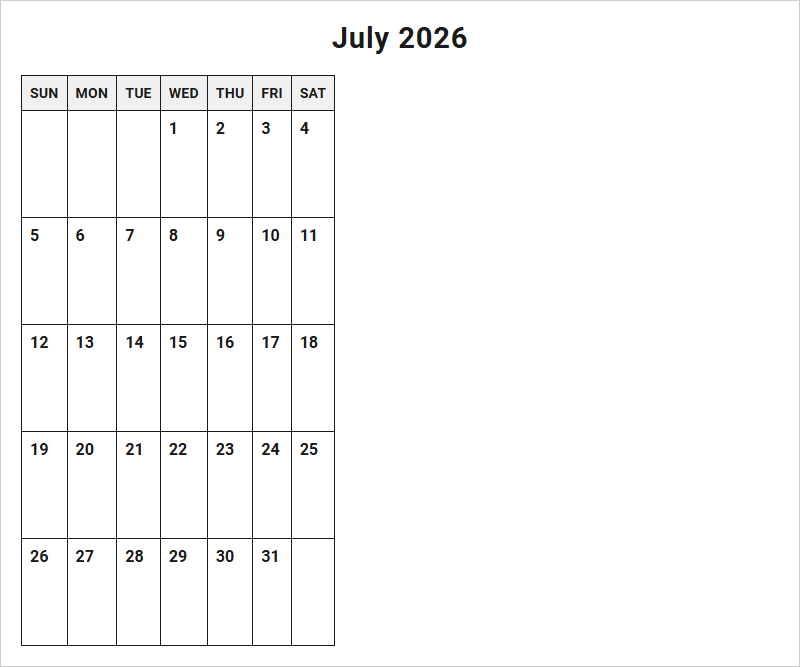
Managing overlapping federal holidays and corporate milestones often leads to chaotic scheduling conflicts. While standard digital alerts or basic diaries offer temporary fixes, they lack comprehensive long-term visibility. Our printable yearly calendars grant immediate visual control over your entire year. Although these static templates require proactive planning, they successfully align key events like Thanksgiving, regional holidays, and project launches. Below, we outline the best layouts to streamline your holiday and event tracking.
Create Your Holiday and Events Calendar
Done customizing?
Holiday and Events Calendar - Good to Know
Social media holidays
In the digital age, social media holidays have emerged as a powerful force for online engagement and brand marketing. These informal observances, ranging from #NationalDonutDay to #WorldEmojiDay, capture the collective attention of internet users globally. Brands and creators leverage these highly visual moments to foster community, boost algorithm visibility, and humanize their online presence.
Unlike traditional commemorations, these events are highly participatory. Users contribute by sharing user-generated content, participating in viral challenges, and using specific hashtags. Here are key characteristics of these modern events:
- Virality: They rely heavily on trending algorithms to gain momentum.
- Niche appeal: They cater to specific hobbies, food lovers, or pet enthusiasts.
- Commercial potential: They provide businesses with organic marketing hooks.
These lighthearted celebrations foster a sense of global connection, transforming ordinary calendar days into shared digital experiences that transcend geographical boundaries and cultural barriers.
Micro-holidays
A step beyond digital trends, micro-holidays focus on hyper-specific interests, obscure historical events, or quirky localized traditions. These occasions, such as Talk Like a Pirate Day
or Left-Handers Day
, provide unique opportunities for communities to celebrate their distinct identities and shared eccentricities without the pressure of major festive obligations.
The beauty of these events lies in their lack of commercialization and formal ceremony. Instead, they encourage playful interactions, creative expression, and authentic human connection through shared humor.
- Grassroots origins: Most micro-holidays start from independent creators or small internet forums.
- Low-pressure engagement: No gift-giving or elaborate family feasts are required.
- Educational value: Many highlight forgotten historical figures or unique scientific concepts.
These eccentric occasions prove that celebration does not always require grand historical weight; sometimes, finding joy in the microscopic details of life is more than enough.
Federal holidays
In contrast to informal celebrations, federal holidays are legally established by government bodies to honor monumental historical events, foundational values, or national heroes. These days-such as Independence Day, Memorial Day, and Thanksgiving-typically involve government office closures, paid leave for workers, and nationwide civic ceremonies.
These formal observances serve as pillars of national identity, encouraging citizens to pause, reflect, and engage in patriotic remembrance. They often feature public parades, educational programming, and family gatherings that reinforce a unified cultural narrative across diverse populations.
- Civic recognition: They honor the sacrifices of military veterans and civil rights pioneers.
- Economic impact: They stimulate tourism, travel, and retail sectors through long holiday weekends.
- Legislative authority: Their dates and observances are strictly regulated by statutory laws.
These designated days provide a rare, synchronized pause in the modern work week, allowing communities to collectively honor the history that shapes their society.
Heritage months
Designed to foster inclusivity and cultural education, heritage months dedicate a full thirty days to celebrating the history, contributions, and rich cultures of specific demographic groups. Prominent examples include Black History Month, Women's History Month, and Asian American and Pacific Islander Heritage Month.
These extended observances allow institutions, schools, and media outlets to dive deeply into narratives that have historically been marginalized. Through art exhibits, historical lectures, and community workshops, these months provide essential representation and promote empathy among diverse citizens.
"Recognizing our past is the first step toward building an inclusive future where every culture's legacy is honored and preserved."
By moving beyond single-day events, these month-long celebrations ensure that vital historical contributions are thoroughly analyzed, appreciated, and integrated into the broader educational curriculum for future generations.
Lunar calendar
Many of the world's most ancient and vibrant traditions are governed not by the sun, but by the cycles of the moon. Lunar calendar celebrations, such as the Lunar New Year, Diwali, and Ramadan, fluctuate in date on the solar Gregorian calendar, reflecting the natural rhythms of the night sky.
These observances are deeply spiritual and familial. They mark periods of renewal, reflection, and community gathering. Families travel vast distances to reunite, share traditional meals, and perform sacred rituals that have been passed down for millennia.
- Astronomical alignment: Dates are determined by the new moon, full moon, or crescent sightings.
- Agricultural roots: Many lunar festivals originally marked seasonal planting or harvesting cycles.
- Global diversity: Millions of people across Asia, the Middle East, and global diasporas participate.
These celestial holidays remind modern urban societies of their historical connection to the cosmos, highlighting the enduring influence of natural patterns on human culture.
Solstices and equinoxes
Marking the precise astronomical transitions of our planet, solstices and equinoxes represent the physical turning points of the Earth's journey around the sun. From the high energy of the summer solstice to the quiet introspection of the winter solstice, these events have been observed by human civilizations for thousands of years.
Ancient monuments like Stonehenge and Chichen Itza were specifically engineered to align with these solar alignments, serving as giant calendar markers for early societies.
- Equinoxes (Spring and Autumn)
- These moments feature equal day and night length, symbolizing balance, transition, and harvest preparation.
- Solstices (Summer and Winter)
- These mark the longest and shortest days of the year, celebrating the peak of light or the return of warmth.
Honoring these celestial milestones allows people to align themselves with the seasonal shifts, fostering ecological awareness and historical connection.
Cultural observances
Deeply rooted in the fabric of regional identity, cultural observances represent the unique customs, folklore, and social practices of specific communities. Festivals like Mexico's Día de los Muertos, Germany's Oktoberfest, or India's Holi showcase the artistic, culinary, and spiritual heritage of their respective regions.
These celebrations are characterized by their sensory richness, featuring vibrant traditional clothing, specific musical styles, and symbolic foods. They offer local populations a powerful way to preserve their ancestral heritage while inviting outsiders to learn and participate respectfully.
- Ancestral preservation: They keep ancient folklore, languages, and rituals alive in modern times.
- Intergenerational bonding: Elders pass complex craft and performance traditions down to youth.
- Tourism and exchange: They serve as major cultural ambassadors, attracting global travelers.
These holidays celebrate humanity's creative diversity, offering a colorful window into the distinct histories and values that define communities around the globe.
Awareness days
Focusing on social responsibility, education, and advocacy, awareness days use the calendar to shine a spotlight on critical global issues. Events such as World Mental Health Day, Earth Day, and International Human Rights Day seek to mobilize public action, raise funds, and influence public policy.
These days are highly collaborative, involving non-profit organizations, educational institutions, and corporate sponsors who coordinate global campaigns. By focusing public discourse on a single topic, these events break down social stigmas and drive tangible progress.
- Policy change: Campaigns often lobby governments for legislative improvements.
- Public health: Free screenings, research fundraising, and educational pamphlets are distributed.
- Global solidarity: They unite people facing similar health, social, or environmental struggles.
These purposeful observances channel collective energy toward social improvement, proving that holidays can be powerful instruments for systemic change.
Bank holidays
Originating in the United Kingdom and Ireland, bank holidays are public holidays during which financial institutions, government offices, and many retail businesses close. While historically created to give bank employees dedicated rest days, they have evolved into cherished national days off for the general public.
These holidays are often strategically placed on Mondays to create extended weekends, encouraging domestic tourism, outdoor recreation, and family getaways. They play a vital role in supporting the leisure and hospitality industries, as citizens flock to coastal towns and parks.
- Legislative roots: Established by the Bank Holidays Act of 1871 to regulate commercial pauses.
- Seasonal timing: Often distributed throughout spring and summer to maximize pleasant outdoor weather.
- Work-life balance: They emphasize the societal value of rest, leisure, and detaching from professional stress.
These structural breaks remain essential to modern labor standards, ensuring workers have predictable intervals to recharge and enjoy communal rest.
Liturgical seasons
For religious communities, time is structured by liturgical seasons, which organize the year into sacred cycles of preparation, celebration, and reflection. In Christianity, this cycle includes seasons like Advent, Lent, and Eastertide, each defined by specific liturgical colors, scriptures, and spiritual disciplines.
These seasons invite believers to step out of ordinary, linear time and participate in a sacred narrative. Through fasting, prayer, and charitable works, individuals align their daily habits with deep theological mysteries.
The transition between these seasons is marked by profound shifts in communal worship, moving from quiet contemplation to joyful celebration. These recurring rituals provide comfort, foster spiritual maturity, and strengthen the bonds of faith communities worldwide.
Leave a comment