
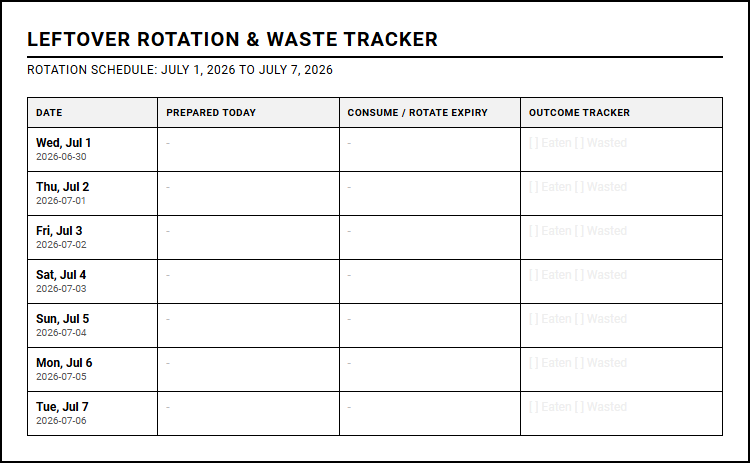
Managing household food waste is a persistent challenge for busy families, often leading to discarded grocery budgets. While standard financial planning secures the initial funding for meals, optimizing those resources requires tactical tracking. Our printable Leftover Rotation and Food Waste Tracker grants households immediate visibility over inventory. Crucially, success requires a commitment to daily updates. By monitoring specific items, such as Sunday's roast or perishable greens, families systematically cut losses. Below, we outline how to integrate this tracker into your routine.
Create Your Leftover Rotation and Food Waste Tracker
| Date | Prepared Today | Consume / Rotate Expiry | Outcome Tracker |
|---|
Done customizing?
Leftover Rotation and Food Waste Tracker - Good to Know
First-In First-Out
The First-In First-Out (FIFO) method is a highly effective inventory management strategy originating from the professional culinary world. By organizing your pantry, refrigerator, and freezer using this system, you ensure that older items are consumed before newer purchases. When you return from grocery shopping, place the newly bought items at the back of the shelf and pull the pre-existing stock to the front where it is easily accessible.
Implementing this simple rotation system significantly minimizes food waste by preventing hidden ingredients from expiring in the dark corners of your cupboards. To make this system work seamlessly in your home, consider using these visual aids:
- Labeling container lids with purchase dates.
- Designating a specific "eat-me-first" bin for expiring items.
- Grouping identical products in neat, single-file columns.
Adopting this disciplined approach saves money and streamlines meal preparation, ensuring every ingredient is utilized at its peak freshness.
Zero Waste Kitchen
Cultivating a Zero Waste Kitchen requires a conscious shift in how we procure, store, and consume resources. This culinary philosophy focuses on minimizing trash output, reducing single-use plastics, and maximizing the utility of every ingredient. Achieving this lifestyle begins with smart grocery shopping-buying loose produce, choosing bulk bins, and carrying reusable mesh bags to eliminate excess packaging.
Inside the kitchen, conservation techniques like proper food preservation, conscious portioning, and creative cooking play vital roles. Instead of discarding stems, skins, and leftover bones, mindful home cooks view them as valuable culinary assets. By transforming potential waste into useful resources, you establish a sustainable domestic ecosystem that honors the energy and labor required to produce your food.
Transitioning to this sustainable model reduces your carbon footprint, lowers household grocery expenses, and inspires creative culinary experimentation with overlooked ingredients.
Fridge Audit
A routine Fridge Audit is the cornerstone of proactive kitchen management. Conducting this check weekly allows you to assess the contents of your refrigerator, take stock of expiring ingredients, and prevent costly duplication during grocery trips. To perform a thorough audit, clear out each shelf systematically, wiping down the surfaces while evaluating the condition of every jar, container, and produce drawer.
This process helps you identify forgotten leftovers, check expiration dates, and organize your cold storage according to temperature zones. Raw meats should reside on the coldest bottom shelf, while condiments occupy the warmer door shelves. An organized fridge promotes better air circulation, which keeps food fresher for longer periods.
Integrating this habit into your weekend routine simplifies meal planning for the upcoming week and ensures that no ingredient is left to spoil in a chaotic, overcrowded refrigerator.
Shelf-Life Tracking
Effective Shelf-Life Tracking bridges the gap between buying food and actually consuming it before it spoils. Understanding the subtle differences between "best-by," "sell-by," and "use-by" dates empowers consumers to make safe, informed decisions rather than prematurely discarding perfectly edible food. Many dates stamped on packaging refer to peak quality rather than actual safety thresholds.
To track inventory efficiently, consider utilizing digital tools, physical magnetic whiteboards, or simple kitchen labels. Documenting purchase dates and projected expiration dates keeps your pantry organized. Below are key factors that influence shelf-life:
- Humidity control: Adjusting crisper drawers for leafy greens versus fruits.
- Temperature stability: Avoiding frequent door openings.
- Airtight sealing: Storing dry goods in glass jars to prevent pest infestations.
Monitoring these variables helps extend the usability of your groceries, reducing waste and ensuring your meals are prepared with wholesome ingredients.
Meal Prep Rotation
A structured Meal Prep Rotation is an invaluable strategy for busy households striving to maintain a healthy diet while controlling food waste. Instead of cooking large batches of a single dish that leads to flavor fatigue, prepare versatile, modular ingredients. Roast a large tray of seasonal vegetables, boil a batch of grains, and prep diverse proteins that can be combined in different ways throughout the week.
To keep your meals appetizing and safe, implement a strict rotation cycle. Store freshly prepared meals in clear, airtight glass containers labeled with the preparation date. Consume highly perishable seafood and salads during the first two days, leaving sturdier grain bowls and stews for later in the week.
This organized cycle preserves food quality, reduces cooking stress on busy weeknights, and ensures that home-cooked meals are consumed long before spoilage becomes an issue.
Food Scrap Upcycling
Food Scrap Upcycling is the art of transforming discarded kitchen scraps into delicious, nutrient-dense culinary creations. Rather than sweeping vegetable peels, herb stems, and meat trimmings into the trash can, view them as valuable building blocks for flavor. Keeping a dedicated freezer bag for scrap collection allows you to accumulate ingredients over time until you have enough to process.
When the bag is full, simmer the contents with water and aromatics to create rich, homemade broths that far surpass store-bought alternatives in flavor and nutrition. You can also upcycle scraps through these creative methods:
- Blending soft herbs and wilted greens into vibrant pestos or chimichurris.
- Dehydrating citrus peels to make fragrant seasoning blends or household cleaners.
- Pickling tough watermelon rinds or broccoli stems for a crunchy, tangy condiment.
This creative resourcefulness elevates your cooking, honors the entire lifecycle of your food, and significantly decreases organic waste.
Inventory Decay
Understanding the science of Inventory Decay is essential for optimizing food storage and slowing down natural spoilage. All organic matter undergoes chemical breakdown caused by enzymes, oxidation, and microbial activity. Managing environmental factors like light, oxygen, heat, and moisture is critical to delaying this inevitable degradation process.
A primary driver of rapid decay in produce is ethylene gas, a natural ripening agent emitted by fruits like bananas, apples, and tomatoes. When ethylene-producing items are stored in close proximity to sensitive greens and root vegetables, they accelerate the decay of neighboring produce. Separating these categories preserves freshness.
By learning how different foods react to their environment, you can customize your storage techniques, neutralize decay triggers, and maintain the nutritional integrity of your fresh ingredients for much longer periods.
Use-By Alert
Implementing a visual Use-By Alert system is a simple, highly effective way to prioritize ingredients that require immediate attention. In a busy kitchen, it is easy to forget about perishable items until they are past the point of consumption. Creating a designated high-priority zone in your refrigerator establishes an instant visual reminder for anyone looking for a snack or planning a meal.
Use bright labels, colored tape, or a designated plastic bin marked with "Eat Me First" to house items nearing their expiration dates. This system guides family members toward choosing snacks that need to be eaten quickly. It also helps meal planners quickly identify which ingredients must be integrated into tonight's dinner menu.
This habit reduces decision fatigue, prevents expensive proteins and cheeses from going to waste, and ensures that expiring food is rescued in a timely manner.
Fridge Clean-Out
A dedicated Fridge Clean-Out session is a rewarding weekly ritual that combines deep cleaning with culinary creativity. Before embarking on your weekly grocery shopping trip, designate an evening to clean out the refrigerator. This practice serves a dual purpose: it cleans your storage spaces and challenges you to create resourceful "clean-out-the-fridge" meals using diverse leftovers.
Dishes like frittatas, fried rice, stir-fries, and rustic soups are excellent canvases for utilizing miscellaneous vegetables, partial blocks of cheese, and leftover proteins. Emptying the shelves also allows you to wipe down sticky spills, sanitizing surfaces to prevent mold growth and unpleasant odors.
This weekly routine ensures you start the next shopping cycle with a clean slate, a hygienic refrigerator, and a clear understanding of what you actually need to purchase.
Surplus Management
Active Surplus Management is the ultimate defense against food waste when you find yourself with an abundance of ingredients. Whether you overbought during a sale, harvested a bumper crop from your garden, or have leftovers from a large event, managing surplus effectively prevents valuable food from ending up in landfills. Preserving these items extends their usability for months to come.
When faced with a surplus, consider preservation methods like freezing, canning, dehydrating, or fermenting. Berries can be frozen for smoothies, vegetables can be pickled in vinegar, and excess herbs can be preserved in olive oil ice cubes. If preservation isn't an option, sharing your bounty with neighbors, family, or local food pantries strengthens community bonds.
Developing a diverse toolkit for managing surplus ensures that excess food is redirected to productive uses, saving money and respecting valuable agricultural resources.
Leave a comment