
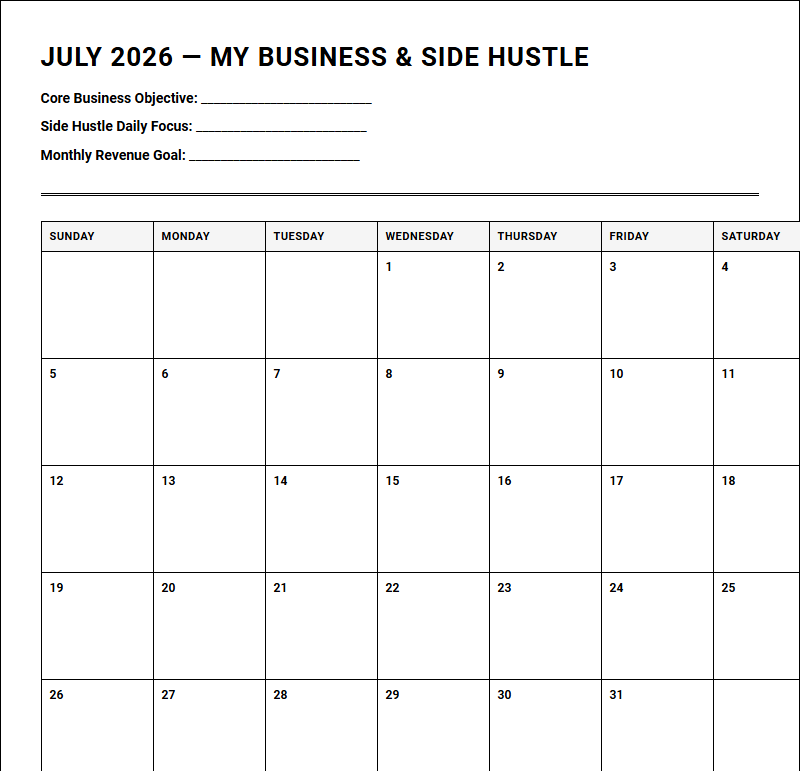
Balancing a demanding career with a side hustle often leads to operational chaos. While traditional funding sources like bank loans can inject capital, they require robust business plans. Fortunately, strategic time management grants you the focus needed to execute efficiently. Note: a tool cannot replace effort, but a systematic approach is vital. Utilizing a Weekly Planners printable calendar helps founders structure their high-impact tasks. Below, we outline key strategies to optimize your planner for sustainable growth.
Create Your Business and Side Hustle Planner
Done customizing?
Business and Side Hustle Planner - Good to Know
Solopreneur planner
A solopreneur planner is the central nervous system of any one-person business operation. Unlike traditional corporate planners, this specialized tool focuses on balancing high-level strategy with daily execution. It allows independent business owners to align their personal values with professional milestones. By mapping out daily priorities, energy levels, and critical tasks, you can avoid burnout while maintaining consistent momentum.
Key elements of an effective solopreneur planning system include:
- Daily focus areas: Keep your energy directed at one major initiative per day.
- Energy mapping tracker: Align demanding tasks with your peak cognitive hours.
- Weekly review templates: Evaluate wins, losses, and system bottlenecks systematically.
The primary goal of this planning framework is to transition from reactive firefighting to proactive, strategic business growth. Using a structured system ensures that no critical operations fall through the cracks while you manage client work and administrative duties simultaneously.
Revenue stream tracker
For any independent professional, diversifying income is essential for long-term financial stability. A revenue stream tracker provides a visual representation of where your money comes from, helping you identify which services or products are most profitable. Instead of guessing your financial health, this data-driven tool offers real-time insights into your business viability.
Effective tracking categorizes earnings into distinct buckets:
- Active income: Client retainers, project-based fees, and direct consulting services.
- Passive income: Digital product sales, affiliate commissions, and course enrollments.
- Recurring revenue: Software subscriptions or monthly maintenance packages.
By monitoring these channels closely, you can make informed decisions about where to invest your marketing efforts. Recognizing shifts in consumer behavior or seasonal demand early allows you to pivot your offerings before cash flow is negatively impacted. Accurate tracking transforms raw financial data into an actionable roadmap for business scaling.
Side hustle launch checklist
Launching a side hustle requires careful preparation to ensure your transition from employee to entrepreneur is seamless. A comprehensive side hustle launch checklist serves as your step-by-step roadmap, preventing you from skipping crucial legal, financial, or operational steps. Rather than rushing to market, this systematic approach helps build a sustainable foundation.
- Market Validation: Conduct target audience research and analyze competitors to verify demand.
- Financial Setup: Open a dedicated business bank account and establish pricing tiers.
- Legal Foundations: Register your business entity and secure necessary licenses.
- Brand Identity: Develop a basic logo, domain name, and professional email address.
- Marketing Launch: Create a landing page and initiate your first outreach campaign.
Following this structured sequence mitigates risk and builds business momentum efficiently. By checking off each milestone systematically, you transition smoothly from a hobbyist to a legitimate, revenue-generating business owner.
Time blocking schedule
Time blocking is a highly effective productivity methodology where you divide your day into dedicated blocks of time, each reserved for a specific task or group of tasks. For solopreneurs, this technique prevents the constant context-switching that drains mental energy and reduces cognitive performance.
Implementing an optimized time-blocking routine involves several key strategies:
- Theme days: Dedicate specific days to administrative tasks, client fulfillment, or marketing.
- Buffer blocks: Reserve small intervals throughout the day for unexpected interruptions or rest.
- Deep work segments: Allocate uninterrupted multi-hour periods for complex, high-value projects.
By treating these blocks as non-negotiable appointments with yourself, you regain control over your daily schedule. This disciplined approach ensures that administrative overhead does not cannibalize the creative and strategic work necessary for business longevity. Protecting your time is equivalent to protecting your revenue potential.
Tax deduction log
Maintaining a meticulous tax deduction log is vital for preserving your business profits and ensuring compliance with financial regulations. Every legitimate business expense reduces your taxable income, which saves you money. Without a structured logging system, you risk overlooking valuable deductions when tax season arrives.
Your logging protocol should systematically capture critical transactional details:
- Date and amount: Record exact figures immediately following any business-related purchase.
- Expense category: Classify items into standard categories like software, office supplies, or travel.
- Business purpose: Document a brief explanation of how the expense directly supports your operations.
- Receipt storage: Link digital copies of receipts to each entry for audit protection.
Consistent, real-time logging prevents the stressful, last-minute rush to organize disorganized receipts in April. Utilizing this proactive financial habit empowers you to maximize your write-offs legally, keeping more hard-earned cash in your business accounts.
Social media content calendar
A social media content calendar is a strategic framework designed to plan, organize, and schedule your brand's digital output across various marketing platforms. Consistency is the foundation of online audience growth, and planning your content in advance eliminates the daily anxiety of deciding what to post.
An optimized calendar balances different types of engaging content:
- Educational posts: Share valuable insights, industry tips, and actionable tutorials.
- Promotional campaigns: Drive traffic to your core offers, lead magnets, or services.
- Authority building: Highlight client testimonials, case studies, and professional milestones.
- Engagement prompts: Foster community interaction through polls, questions, and discussions.
By mapping your content strategy weekly or monthly, you align your social media presence with overarching business goals. This structured approach allows you to maintain a cohesive brand voice, nurture your target audience, and convert passive followers into loyal customers systematically.
Quarterly goal setter
Setting annual goals can often feel overwhelming, leading to procrastination or a loss of focus. A quarterly goal setter solves this issue by breaking down your broad, long-term vision into manageable, ninety-day sprints. This structured timeframe provides enough space to achieve significant milestones while maintaining urgency.
To maximize your quarterly strategy, focus on these essential components:
- Define three core objectives: Limit your focus to avoid spreading your resources too thin.
- Establish key results: Determine measurable metrics that indicate successful goal completion.
- Break down weekly action steps: Translate high-level objectives into specific daily tasks.
- Schedule bi-weekly check-ins: Monitor your progress and adjust tactics as market dynamics shift.
This agile planning methodology helps solopreneurs stay highly adaptable. By evaluating your business trajectory every ninety days, you can quickly double down on what works and pivot away from unproductive strategies.
Client onboarding checklist
A seamless onboarding experience is critical for setting expectations and building trust with new clients. A client onboarding checklist ensures that your client relationship begins with clarity, professionalism, and organization. By standardizing this process, you eliminate administrative confusion and deliver immediate value.
An outstanding onboarding sequence typically includes:
- Contract and invoice fulfillment: Secure legal signatures and process initial payments promptly.
- Welcome packet delivery: Provide clients with an introductory guide explaining your communication channels.
- Intake questionnaire completion: Gather essential project details, assets, and access credentials.
- Kickoff meeting scheduling: Align on project timelines, deliverables, and major milestones.
Systematizing these administrative touchpoints reduces client anxiety and frees up your mental energy to focus on high-quality delivery. A structured onboarding experience reassures clients that they made the correct financial investment in your professional services.
Batch working schedule
Batch working is a productivity technique that involves grouping similar tasks together and completing them during a dedicated, uninterrupted block of time. This approach minimizes cognitive switching costs, allowing you to enter a state of deep focus and produce higher quality work in less time.
To structure your weekly schedule for optimal batching, consider these core categories:
- Creation days: Dedicate specific blocks solely to writing, designing, or development work.
- Administrative tasks: Batch email management, invoicing, and bookkeeping into a single afternoon.
- Client communication: Schedule all consulting calls, discovery meetings, and updates sequentially.
- Marketing operations: Record multiple podcast episodes or design several social media graphics together.
By isolating these activities, you eliminate the constant transition between creative, administrative, and communicative states. This focused workflow pattern optimizes your mental energy, allowing you to scale your productivity without increasing your working hours.
Financial runway tracker
For a solopreneur, maintaining a clear view of your financial health is paramount to business survival. A financial runway tracker calculates how many months your business can operate if your revenue suddenly drops to zero. This essential metric offers peace of mind and informs high-stakes business decisions.
Your tracking spreadsheet should monitor several critical variables:
- Monthly operating expenses: Calculate the total cost of software, tools, and business overhead.
- Personal survival budget: Know the absolute minimum cash required to cover your personal expenses.
- Current cash reserves: Total all liquid capital available in your business checking and savings accounts.
- Runway calculation: Divide your total cash reserves by your monthly business and personal burn rate.
Understanding your exact runway empowers you to negotiate with clients from a position of strength, invest confidently in your business growth, and navigate economic downturns without facing immediate financial distress.
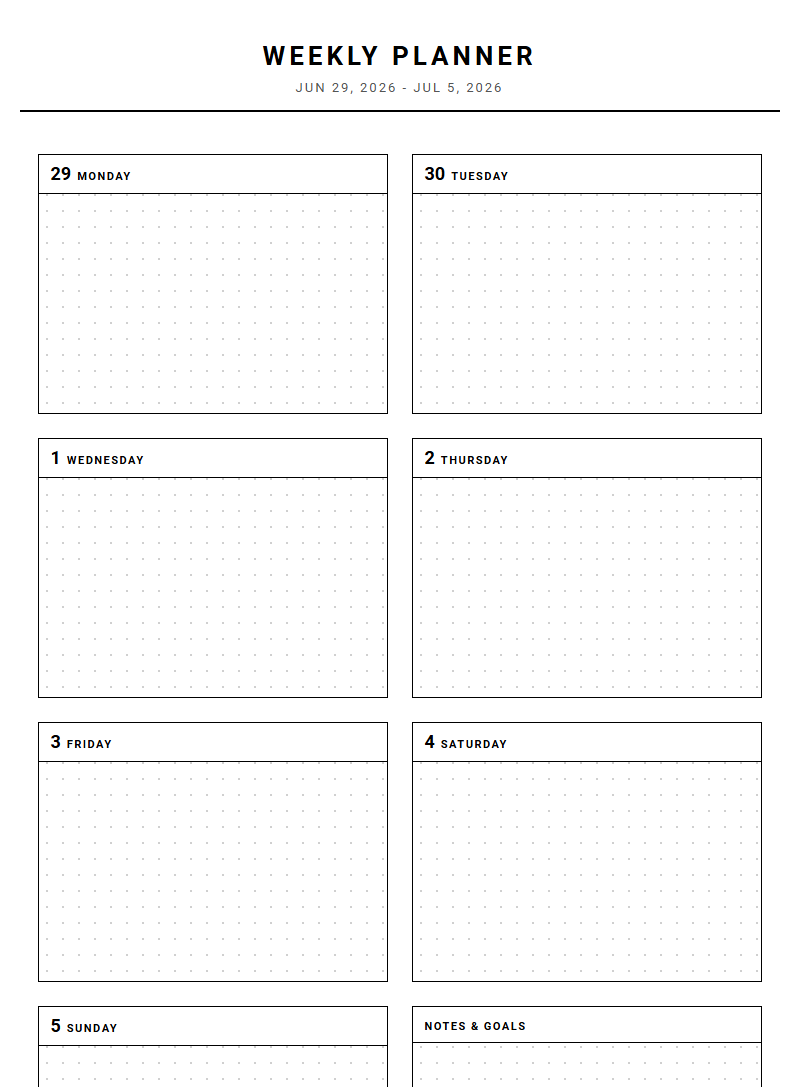
Leave a comment