
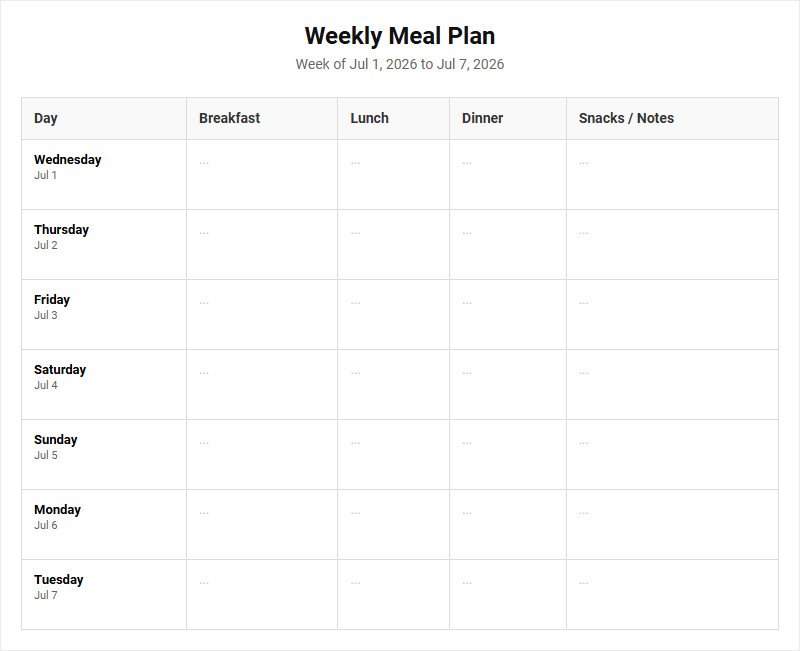
Managing daily dinner chaos is a constant struggle for busy households. While many rely on rigid meal planning apps, these standard tools often fail to adapt to unique dietary needs. Our blank and custom printable calendar templates grant you complete control over your menu. Though they require a brief initial setup to align with your schedule, they provide sustainable organization for tracking Sunday prep-days and family dinners. Below, we outline how to customize these templates to streamline your kitchen routine.
Create Your Meal Planning Calendar
| Day | Breakfast | Lunch | Dinner | Snacks / Notes |
|---|
Done customizing?
Meal Planning Calendar - Good to Know
Batch cooking schedule
Establishing a structured batch cooking schedule is the cornerstone of efficient weekly meal preparation. By dedicating specific blocks of time-typically Sunday afternoons and Wednesday evenings-you can prepare large quantities of base ingredients that form the foundation of multiple dishes. This systematic approach minimizes daily kitchen chaos and ensures you always have nutritious options readily available.
To maximize your efficiency, consider organizing your cooking session into distinct phases:
- Prep phase: Wash, chop, and portion all vegetables and aromatics.
- Active cooking: Utilize your stovetop, oven, and slow cooker simultaneously to cook proteins and grains.
- Portioning: Cool and store meals in airtight, freezer-safe containers labeled with dates.
This disciplined routine reduces active cooking time during busy weekdays, allowing you to reclaim precious evening hours while maintaining a healthy diet.
Digital meal board
Transitioning to a digital meal board revolutionizes how households coordinate their weekly nutrition. By utilizing collaborative platforms or dedicated smart displays in the kitchen, family members can access real-time updates regarding dinner plans, ingredient availability, and preparation responsibilities. This centralized hub eliminates the frequent question of what to eat for dinner.
An effective digital board integrates several key features to streamline your kitchen management:
- Interactive calendars that sync with everyone's daily schedules.
- Color-coded tags to distinguish between quick lunches, slow-cooker meals, and dine-out nights.
- Direct links to digital recipes, including precise cooking instructions and scaling tools.
Embracing this modern solution fosters household collaboration, reduces food-related decision fatigue, and ensures everyone stays aligned with nutritional goals.
Zero-waste meal planning
Implementing a zero-waste meal planning strategy is both economically beneficial and environmentally responsible. This methodology focuses on designing menus around ingredients you already own, particularly perishable items nearing their expiration dates. By conducting a thorough inventory of your refrigerator and pantry before planning, you prevent unnecessary purchases and significantly reduce food spoilage.
To successfully execute a waste-free kitchen ecosystem, integrate these practical habits into your routine:
- Reverse meal planning: Search for recipes based on existing ingredients rather than buying new ones.
- Component cooking: Prepare versatile ingredients that can easily morph into soups, stir-fries, or bowls.
- Creative preservation: Freeze surplus herbs in olive oil, and turn vegetable scraps into savory homemade broths.
Consistently practicing these techniques minimizes environmental impact while maximizing your grocery budget.
Theme night rotation
A theme night rotation simplifies the creative process of meal planning by providing a structured yet flexible framework. Instead of staring at an endless list of possibilities, assigning specific culinary themes to designated days of the week narrows your focus. This approach keeps dining exciting while dramatically reducing the mental energy required to compile a weekly grocery list.
Consider implementing a diverse weekly schedule that caters to various tastes and preparation styles:
- Meatless Monday: Plant-based curries, lentil dals, or hearty grain bowls.
- Taco Tuesday: Interactive Mexican-inspired dishes with customizable toppings.
- Sheet-Pan Thursday: Low-effort, single-pan roasted proteins and seasonal vegetables.
This predictable rhythm provides comfort and structure, making grocery shopping straightforward and cooking highly manageable for busy households.
Automated grocery list integration
Leveraging automated grocery list integration bridges the gap between meal selection and ingredient acquisition. When your digital meal planner automatically translates selected recipes into an organized, categorized shopping list, you eliminate human error and impulse buying. This seamless synchronization ensures you purchase the exact quantities needed, saving time and money at the supermarket.
Modern smart list integrations offer several sophisticated advantages for home cooks:
- Aisle categorization: Automatically groups ingredients by supermarket section to speed up shopping trips.
- Pantry cross-referencing: Flags items you likely already have in stock to prevent duplicate purchases.
- E-commerce syncing: Directly exports your generated list to online grocery delivery services with one click.
Adopting this technology optimizes your shopping workflow, turning a tedious chore into a highly efficient, automated process.
Macro-friendly prep
Designing a macro-friendly prep routine is essential for individuals aiming to meet precise nutritional targets, whether for athletic performance, weight management, or general wellness. This specialized approach focuses on balancing macronutrients-carbohydrates, proteins, and fats-within every prepared meal. By pre-portioning components according to your specific caloric and metabolic needs, you remove the guesswork from daily eating.
To maintain consistency, structure your prep sessions around high-yield, versatile macronutrient sources:
- Lean proteins: Grilled chicken breast, tofu, and lean beef cooked in bulk.
- Complex carbohydrates: Roasted sweet potatoes, brown rice, and quinoa.
- Healthy fats: Pre-measured portions of nuts, seeds, and avocado-based dressings.
Having these macro-balanced building blocks readily available prevents impulsive eating and ensures you consistently fuel your body with targeted, high-quality nutrition.
Capsule pantry planning
Borrowing principles from minimalist fashion, capsule pantry planning relies on keeping a highly curated, versatile selection of dry goods and spices. Instead of cluttering shelves with single-use items, you stock high-quality, multi-purpose essentials that form the backbone of dozens of different recipes. This streamlined pantry setup makes cooking intuitive, reduces clutter, and ensures you can always whip up a delicious meal spontaneously.
Building an effective capsule pantry involves focusing on foundational, long-lasting ingredients:
- Base grains: Versatile options like jasmine rice, rolled oats, and premium pasta.
- Canned staples: Chickpeas, black beans, diced tomatoes, and rich coconut milk.
- Flavor enhancers: High-quality olive oil, soy sauce, apple cider vinegar, and essential spices.
This minimalist culinary philosophy ensures you are always prepared to cook flavorful meals without needing constant, frantic trips to the grocery store.
Leftover rotation calendar
An organized leftover rotation calendar is the secret weapon of efficient home cooks who despise food waste and menu monotony. Rather than letting extra portions sit forgotten in the back of the fridge, this system schedules specific days to consume or repurpose previously cooked meals. By formalizing this rotation, you ensure that every dish is enjoyed at its peak freshness and safety.
To successfully integrate leftovers into your weekly routine, implement these simple strategies:
- Scheduled leftover nights: Dedicate Thursday evenings to clearing out the refrigerator before the weekend.
- Creative reinvention: Transform leftover roasted chicken into savory enchiladas, or turn roasted vegetables into a morning frittata.
- The "First In, First Out" rule: Arrange containers chronologically so older meals are consumed first.
This structured approach saves significant time on busy weeknights while ensuring your hard work in the kitchen never goes to waste.
Seasonal eating schedule
Aligning your meals with a seasonal eating schedule dramatically enhances the flavor of your food while supporting local agriculture. Consuming fruits and vegetables harvested at their natural peak ensures you enjoy maximum nutrient density and superior taste. Additionally, seasonal produce is often more affordable due to its abundance, making this schedule a budget-friendly choice for health-conscious families.
Structuring your yearly meal plan around nature's harvest cycle provides wonderful culinary diversity:
- Spring: Bright salads featuring crisp asparagus, radishes, and sweet peas.
- Summer: Light, refreshing meals utilizing ripe heirloom tomatoes, zucchini, and berries.
- Autumn/Winter: Hearty, comforting stews packed with butternut squash, kale, and root vegetables.
Embracing this seasonal rhythm connects you deeper to nature, diversifies your gut microbiome, and brings exciting culinary variety to your dining table throughout the year.
Aesthetic meal planning app
Utilizing an aesthetic meal planning app elevates the daily chore of cooking into an inspiring, visually pleasing creative outlet. These beautifully designed applications prioritize intuitive user experiences, clean layouts, and high-definition food photography. Engaging with a visually harmonious interface motivates you to discover new recipes, track your nutrition, and organize your culinary calendar with genuine enthusiasm.
The finest aesthetic planners combine stunning visual design with powerful, practical functionalities:
- Visual drag-and-drop: Easily curate your weekly grid with elegant meal cards.
- Customizable themes: Personalize the interface to match your kitchen style or mood.
- Photo-forward journals: Log your successful culinary creations in an elegant digital scrapbook.
Transforming the organizational process into an art form encourages long-term consistency, making healthy meal preparation an enjoyable lifestyle habit rather than a boring administrative task.
Leave a comment